
Tired of uneven paint jobs that leave more streaks than style? Today, we’re diving into the world of airless paint sprayers—the power tools that can turn a weekend project into a pro-level finish. Whether you’re tackling walls, fences, or furniture, these machines promise speed, precision, and a whole lot less arm fatigue. Stick around, because we’ve lined up the best options on the market, compared their features, and tested how they really perform. By the end, you’ll know exactly which sprayer deserves a spot in your toolkit—and which ones are better left on the shelf.
Top 7 Airless Paint Sprayers:
1. Graco Magnum X5
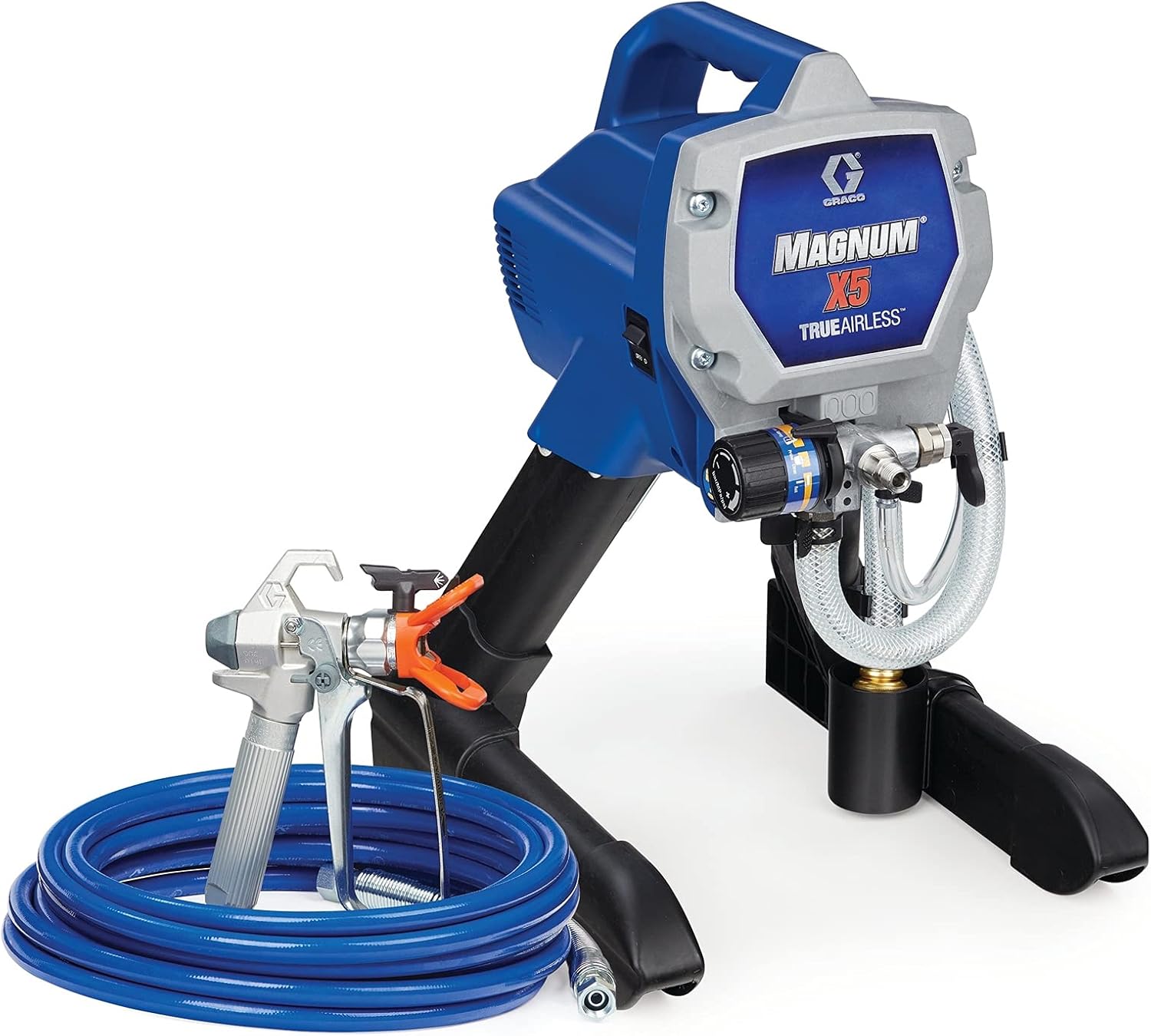
Power and precision define the Graco Magnum X5. This paint sprayer gives you more control than many models in its class. Adjustable pressure lets you fine-tune spray patterns for smooth, even coverage, whether you are painting walls or staining a fence. That level of flexibility makes it stand out against competitors with fixed settings.
Mobility feels effortless thanks to the lightweight frame and the ability to connect up to 75 feet of hose. You can easily reach second stories without losing performance, which is rare in midrange sprayers. Directly spraying from a 1 or 5-gallon bucket with the flexible suction tube saves time and prevents messy transfers. I found this feature especially helpful when working on larger outdoor jobs.
Accessories included in the box add serious value. The SG2 metal spray gun feels durable, and the RAC IV 515 Switch Tip makes cleaning clogs quick. Using the PowerFlush adapter with a garden hose made cleanup much faster than other models I’ve tested. What I love most about this unit is how consistently it delivers professional-quality results on both small and midsize projects.
Noise during operation runs louder than some competitors, which may bother sensitive users. Still, its performance, efficiency, and versatility make it an excellent choice for DIY homeowners and remodelers.
2. Wagner Control Pro

Control meets efficiency with the Wagner Control Pro. This paint sprayer uses High Efficiency Airless Technology to cut overspray by over half while giving a soft, even finish. Compared to standard airless sprayers, you get more accuracy and less wasted paint, which makes a huge difference on big jobs.
Durability feels impressive thanks to the .60 horsepower HEA pump. It sprays unthinned materials with ease and lasts longer than many competitors. With a max pressure of 1500 PSI, you still get plenty of power while enjoying smoother results. I found the all-metal gun comfortable to use, even on long projects.
Convenience shines through with the 30-foot hose that makes reaching large areas simple. Drawing directly from a 5-gallon bucket saves time, especially when painting siding or garage doors. Storage built into the stationary base keeps spare tips handy, and adjusting the pressure control knob takes seconds. What I love most is the consistent spray pattern that looks professional with very little effort.
Noise runs slightly higher than I expected, which could be distracting indoors. Still, with reduced overspray, extended pump life, and user-friendly features, this sprayer delivers outstanding value for homeowners ready to tackle big projects confidently.
3. Titan Tool ControlMax

Speed and control define the Titan Tool ControlMax. This airless paint sprayer uses High Efficiency Airless Technology to cut overspray by up to 55% while giving a softer, more consistent finish. Compared to standard sprayers, you get cleaner results and far less wasted paint.
Power comes from a .60 horsepower pump that sprays unthinned paints and stains at up to 0.33 gallons per minute. With a max operating pressure of 1700 PSI, it balances strength and precision better than many competitors in the same class. The all-metal gun feels solid and dependable, even during long projects.
Flexibility matters here with the included 30-foot hose, extendable to 80 feet for larger jobs. Drawing directly from 1 or 5-gallon buckets saves time and makes it easier to handle exterior projects like siding and fences. Built-in storage for tips and tools keeps everything organized. I especially enjoyed using the free ControlMax app, which offers custom settings and job tracking that other sprayers simply don’t match.
Weight feels slightly bulkier compared to compact units, which may limit portability for smaller indoor projects. Still, the durability, high output, and smart technology make this sprayer a top pick for DIYers and remodelers who want pro-level results.
4. Wagner Spraytech Control Pro
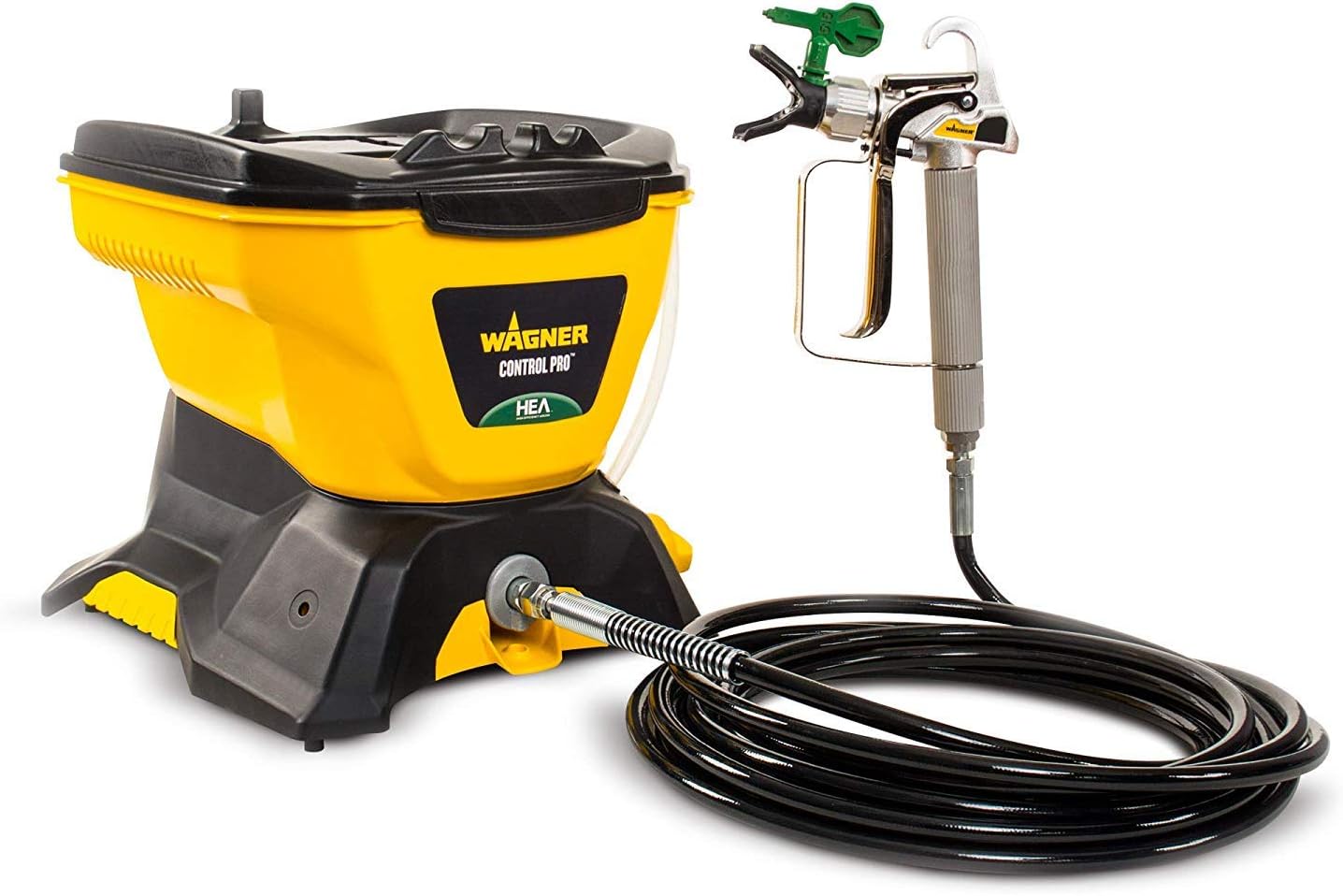
Speed and ease define the Wagner Spraytech Control Pro. This Power Tank sprayer applies coatings three times faster than a roller while keeping overspray low. Compared with traditional sprayers, you waste less paint and spend less time prepping.
Performance improves further with High Efficiency Airless Technology that reduces overspray by up to 55% while producing a softer spray. That balance of power and control makes it ideal for both interior walls and exterior siding. I appreciated how consistent the finish looked, even on larger surfaces.
Capacity also stands out. The 1.5-gallon hopper keeps paint contained, letting you work longer without frequent refills. Its gravity-fed design makes priming and cleaning simple, with less mess than units relying on suction tubes. A 25-foot hose adds flexibility to move around ladders or large decks without losing spray quality.
Storage and convenience features make this sprayer easier to manage than similar models. Integrated handles, tip storage, and a spill-resistant lid keep everything tidy. What I love most is how the gun and hose fit inside the tank, so setup and cleanup feel less like a chore.
The weight can feel a little heavy when moving the unit between areas. Still, this model delivers professional results with minimal effort, making it a strong choice for demanding projects.
5. Graco Magnum Project Painter Plus
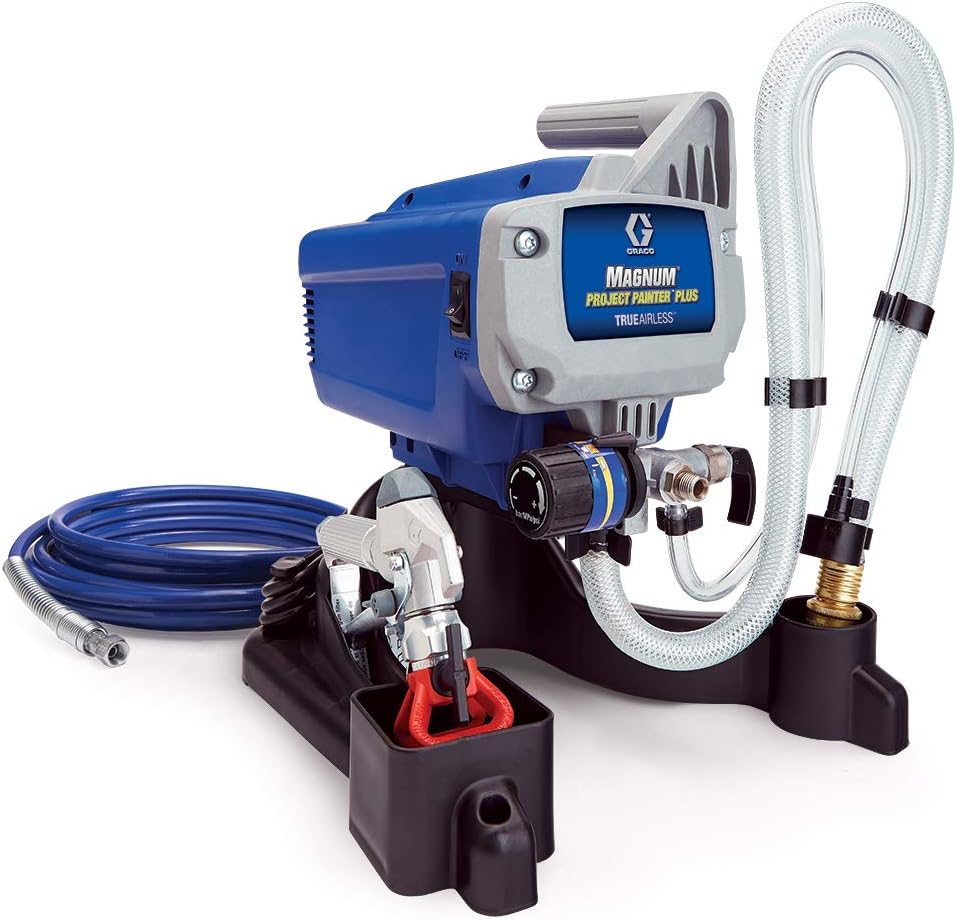
Speed meets simplicity with the Graco Magnum Project Painter Plus. This sprayer offers a faster, easier alternative to brushes and rollers, finishing projects in half the time. Compared with other entry-level sprayers, it delivers more control and flexibility.
Adjustable pressure settings let you handle a variety of paints or stains unthinned, which makes it more versatile than fixed-pressure competitors. The flexible suction tube draws directly from 1 or 5-gallon buckets, cutting down on messy transfers and saving setup time. With support for up to 50 feet of hose, you can easily reach second stories without losing performance.
Stability feels secure thanks to the low-profile frame and integrated pail hook that keeps everything together when moving around. Included accessories like the SG2 metal spray gun and RAC IV 515 tip give this model a professional edge at a DIY-friendly price. I especially loved the PowerFlush adapter, which makes cleaning with a garden hose quick and painless compared to other units I’ve tested.
Noise levels are higher than those of some competing models, which may be bothersome during extended indoor sessions. Still, its speed, convenience, and pro-level results make it one of the most reliable paint sprayers for homeowners upgrading from brushes and rollers.
6. Wagner Spraytech Handheld Paint Sprayer

Versatility meets speed with the Wagner Spraytech Handheld Paint Sprayer. The FLEXiO 595 model sprays unthinned latex, stains, and sealers, finishing projects far quicker than a brush. In my testing, it covered an 8×10 wall in just five minutes, which is much faster than competing handheld units.
Two included nozzles expand their usefulness. The iSpray nozzle works best for broad surfaces like siding and walls, while the Detail Finish nozzle delivers smooth results on cabinets and furniture. That dual setup makes it more flexible than many single-nozzle sprayers.
Control feels excellent thanks to nine power settings, variable paint flow, and adjustable spray patterns. Switching between horizontal, vertical, wide, or narrow coverage gives you precision without extra effort. Compact and lightweight design reduces arm fatigue during long sessions, making it easier to handle compared with older FLEXiO models. What I love most is the Lock-N-Go system, which lets you swap parts and clean quickly.
Noise from the X-Boost turbine runs louder than expected, though it’s manageable with larger projects. Still, with faster performance, adjustable controls, and two specialized nozzles, this handheld sprayer stands out as one of the most efficient options for DIY painters.
7. HVLP Handheld Paint Sprayer Tool

Power and precision come together in the HVLP Handheld Paint Sprayer Tool. This 1000W electric spray gun delivers stronger performance than many budget handheld sprayers I’ve tested. Adjustable flow control lets you fine-tune paint output, reducing overspray and helping you get smooth, even coverage every time.
Flexibility improves with multiple spray patterns, including vertical, horizontal, and circular. Four brass nozzle sizes make switching between thin sealers and heavy latex paints straightforward. Compared to plastic tips on cheaper models, these brass nozzles clean more easily and last longer. I found them especially reliable when spraying cabinets and furniture.
Safety features enhance durability with a motor that includes a temperature protection fuse. Double-layer insulation adds extra security, making long sessions feel worry-free. Cleaning feels simple since the sprayer comes apart without tools, and the included brushes and needle make unclogging quick. What I love most is how all the extras—funnels, filter, gloves, and viscosity cup—create a complete kit that’s ready out of the box.
The weight feels slightly heavier than compact competitors, which may tire your arm during extended work. Still, its power, adjustability, and ease of cleaning make it a highly capable sprayer for homeowners who want reliable results.
Best Airless Paint Sprayer: A Complete Buying Guide
Introduction
Painting projects can be incredibly rewarding, but let’s face it—rolling or brushing a large surface can quickly turn into a time-consuming, back-straining task. Whether you’re tackling home renovation projects, refinishing furniture, or adding a fresh coat to a fence, the right tool can make all the difference. That’s where an airless paint sprayer steps in. Designed to deliver even coats of paint at high pressure, airless sprayers turn what could be hours of work into minutes while offering professional-quality results.
Unlike traditional brushes or rollers, an airless paint sprayer atomizes paint by pumping it at very high pressure through a nozzle, creating a fine spray that adheres smoothly to surfaces. This method provides excellent coverage and reduces the number of coats needed. From walls and ceilings to outdoor siding, decks, and even cabinetry, airless sprayers offer unmatched versatility.
One of the biggest reasons homeowners and professionals alike turn to airless sprayers is efficiency. Imagine covering an entire room in under an hour with a flawless finish compared to spending all day with a roller. Not only does it save time, but it also reduces paint waste and creates a finish that looks like it came straight out of a professional workshop.
Beyond time and efficiency, airless sprayers improve consistency. No more roller marks, brush streaks, or uneven coverage—just smooth, even layers of paint that enhance the appearance of any surface. They’re also excellent at handling a wide range of coatings, from thin stains to thick latex paints, making them suitable for nearly any job.
For DIY enthusiasts, the learning curve is surprisingly manageable. With just a bit of practice, you can achieve professional-level results without hiring a contractor. For professionals, the speed and precision of an airless sprayer allow for more projects in less time, ultimately boosting productivity and profits.
Of course, not every airless paint sprayer is the same. Different models cater to different needs—some are compact and portable for small household projects, while others are heavy-duty machines built for commercial or industrial use. Understanding the types, features, and considerations before buying ensures you’ll choose the sprayer that matches your projects, skill level, and budget.
This guide will walk you through the various types of airless paint sprayers, key features to look for, considerations before buying, pros and cons, maintenance tips, common troubleshooting issues, and a step-by-step buying process. By the end, you’ll be fully equipped to pick the perfect airless sprayer for your painting needs.
Types of Airless Paint Sprayers
Airless paint sprayers come in several designs, each suited for different users and projects. Here’s an overview of the main types:
1. Handheld Airless Paint Sprayers
Compact, lightweight, and portable, handheld models are ideal for small projects like furniture, doors, cabinets, or touch-ups. They’re best for homeowners who occasionally need to spray small surfaces without investing in a large, bulky machine. While not as powerful as larger sprayers, they’re affordable, easy to store, and quick to set up.
2. Stand-Mounted Airless Paint Sprayers
These sprayers sit on a stand and connect to a hose and spray gun. They’re designed for medium to large painting projects such as rooms, fences, or decks. Stand-mounted sprayers strike a balance between portability and performance, offering higher pressure and coverage compared to handheld units.
3. Cart or Wheeled Airless Paint Sprayers
Built for professionals or serious DIYers, cart-mounted sprayers are powerful machines that can handle large-scale projects like houses, barns, or industrial buildings. They usually feature longer hoses and larger paint reservoirs, making them suitable for heavy-duty, continuous use. The wheeled design ensures easier mobility despite their size.
4. High-Efficiency Airless (HEA) Sprayers
A subcategory worth mentioning, HEA sprayers reduce overspray by up to 55% while maintaining excellent coverage. These models are great for beginners or anyone concerned about wasting paint and making a mess. They typically use lower pressure but deliver consistent results.
Key Features to Look For
1. Pressure and Flow Rate
Pressure determines how well the sprayer atomizes the paint, while flow rate measures how much paint is delivered per minute. Higher pressure and flow rates are ideal for large projects, but they also consume more paint. A model with adjustable pressure is valuable for tackling different tasks.
2. Nozzle and Tip Sizes
Different projects require different tip sizes. For example, a fine tip is perfect for cabinets, while a wider one works better for walls or fences. Choosing a sprayer with interchangeable nozzles adds versatility and ensures you can handle various coatings.
3. Hose Length and Mobility
If you’re painting large areas, hose length is critical. Longer hoses let you cover more ground without moving the sprayer constantly. For big projects, cart-mounted sprayers with extended hoses provide convenience and efficiency.
4. Paint Compatibility
Not all sprayers handle thick paints well. Check whether your model can spray unthinned latex, stains, or varnishes. Some may require thinning, which adds extra steps. A versatile sprayer saves time and expands your project possibilities.
5. Ease of Cleaning
Airless sprayers can be messy. Look for models with features like quick-flush systems or detachable parts that simplify cleaning. Proper maintenance prevents clogging and extends the sprayer’s life.
6. Safety Features
Since airless sprayers operate at high pressure, safety is crucial. Features like trigger locks, pressure relief valves, and sturdy construction help prevent accidents and ensure smoother operation.
Things to Consider Before Buying
Budget
Airless sprayers range from $100 for small handheld units to over $1,000 for professional-grade machines. Set your budget based on how frequently you’ll use the sprayer and the size of your projects. Occasional DIYers may find mid-range options sufficient, while contractors should invest in higher-end, durable models.
Size and Storage Space
Compact sprayers are easier to store and move, making them suitable for small homes or apartments. Larger wheeled models require more space but excel in tackling extensive projects.
Ease of Use
Beginners should look for user-friendly designs with straightforward controls and clear instructions. HEA models are particularly good for minimizing overspray and frustration. Experienced painters may prefer advanced models with customizable settings.
Durability and Warranty
High-quality materials, sturdy construction, and a reliable pump are critical for long-term use. A good warranty provides peace of mind, especially for expensive professional sprayers. Check whether the manufacturer offers service centers or replacement parts.
Pros and Cons
| Pros | Cons |
|---|---|
| Fast and efficient coverage | Can be messy if not used carefully |
| Professional-quality finish | Higher cost compared to brushes/rollers |
| Handles large projects easily | Requires thorough cleaning after use |
| Versatile for many coatings | Steeper learning curve for beginners |
| Saves time and effort | Overspray may waste paint |
Step-by-Step Buying Guide
1. Research Your Needs
Start by identifying the types of projects you’ll be tackling most often. Small DIY touch-ups require less power than painting an entire house. Knowing your needs ensures you don’t overpay for unnecessary features or end up with an underpowered sprayer.
2. Compare Products
Read reviews, compare specifications, and consider factors like pressure, hose length, and paint compatibility. Don’t just look at the price—think about long-term value and durability. A slightly more expensive model may save you money and frustration over time.
3. Finalize Your Choice
Before making the purchase, double-check warranty details and customer support availability. Choose reputable brands known for reliability and service. Finally, decide where to buy—trusted retailers and official brand websites are often the safest bets for ensuring authenticity.
Maintenance Tips
-
Clean After Every Use: Flush the system with water or a suitable solvent immediately after painting to prevent clogs.
-
Avoid Using Incorrect Tips: Using the wrong nozzle size can strain the pump and reduce performance. Match the tip to your project.
-
Lubricate Moving Parts: Regularly oil the pump and gun components to keep them running smoothly.
-
Store Properly: Keep the sprayer in a cool, dry place and protect it from dust. Always depressurize before storing.
Common Issues and Troubleshooting
-
Clogged Nozzle: If the spray pattern becomes uneven, stop immediately and clean the tip. Many sprayers come with reversible tips that allow for quick unclogging.
-
Uneven Spray or Spitting: Often caused by air in the hose or a partially clogged filter. Check for leaks and clean filters regularly.
-
Pump Not Priming: Ensure the suction tube is fully submerged in paint. If still an issue, check for blockages or worn seals.
-
Overspray: Reduce pressure or switch to a smaller tip to minimize waste and mess.
Final Words
Choosing the right airless paint sprayer can completely transform your painting experience. Instead of dreading long hours with a roller, you can complete projects faster, with better coverage, and a professional-grade finish. The key is matching the sprayer to your needs—whether that’s a compact handheld for small tasks, a stand-mounted model for medium projects, or a wheeled powerhouse for large-scale jobs.
By considering features like pressure control, nozzle sizes, hose length, and ease of cleaning, you’ll make an informed decision that saves you time, effort, and money in the long run. With proper care and maintenance, your airless sprayer will serve you for years, making every painting project not only easier but far more satisfying.