
“Every drive deserves better than outdated controls, blind spots, and missed technology sitting affordably within reach right now. Today, we reveal the coolest and most unique car gadgets completely transforming ordinary vehicles into seriously impressive driving machines. These brilliantly designed devices boost safety, eliminate annoying daily frustrations, and deliver genuinely remarkable experiences that make every single commute unexpectedly enjoyable.”
Top 15 Car Gadgets:
1. LIANXIN Car Roadside Emergency Kit

You never plan for a breakdown, but this kit means you’re never caught off guard. Inside one compact bag, you get jumper cables, tow straps, a headlamp, a safety hammer, rain gear, and heavy-duty gloves. Everything you need for a dead battery, flat tire, or roadside accident sits ready to grab in seconds. It stays tucked in your trunk without taking up much space. This isn’t flashy gear — it’s the kind of practical investment you’ll be grateful for the one time you actually need it.
2. SHINE ARMOR Fortify Quick Coat

Skip the hose, skip the bucket, skip the effort. This 3-in-1 ceramic spray washes away light dirt, seals your paint with a hydrophobic layer, and leaves a mirror shine after one wipe. You can use it on paint, glass, trim, leather, tires, and rims without worrying about compatibility. Made in the USA, it bonds fast and protects your finish for months. If you want your car looking freshly detailed without ever visiting a car wash, this spray gets you there in minutes.
3. ROGTZ Electric Hydraulic Car Jack
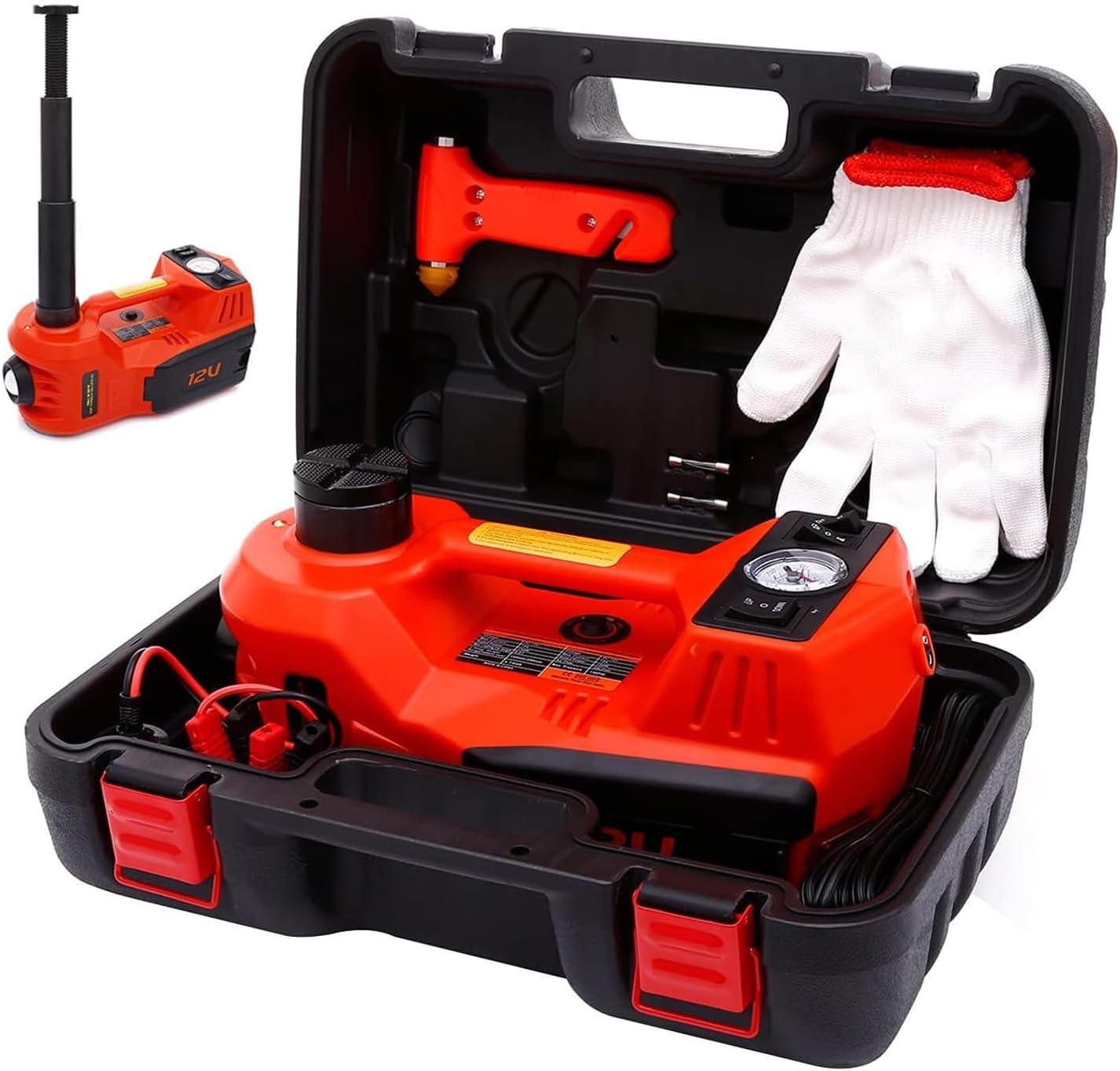
Changing a tire on the roadside is stressful enough without wrestling a manual jack. This one does the lifting for you. Plug it into your 12V outlet, press a button, and it lifts up to 5 tons on its own. You also get a built-in tire inflator, impact wrench, and LED work light, all packed into one case. The lid even flips into a red warning triangle for visibility at night. It turns a dreaded roadside task into something you can handle calmly.
4. Anker USB-C Car Charger (40W, 2-Port)

Charging two phones from one outlet shouldn’t slow either of them down. Anker’s PowerDrive III Duo delivers 40W total, splitting power intelligently between its USB-C and USB-A ports so each device gets its fastest safe charge. Your iPhone hits 50% in under 30 minutes. The compact shell stays low-profile enough to leave plugged in permanently, so it never blocks your cupholder or gearshift. It’s a small upgrade, but one you’ll notice every single time you get in the car.
5. LISEN iPad Holder Car Tablet Mount

Navigation and entertainment stay right where you need them with this mount. It holds any tablet from 4 to 13 inches steady on your dashboard, windshield, or air vent, even over rough roads. A 360-degree ball joint lets you angle the screen exactly how you want it, and a one-touch release pulls your tablet free instantly. Setup takes minutes, and it works with virtually every major tablet brand. For road trips or daily commutes, it keeps your screen exactly in view.
6. Airmoto Tire Inflator Portable Air Compressor

A flat tire stops feeling like an emergency once you’re carrying this. The Airmoto reaches 120 PSI with auto shut-off, so you never have to guess when you’re done. A digital display shows your exact pressure, and a built-in LED flashlight helps if you’re stuck after dark. It runs on a rechargeable USB-C battery, no cord required, and fits easily in your glove box. Cars, motorcycles, bikes, and sports equipment are all covered by this one small device.
7. HOTO Handheld Car Vacuum Cleaner (4-in-1)

Instead of buying four separate car-cleaning tools, you get all of them in one. This cordless vacuum pulls 20,000Pa of suction, strong enough to lift crumbs, pet hair, and dust from tight seat gaps and floor mats. Flip a switch, and it becomes an air blower, tire inflator, or desk duster. It’s slim enough to store in your glove box, so it’s always within reach. For anyone who hates a messy interior, this tool earns its spot in your car.
8. Coverado Car Seat Cushion
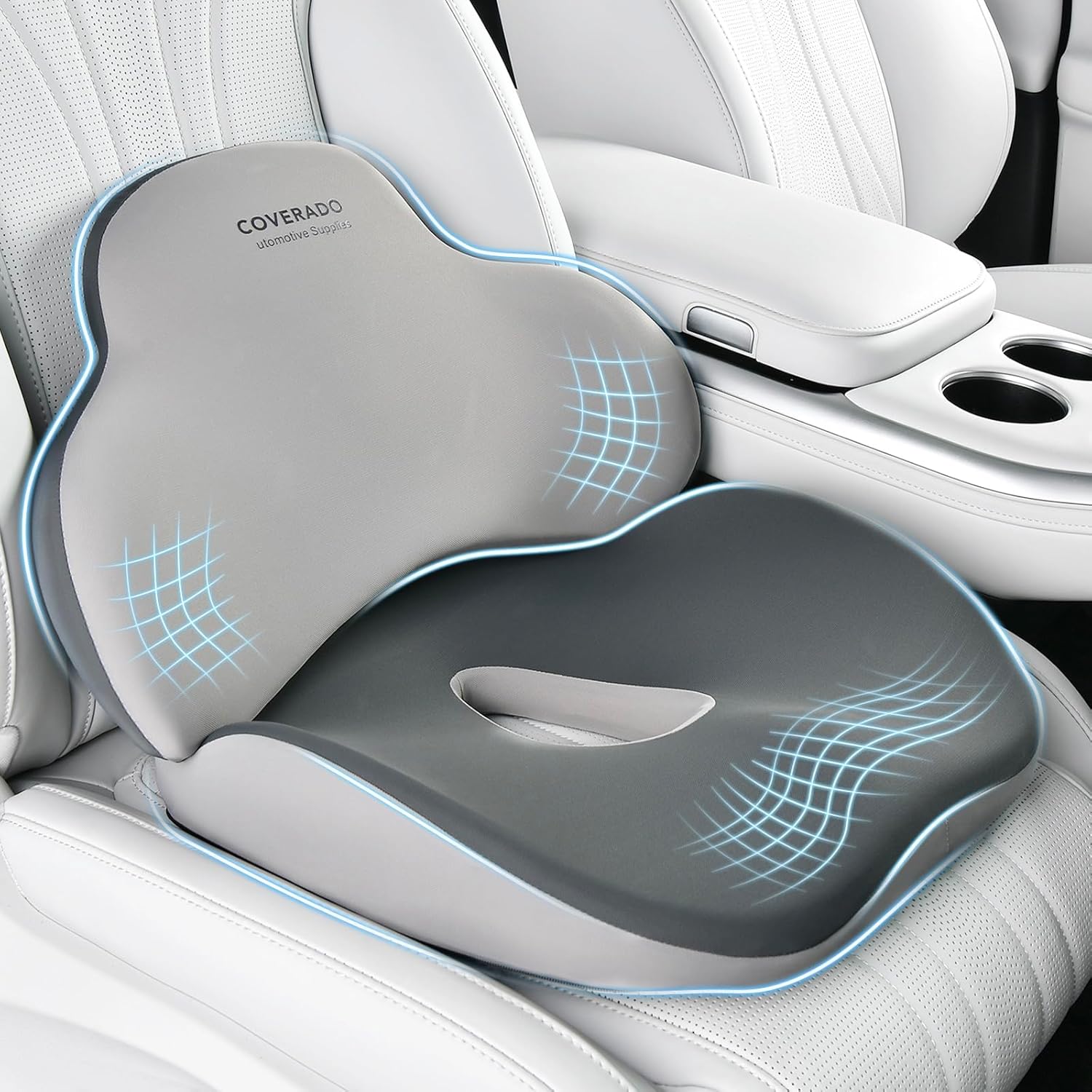
Long drives take a toll on your back, but this cushion softens the blow. High-density memory foam relieves pressure on your tailbone, lower back, and hips, even on hours-long trips. A breathable mesh cover keeps you cool, while a non-slip base keeps the cushion locked in place on your seat. A built-in carry handle makes it easy to move between cars or bring inside. If road trips usually leave you sore, this cushion changes how those drives feel.
9. Govee Car LED Lights (RGB Interior)

Your car’s interior gets a full glow-up in under 10 minutes with this kit. The dual-line RGB strip mounts under your dash and seats, and a built-in mic syncs the lights to your music’s beat. The Govee Home app unlocks 16 million color options, so you can match any mood or setup. A separate control box also lets you adjust settings without touching your phone. It’s an easy way to make your car feel personal, modern, and a little more fun.
10. ANCEL AD310 OBD II Scanner

That check engine light doesn’t have to be a mystery anymore. Plug the ANCEL AD310 into your 16-pin OBD2 port, and it draws power directly from your car, no batteries needed. It reads and clears diagnostic codes in seconds, supporting every OBD2 protocol on 1996-and-newer vehicles, trucks, and SUVs. A clear backlit display makes the codes easy to read even in low light. For anyone who wants answers before heading to a mechanic, this scanner pays for itself fast.
11. Jemluse Wireless CarPlay Adapter

Plugging in your iPhone every drive gets old fast, and this adapter ends that habit for good. It converts your factory wired CarPlay setup into a wireless one, connecting automatically the moment you start your engine after just one initial pairing. An 8-core processor paired with 5.8GHz Wi-Fi keeps navigation, music, and calls running smoothly with no noticeable lag. It works with any iPhone running iOS 10 or later, making it a simple upgrade for a cleaner, cable-free dashboard.
12. Syncwire Bluetooth FM Transmitter (48W)
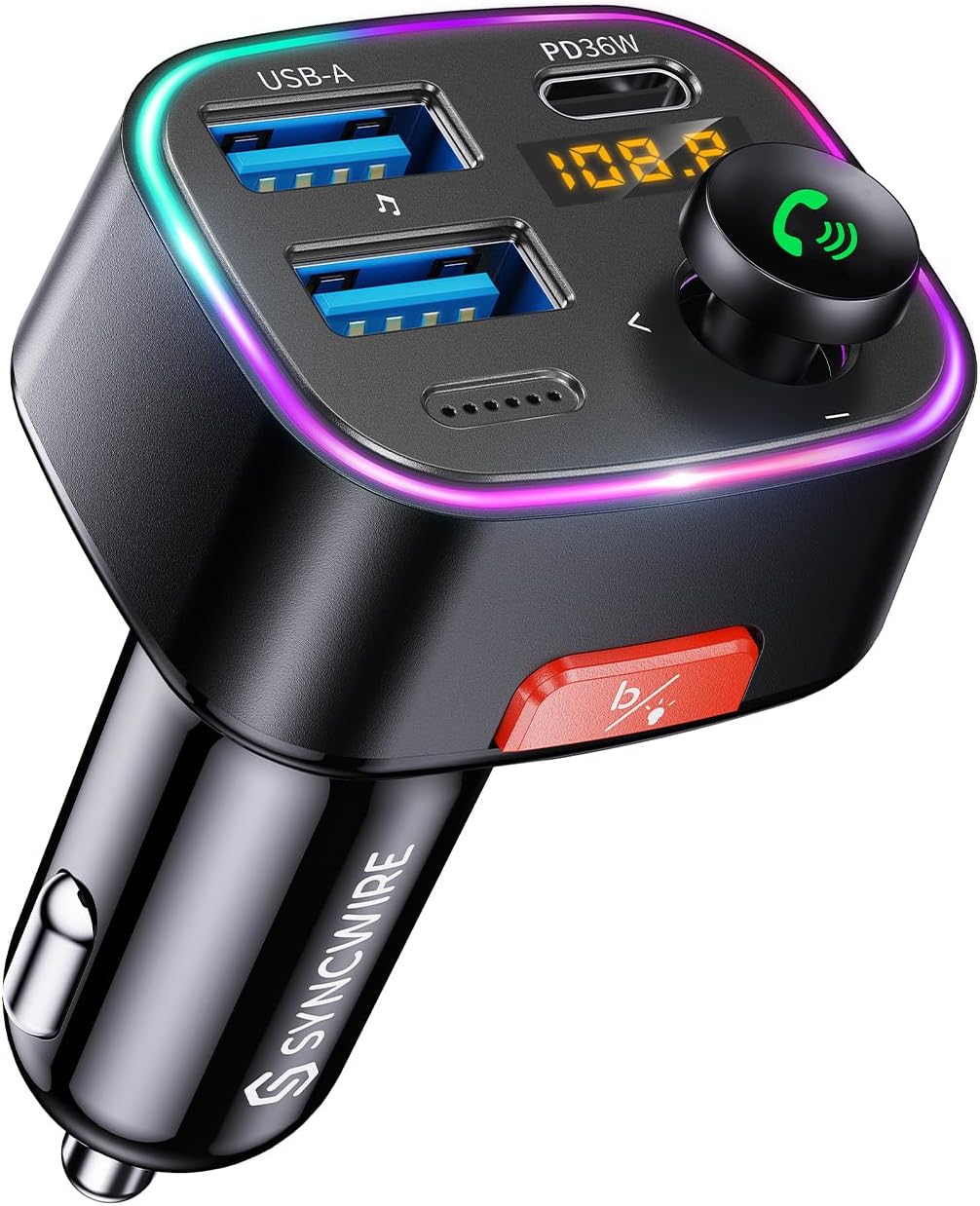
Older cars can feel modern again with this small add-on. Syncwire streams HiFi bass audio to your FM radio over Bluetooth 5.4, so you get wireless music without replacing your stereo. It also charges two devices at once, delivering 48W total through PD USB-C and USB-A ports. The LED display dims automatically at night so it never distracts you while driving. Hands-free calling and USB drive playback round it out, giving your dashboard a real functionality boost.
13. wiiyii OBD2 Gauge HUD Display (P6)

Checking your dashboard means taking your eyes off the road, but this display fixes that. The wiiyii P6 plugs into your OBD2 port and projects your speed, RPM, water temp, voltage, and fuel data directly onto your windshield. It runs in dual OBD2 and GPS modes, includes an overspeed alarm, and needs no subscription to work. It’s compatible with most vehicles from 2008 onward. For drivers who want key stats visible without glancing down, this HUD keeps focus where it belongs.
14. HI-TECH Vortex II Air Cleaning Gun

Your vacuum can only reach so far, but this tool finishes the job. Powered by an air compressor running 60 to 90 PSI, the Vortex II blasts a concentrated, tornado-like vortex into carpet fibers, vents, seat seams, and even engine bays. You can flip a switch to switch between wet and dry cleaning depending on the mess. It clears out dust and debris in seconds that a regular vacuum would miss entirely, making it a serious upgrade for deep car cleaning.
15. Coverado Car Center Console Organizer

If you’re driving with a bench seat, this organiser instantly makes your car feel more functional. It slides right between your seats and adds two cup holders, a storage compartment, a phone holder, and a padded PU leather armrest, all without a single drill hole. Velcro strips hold it firmly in place, so it won’t shift around during turns or stops. For anyone tired of a bare bench seat with nowhere to put anything, this organiser solves that problem instantly.
Drive Smarter Every Day: The Ultimate Buying Guide to the Best Car Gadgets
Introduction
The modern car is no longer just a vehicle — it is a mobile workspace, an entertainment hub, a navigation centre, and increasingly, a safety system on wheels. Yet even the most capable factory-built cars leave meaningful gaps in convenience, connectivity, and protection that the right accessories can fill quickly and affordably. Car gadgets have evolved from novelty items into genuinely useful tools that make every journey safer, more comfortable, and more enjoyable.
Think about the frustrations that define modern driving — dead phone batteries on long trips, blind spots that mirrors cannot fully eliminate, the helplessness of not knowing what that dashboard warning light actually means, the stress of parallel parking in tight urban spaces, or the vulnerability of leaving a vehicle unattended in an unfamiliar location. Each of these problems has a practical, well-designed gadget solution that works reliably and requires minimal technical knowledge to install and use.
Safety is the most compelling reason to invest in quality car gadgets. A dash cam records everything that happens on the road ahead — and sometimes behind — providing objective, time-stamped video evidence in the event of an accident, insurance dispute, or roadside altercation. That footage has saved drivers thousands in fraudulent insurance claims and provided critical evidence in legal proceedings. For fleet operators and rideshare drivers, dash cams have become near-mandatory equipment, and private drivers are adopting them at a rapidly increasing rate as awareness of their value grows.
Beyond safety, car gadgets address the very human need to stay connected without compromising attention to the road. Wireless charging pads designed for car use keep smartphones topped up without cable clutter. Bluetooth adapters bring hands-free calling and music streaming to older vehicles that lack native connectivity. HUD — heads-up display — devices project essential navigation and speed information onto the windscreen at eye level, allowing drivers to absorb critical information without looking down from the road.
Comfort and convenience gadgets transform long drives from endurance tests into genuinely pleasant experiences. Portable vacuum cleaners make interior cleaning effortless between professional details. Tyre pressure monitoring systems provide real-time alerts before a slow puncture becomes a dangerous blowout at motorway speed. Jump starters small enough to fit in a glove compartment have rescued thousands of drivers from a flat battery without the need to wait for roadside assistance. These are not luxury items — they are practical investments that pay for themselves the first time they are genuinely needed.
The car gadget market is large and varied enough to be confusing without clear guidance. Quality varies enormously between products that appear superficially similar, and the wrong choice can mean a device that stops working after a few weeks, produces footage too blurry to be useful as evidence, or creates more distraction than it eliminates. This guide walks you through the main categories, the features that truly matter, and the practical considerations that separate a genuinely useful car gadget from one that ends up in a drawer.
Types of Car Gadgets
Car gadgets span a wide range of functions and form factors. Understanding the main categories helps you identify which types address your actual needs rather than simply adding unnecessary complexity to your driving experience.
Type 1: Dash Cameras
Dash cameras are forward-facing — and increasingly dual-channel front-and-rear — video recorders that mount to the windscreen or rearview mirror and record continuously while the vehicle is in motion. They are among the most universally useful car gadgets available, providing passive protection that requires no action from the driver once installed. Modern dash cams offer 1080p to 4K resolution, wide-angle lenses that capture multiple lanes simultaneously, GPS logging that stamps location and speed data onto recorded footage, night vision for low-light driving, and parking mode that continues recording when the vehicle is stationary. They are well-suited to every type of driver — commuters, long-distance travellers, rideshare and delivery drivers, and anyone who wants objective evidence protection against fraudulent claims or at-fault disputes.
Type 2: Diagnostic and Monitoring Devices
OBD-II (On-Board Diagnostics) adapters plug into the diagnostic port found in virtually every car manufactured after 1996 and connect to a smartphone app via Bluetooth or Wi-Fi. They read and interpret the data that your car’s onboard computer continuously generates — engine fault codes, fuel efficiency, throttle response, battery voltage, coolant temperature, and dozens of other parameters — translating that information into plain-language alerts and real-time dashboards. For drivers who want to understand what a warning light actually means before taking the car to a mechanic, an OBD-II scanner is an invaluable tool that can save significant diagnostic labour costs. More advanced versions track driving behaviour, log trip data, and provide insights into how driving style affects fuel consumption. They are ideal for DIY-minded owners, used car buyers wanting to verify a vehicle’s reported condition, and fleet managers monitoring multiple vehicles.
Type 3: Wireless Charging and Power Accessories
In-car wireless charging mounts combine smartphone mounting and Qi wireless charging in a single device, typically attaching to the air vent, dashboard, or windscreen and automatically gripping the phone when it is placed against the mount. They eliminate the cable clutter of traditional wired charging while keeping the phone visible for navigation use. Multi-port USB car chargers — particularly those supporting USB-C Power Delivery and Qualcomm Quick Charge protocols — allow multiple devices to charge simultaneously at their maximum supported rates. Portable power banks with jump-starting capability extend this category further, providing both device charging and emergency vehicle starting power in a single compact unit. These accessories are particularly valuable for long-distance drivers, families with multiple device users, and anyone who relies heavily on their smartphone for navigation and communication.
Type 4: Heads-Up Display (HUD) Devices
Heads-up display units project driving information — vehicle speed, navigation turn-by-turn directions, speed limit warnings, and sometimes incoming call alerts — onto a transparent film applied to the windscreen or onto a small dedicated reflective panel, positioning the information at the driver’s eye level within their natural forward field of vision. By keeping critical information visible without requiring the driver to look down at the instrument cluster or a mounted phone screen, HUD devices meaningfully reduce the frequency and duration of gaze diversion from the road. They connect to the vehicle via OBD-II port, GPS, or smartphone app depending on the model. HUD devices are particularly valued by motorway drivers covering long distances, those who rely heavily on navigation, and safety-conscious drivers who want to minimise any distraction from the road ahead.
Type 5: Tyre Pressure Monitoring Systems (TPMS)
External TPMS devices replace or supplement standard tyre valve caps with smart sensors that continuously transmit tyre pressure and temperature data to a small dashboard-mounted display unit. Maintaining correct tyre pressure is one of the most consistently neglected aspects of vehicle maintenance, yet underinflated tyres are a leading cause of blowouts, increase fuel consumption, accelerate tyre wear, and reduce braking performance — all risks that a real-time monitoring system effectively eliminates. External TPMS units are compatible with virtually any vehicle regardless of age and require no professional installation. They are an especially practical gadget for drivers who cover high mileages, those who drive in varied climates where temperature changes affect tyre pressure, and owners of older vehicles that do not include factory-fitted tyre pressure monitoring.
Key Features to Look For
Video Resolution and Image Quality
For dash cameras and any other recording device, resolution determines whether captured footage is actually useful as evidence or merely a record that something happened. At 1080p Full HD, footage is sufficiently detailed to capture number plates, facial features, and road signs under good lighting conditions. At 2K or 4K, that detail is preserved in a wider range of lighting conditions including night driving and adverse weather. Wide dynamic range (WDR) or high dynamic range (HDR) processing is equally important — it prevents footage from being washed out by bright sunlight or too dark in shadowed areas, both of which can render otherwise clear footage useless for identification purposes. Never compromise on image quality for a dash cam — it defeats the entire purpose of the device.
Connectivity and Compatibility
The usefulness of most modern car gadgets is significantly enhanced by seamless connectivity — to your smartphone, your vehicle’s data systems, and cloud storage platforms. Bluetooth 5.0 or Wi-Fi connectivity allows real-time data transfer, remote app control, and firmware updates without physical cable connections. GPS integration adds location and speed data to dash cam footage and provides accurate navigation context for HUD devices. Before purchasing any connected car gadget, verify compatibility with your specific smartphone operating system and version, and check that the companion app has strong reviews for stability and regular updates — a gadget with a poorly maintained app quickly becomes frustrating or non-functional as operating systems evolve.
Build Quality and Operating Temperature Range
Car interiors are among the most demanding environments for electronics. Dashboard-mounted devices are exposed to direct sunlight that can raise temperatures well beyond 70°C in summer, and to sub-zero cold in winter. Gadgets with inadequate temperature ratings will develop adhesive failures, screen damage, battery swelling, and circuit failures under these conditions far sooner than quality alternatives. Look for devices that specify an operating temperature range appropriate for your climate, housings made from UV-resistant materials that do not become brittle under prolonged sun exposure, and mounting solutions — particularly suction cups and adhesive mounts — that use heat-resistant materials rated for automotive use.
Ease of Installation and Daily Use
The best car gadget is one you will actually use consistently, and that requires it to be easy to install, easy to operate, and unobtrusive enough that it does not feel like a burden. Assess installation complexity honestly before purchasing — some devices are genuinely plug-and-play while others require routing cables through door seals, tapping into the fuse box, or mounting components in multiple locations. For daily-use devices, controls should be accessible and intuitive without requiring the driver to look away from the road. Automatic functions — such as a dash cam that starts recording when the engine starts, or a TPMS that alerts only when pressure falls outside safe parameters — are significantly more practical than devices requiring manual activation every time you drive.
Things to Consider Before Buying
Compatibility with Your Vehicle: Not all car gadgets are universally compatible. OBD-II diagnostic devices work with cars manufactured after 1996 in most markets, but some manufacturers use proprietary protocols that limit third-party adapter functionality. Wireless charging mounts require a phone with Qi wireless charging support. External TPMS units must be compatible with your specific tyre valve type. Always verify compatibility with your specific vehicle make, model, year, and your smartphone model before purchasing — manufacturers typically publish compatibility lists that are worth checking rather than assuming universality.
Mounting Position and Windscreen Obstruction: In many jurisdictions, attaching devices to the windscreen in a way that obstructs the driver’s forward field of vision is a traffic offence. Before choosing a mounting solution, research the specific regulations in your region regarding windscreen-mounted devices. Many drivers opt for dashboard adhesive mounts or rearview mirror mounts as compliant alternatives to suction-cup windscreen mounts. Regardless of legality, the mounting position should not block any critical sightlines and should position the device or its display in a location that can be checked with minimal eye movement from the forward road view.
Power Source and Wiring: Most car gadgets draw power from the 12V cigarette lighter socket, which is the most convenient and reversible power source but has limitations — it typically cuts power when the ignition is off, limiting dash cam parking mode functionality, and a single socket shared between multiple devices can become overloaded. Hardwiring a dash cam to a fused ignition-switched or constant power source in the fuse box is the cleanest and most reliable installation method but requires basic electrical knowledge or professional fitting. For parking mode functionality specifically, a constant power source or a dedicated dash cam battery pack is essential — the device needs power even when the vehicle is unattended.
Data Storage and Management: Dash cameras and other recording devices generate significant volumes of data. Most use micro-SD cards for local storage, operating on a loop-recording system that overwrites the oldest footage when the card is full — ensuring recent footage is always available without manual management. Card quality matters significantly in this application: use cards rated as Class 10 or UHS Speed Class 3 (U3) at minimum, specifically from manufacturers that certify their cards for continuous loop recording in automotive environments. Cheap, unrated cards fail rapidly under the thermal stress and constant write cycles of dash cam operation. Some premium dash cams also offer cloud backup via Wi-Fi, which automatically uploads important flagged footage to a remote server for permanent preservation.
Step-by-Step Buying Guide
1. Research Your Needs
Before browsing products, identify the one or two specific problems you want a car gadget to solve. Are you primarily motivated by insurance and accident protection — in which case a quality dual-channel dash cam is the priority? Are you frustrated by poor connectivity in an older vehicle — in which case a Bluetooth FM transmitter or wireless charging mount addresses that directly? Do you want better visibility into your vehicle’s health and running costs — in which case an OBD-II monitor is the most targeted solution? Buying gadgets to solve defined problems produces far more satisfaction than buying based on feature lists or novelty, and prevents the common experience of purchasing something impressive-sounding that turns out to be irrelevant to how you actually drive.
2. Compare Products
With your target category identified, compare specific models using dedicated automotive technology review publications, independent YouTube review channels that conduct real-world testing — not just unboxing content — and verified owner reviews filtered for long-term reliability feedback. For dash cameras specifically, look for reviews that include actual low-light and night footage samples rather than only daytime demonstration clips, since night recording quality varies far more dramatically between models than daytime performance. For OBD-II devices, check which specific parameters and protocols are supported for your vehicle. For any connected device, evaluate the companion app separately from the hardware — an excellent piece of hardware paired with an unstable or poorly supported app is a frustrating combination.
3. Finalise Your Choice
Confirm warranty terms before completing your purchase — reputable car gadget brands typically offer twelve to twenty-four months of coverage, and some extend this for products registered through their official channels. Verify that customer support is accessible and responsive by checking community forums and support review scores before buying, as post-purchase support quality varies significantly between brands. Purchase from authorised retailers or established automotive accessories stores rather than unverified marketplace sellers, particularly for electronics where counterfeit and specification-misrepresenting products are prevalent. Confirm the return policy allows sufficient time — ideally thirty days — to evaluate the device in real driving conditions before the return window closes.
Maintenance Tips
Clean mounting surfaces and adhesives regularly: Suction cup and adhesive mounts accumulate dust and skin oils over time that progressively weaken their grip — a dash cam that falls from the windscreen while driving is both a distraction and a potential hazard. Clean suction cups with warm soapy water monthly, allow them to dry completely before remounting, and check adhesive mounts for any sign of lifting at the edges. In hot climates, inspect mounts more frequently as heat accelerates adhesive degradation and makes suction cups more prone to failure.
Format storage cards in-device regularly: Micro-SD cards used in dash cameras and other recording devices should be formatted directly within the device — not via a computer — every one to three months. In-device formatting optimises the file structure for the device’s specific recording pattern, reducing the risk of file corruption and card errors that can result in footage gaps precisely when they are most needed. Also replace SD cards entirely every twelve to eighteen months of continuous use, as the constant write cycles of loop recording wear cards beyond their reliable lifespan regardless of brand.
Keep lenses and sensors clean: A dash camera lens obscured by road film, insect residue, or interior condensation will produce footage significantly less useful than its resolution specification suggests. Clean exterior-facing lenses weekly with a microfibre cloth, and address interior fogging by ensuring the vehicle’s ventilation system is functioning correctly and by running a dehumidifier or moisture absorber in the cabin during cold, damp weather. For TPMS sensors, inspect the valve cap sensors periodically for corrosion or physical damage, as damaged sensors can produce inaccurate readings or fail to transmit data reliably.
Common Issues and Troubleshooting
Dash cam stops recording mid-journey: The most common cause is a failing or incompatible micro-SD card. Replace the card with a fresh, high-endurance automotive-rated card and format it in-device before use. Also check whether the device has overheated — many dash cams include thermal protection that halts recording to prevent component damage. Improving cabin ventilation or repositioning the camera away from direct sunlight exposure resolves heat-related recording interruptions.
OBD-II adapter not connecting to app: Confirm that the adapter is fully seated in the OBD-II port — partial insertion is a common cause of connection failure. Check that Bluetooth or Wi-Fi is enabled on your phone and that the app has been granted the necessary location and connectivity permissions in your phone’s settings. Some OBD-II adapters require the vehicle ignition to be in the accessory or run position before the adapter powers on and becomes discoverable. If connection issues persist, check whether a firmware update is available for the adapter through the manufacturer’s app or website.
Wireless charging mount not charging phone: Verify that your phone case is not too thick for wireless charging to function — cases thicker than approximately 3mm, or cases containing metal plates or magnetic inserts, block wireless charging completely. Confirm the mount is receiving adequate power from the 12V socket by checking whether other devices charge normally from the same socket. Some wireless charging mounts require a minimum power input that standard low-output USB sockets cannot provide — use a dedicated high-output car charger as the power source for the mount.
HUD display difficult to read in bright sunlight: Reflective HUD panels and windscreen-projected displays are inherently more difficult to read under direct, intense sunlight — a fundamental optical limitation of the technology. Adjust the brightness setting to its maximum level and experiment with the projection angle, as small adjustments can significantly improve visibility under different lighting conditions. Some HUD devices include anti-glare filters as accessories that can improve daytime readability. Polarised sunglasses can make certain HUD display types — particularly those using LCD panels — invisible or heavily distorted, so use non-polarised lenses when relying on a HUD for navigation information.
Final Words
The right car gadget does not demand your attention — it quietly earns its place by making every drive a little safer, a little more connected, and a little more convenient than it would otherwise be. Whether you are protecting yourself with a dash cam that records everything while you focus on the road, monitoring your vehicle’s health with a diagnostic adapter that translates complex data into plain-language alerts, or simply keeping your phone charged and your hands free throughout your commute, the right gadget integrates seamlessly into your driving life until it feels indispensable.
Start with the problem you actually want to solve, choose a product whose core function it performs excellently rather than one that promises everything superficially, and invest in quality where it matters — particularly image quality for recording devices, connectivity reliability for wireless accessories, and build durability for anything mounted where summer heat and direct sunlight will test it daily.
Drive smarter, not harder. The right car gadget is out there waiting to make every journey better — and once you find it, you will wonder how you ever managed without it.