

Take your woodworking projects to the next level with the best table saws designed for accuracy, power, and safety. A high-quality table saw makes cutting hardwood, plywood, and trim faster, smoother, and more precise. Whether you’re a beginner building DIY projects or a professional craftsman working in a busy shop, choosing the best table saw can improve both efficiency and results. Modern table saws offer powerful motors, reliable fences, adjustable blades, and advanced safety features to help you work with confidence. In this guide, we highlight the best table saw options for every budget and skill level. Compare top-rated models, explore key features, and find the ideal saw for your workshop. Invest in the best table saw today and enjoy cleaner cuts, greater control, and outstanding performance on every project.
Top 5 Table Saws:
1. Milwaukee 2736 Table Saw

Cordless table saws rarely deliver corded-level power, but Milwaukee changed that game entirely. Milwaukee’s 2736 impresses with its POWERSTATE Brushless Motor, matching a 15A corded circular saw’s performance. Working on jobsites, you’ll appreciate never hunting for outlets again. Cutting full 4×8 plywood sheets becomes effortless with its generous 24-1/2″ rip capacity. Similar cordless models often struggle here, making this advantage significant for professionals. REDLINK PLUS Intelligence actively protects your investment during demanding, heavy-duty applications. Overload protection saves both your tool and battery from costly damage. All-metal construction handles rough jobsite conditions better than plastic-framed competitor models. Onboard storage keeps your guard, riving knife, push stick, fence, and miter gauge organized and accessible. Anti-kickback pawls add a critical safety layer during demanding rip cuts. Rack and pinion fence adjustment delivers consistently square, accurate results every single time. Purchasing this bare tool means budgeting separately for batteries and a charger. Overall, professionals wanting cordless freedom without sacrificing cutting performance will find this saw genuinely transformative. Compatible across Milwaukee’s entire M18 system, this investment keeps paying dividends.
2. DEWALT 7491 Table Saw
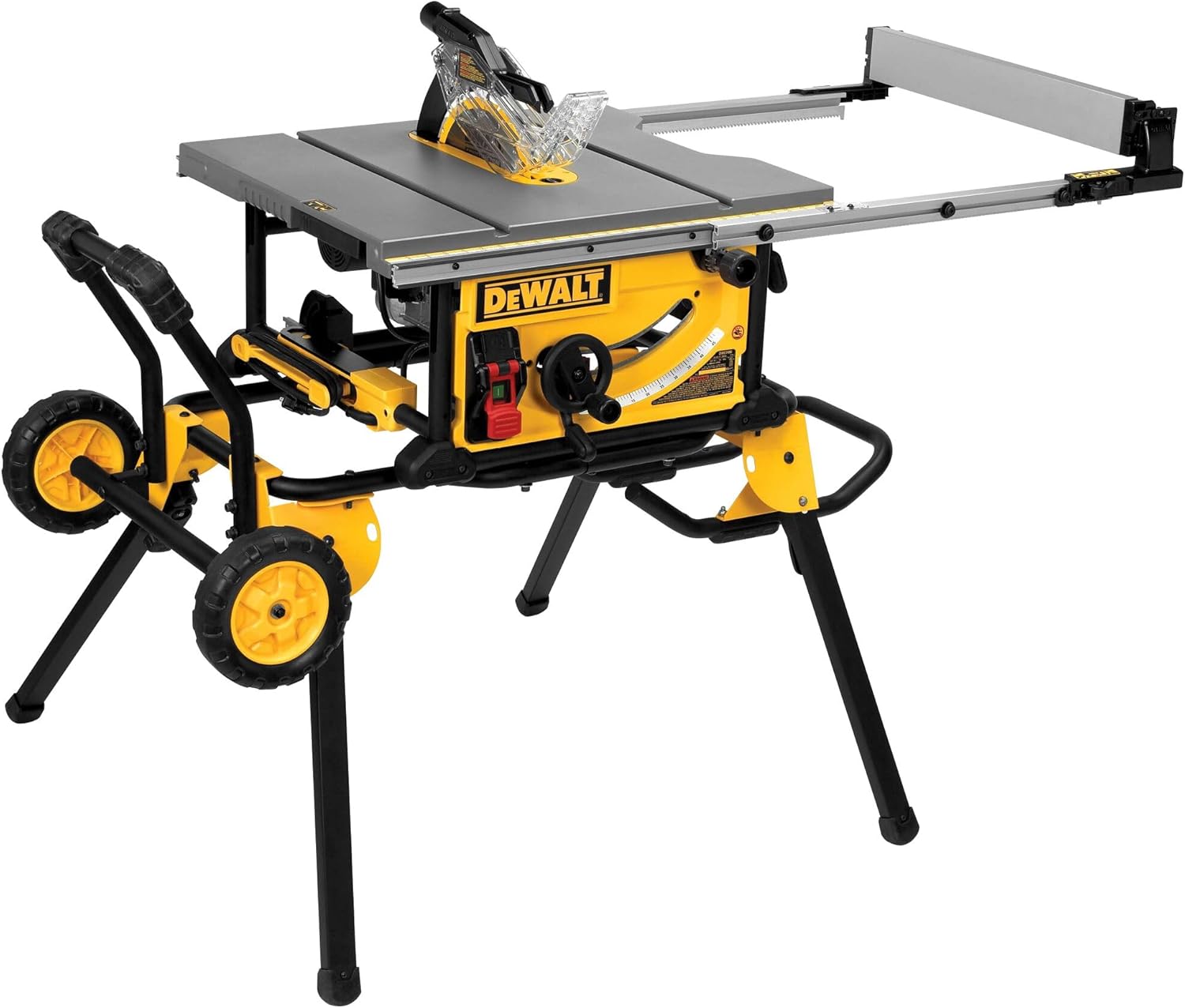
Serious woodworkers deserve a saw that keeps pace with their ambitions, and DEWALT delivers exactly that. DEWALT’s 7491 Table Saw arrives ready to tackle demanding jobsite challenges immediately. Your most ambitious cuts become manageable with its impressive 32-1/2″ rip capacity. Hardwood floor installers, cabinet makers, and deck builders will each find tremendous value here. Competing saws rarely match this versatility across so many professional trades. Powering through dense hardwoods, its 15-amp motor spins blades at 4,800 RPM effortlessly. Rack-and-pinion telescoping fence adjustments feel smooth, fast, and remarkably accurate every time. Setup and breakdown become surprisingly quick with its purpose-built rolling stand design. Telescoping fence rails retract, creating a compact, easily transportable package between worksites. Dust stays controlled through a 2-1/2″ collection port connecting directly to standard vacuums. Onboard storage keeps your blade guard, riving knife, miter gauge, wrenches, and push stick perfectly organized. Buyers should note that this package requires a separate purchase for extension tables on wider projects. Combined, these features make this saw exceptionally well-rounded for professionals and serious hobbyists alike. Rolling mobility truly sets this model apart from stationary competitors.
3. SKILSAW SPT99 Table Saw
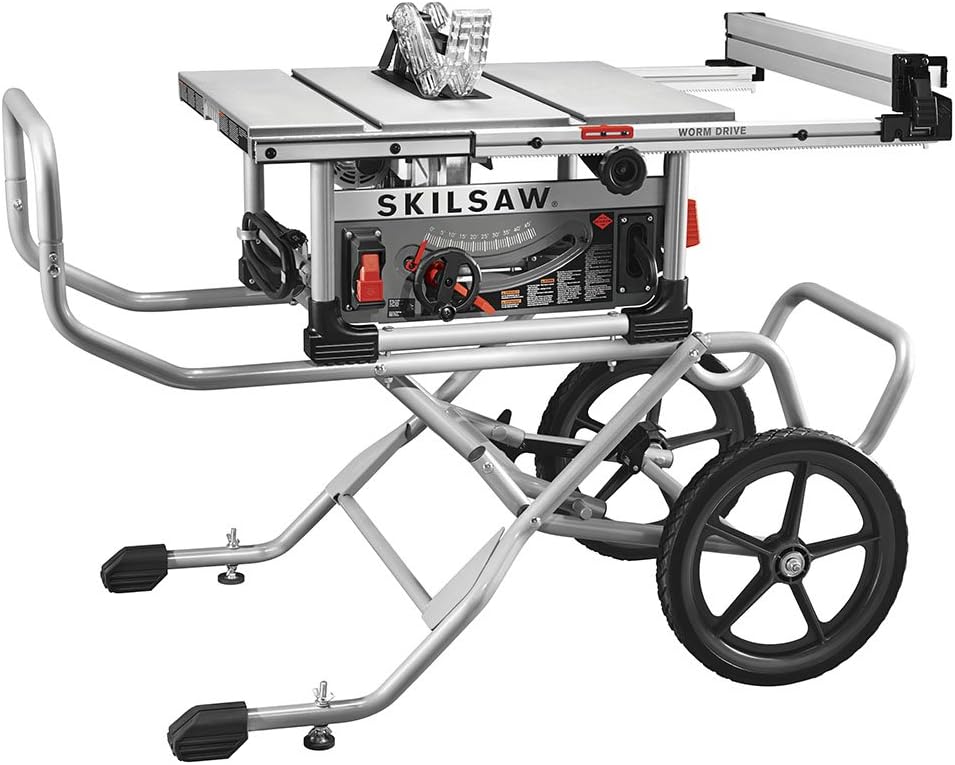
Worm drive technology has long dominated circular saws, and SKILSAW finally brings that legendary power to table saws. SKILSAW’s SPT99 immediately separates itself from conventional table saw competitors with superior torque delivery. Your toughest plywood sheets and dense 4x lumber surrender quickly under this machine’s aggressive cutting action. Few portable saws match its impressive 3-5/8 inch depth-of-cut capability at full capacity. Competing jobsite models often sacrifice torque for portability, but this saw refuses that compromise. SKILSAW’s patented Dual-Field Motor runs dramatically cooler, enabling longer, harder work sessions without performance degradation. Rack-and-pinion fence adjustments feel precise, smooth, and completely reliable during demanding rip cuts. Jobsite mobility reaches new heights with rugged 16-inch wheels conquering stairs and uneven terrain effortlessly. Outfeed and left support extensions allow solo operators to handle oversized materials independently and safely. Its 30-1/2 inch rip capacity handles most standard sheet materials without requiring additional support equipment. Dust management, however, relies on a basic port elbow rather than a more comprehensive integrated collection system. Overall, professionals wanting worm drive performance in portable form will find this saw genuinely revolutionary. Powerful torque, smart cooling, and exceptional mobility make this purchase extremely worthwhile.
4. BOSCH GTS15 Table Saw

Safety and smart engineering rarely combine this elegantly in a jobsite table saw. BOSCH’s GTS15 redefines what professionals should expect from portable cutting equipment today. Your blade stops completely within three seconds, dramatically reducing dangerous downtime between cuts. Competing saws often lack this convenience brake feature, making BOSCH’s solution genuinely impressive. Soft-start circuitry manages motor startup intensity, minimizing frustrating circuit breaker trips on busy jobsites. Electronically regulated speed maintains consistent cutting performance even under demanding, heavy loads. Color-coded rack-and-pinion fence adjustments make accurate setup faster than virtually any rival model. ClampZone areas transform your tabletop into a valuable secondary workspace during complex, multi-stage projects. Smart Guard System delivers unobstructed cut visibility while anti-kickback pawls and riving knife actively protect operators. Gravity-Rise wheeled stand enables single-action setup and breakdown, saving precious time between locations. Its 32-1/8 inch rip capacity handles most standard sheet materials and 4×4 lumber in single passes. Running at 3,800 RPM, this saw trails slightly behind competitors offering higher no-load speeds. Collectively, these intelligent features position this saw above most similarly priced jobsite competitors. Innovative safety technology makes this model worth every dollar spent.
5. Metabo HPT C10 Table Saw

Rip capacity often separates good table saws from truly exceptional ones, and Metabo HPT wins decisively here. Metabo HPT’s C10 delivers an outstanding 35 inches rightward and 22 inches leftward, surpassing most jobsite competitors significantly. Your woodworking projects benefit from a robust 15-amp motor spinning at 4,500 RPM consistently. Hardwoods, composites, and dimensional lumber all surrender cleanly under this machine’s precise cutting action. Front-mounted blade height and angle adjustments make setup faster and more intuitive than rival configurations. Competing saws frequently bury these controls awkwardly, frustrating operators during critical mid-project adjustments. Outfeed support stabilizes longer materials safely, enabling solo operators to handle oversized workpieces confidently. Japanese engineering traditions shine through every precisely machined component and thoughtfully designed feature. Fold-and-roll stand design enables quick, stable setup across diverse jobsite environments without hassle. Each kit arrives fully equipped, including a carbide-tipped blade, guard assembly, anti-kickback pawls, miter gauge, and multiple wrenches. Weighing 96 pounds, transportation demands more physical effort compared to lighter competing portable models. Collectively, these features establish this saw as exceptional value for serious woodworking professionals.
Best Table Saw: The Complete Buying Guide for Woodworkers and DIY Enthusiasts
Introduction
A table saw is widely regarded as the heart of any woodworking shop. Whether you are a beginner building simple home projects, a DIY enthusiast upgrading your workshop, or a professional woodworker creating custom furniture, a quality table saw can dramatically improve the accuracy, speed, and quality of your work. Few woodworking tools offer the versatility and precision that a table saw provides.
The primary purpose of a table saw is to make straight, accurate cuts in wood and other materials. Unlike handheld saws, which rely heavily on user control, a table saw keeps the blade fixed while the material moves across the cutting surface. This design results in cleaner cuts, better consistency, and greater efficiency.
Modern table saws have evolved significantly over the years. Today’s models feature powerful motors, advanced safety systems, precision fence mechanisms, and dust collection solutions that make woodworking easier and safer. These improvements allow users to tackle everything from simple rip cuts to complex joinery with confidence.
One of the biggest advantages of owning a table saw is versatility. It can handle a wide range of tasks including ripping boards, crosscutting lumber, cutting dadoes, beveling edges, and processing large sheet goods. This versatility reduces the need for multiple specialized tools.
For hobbyists, a table saw can help transform creative ideas into finished projects with professional-looking results. For contractors, it improves productivity and accuracy on job sites. For professional woodworkers, it serves as a reliable workhorse capable of handling demanding production schedules.
However, selecting the best table saw can be challenging. There are numerous types, sizes, and configurations available, each designed for different applications. Choosing the wrong model can lead to frustration, wasted money, and limitations in future projects.
Factors such as motor power, rip capacity, portability, workspace size, safety features, and budget all play important roles in determining which table saw is right for you. Understanding these factors before making a purchase can save you both time and money.
Another important consideration is long-term value. A quality table saw can last for many years when properly maintained. Investing in the right model today can provide reliable performance throughout countless woodworking projects.
Safety should also be a major priority. Table saws are powerful machines, and modern safety features such as riving knives, blade guards, anti-kickback pawls, and flesh-detection technology can significantly reduce the risk of accidents.
Whether you plan to build furniture, install cabinetry, perform home renovations, or start a woodworking business, the right table saw can become one of the most valuable tools in your workshop.
This comprehensive buying guide explores the different types of table saws, essential features to consider, important buying factors, maintenance tips, and common troubleshooting advice. By the end, you’ll have a clear understanding of what to look for when choosing the best table saw for your needs.
Types of Table Saws
Table saws come in several different categories. Each type offers unique benefits and is suited for specific users and applications.
Portable/Jobsite Table Saws
Portable table saws are designed for mobility and convenience. They are lightweight compared to larger models and often include folding or wheeled stands for easy transportation.
These saws typically use 15-amp motors that provide enough power for most construction and DIY applications. While they may not offer the same precision as larger stationary saws, they are excellent for users who need flexibility.
Best For:
- Contractors
- Homeowners
- DIY enthusiasts
- Renovation projects
- Small workshops
Advantages:
- Lightweight design
- Easy transportation
- Affordable pricing
- Simple storage
Contractor Table Saws
Contractor saws are larger and heavier than portable models. They provide greater stability, larger work surfaces, and improved cutting capacity.
These saws often feature more robust fence systems and stronger motors, making them suitable for serious woodworking projects.
Best For:
- Advanced hobbyists
- Furniture makers
- Small woodworking businesses
- Frequent workshop use
Advantages:
- Improved accuracy
- Larger cutting capacity
- Better stability
- More powerful motors
Hybrid Table Saws
Hybrid table saws bridge the gap between contractor saws and cabinet saws. They combine many professional features with a more affordable price point.
These models often include enclosed cabinets, improved dust collection, and enhanced vibration control.
Best For:
- Dedicated hobbyists
- Small professional shops
- Intermediate to advanced users
Advantages:
- Better dust collection
- Reduced vibration
- Professional-level performance
- Lower cost than cabinet saws
Cabinet Table Saws
Cabinet saws represent the highest level of table saw performance. They feature fully enclosed steel cabinets, cast iron work surfaces, and powerful motors ranging from 3 to 5 horsepower or more.
These saws are designed for maximum precision, durability, and production capacity.
Best For:
- Professional woodworkers
- Commercial workshops
- Furniture manufacturers
- High-volume production environments
Advantages:
- Exceptional power
- Outstanding accuracy
- Superior durability
- Long service life
Key Features to Look For
Motor Power
Motor power directly impacts cutting performance. More powerful motors allow smoother cuts through thick hardwoods and reduce the likelihood of bogging down under heavy loads.
For most homeowners, a 15-amp motor is sufficient. Professionals working with dense hardwoods may prefer 3-5 horsepower cabinet saws.
Rip Capacity
Rip capacity refers to the maximum distance between the blade and the fence.
A larger rip capacity allows you to cut wider boards and sheet goods more easily.
Recommended capacities:
- 24 inches: Basic DIY projects
- 30 inches: General woodworking
- 36-52 inches: Professional cabinetry and furniture making
Fence Quality
The fence is one of the most critical components of a table saw.
A high-quality fence should:
- Lock securely
- Remain parallel to the blade
- Adjust smoothly
- Resist deflection
An inaccurate fence can ruin cuts and create safety hazards.
Blade Adjustment System
Easy blade height and bevel adjustments improve workflow and accuracy.
Look for systems that provide:
- Smooth operation
- Precise settings
- Minimal backlash
- Clear measurement indicators
Safety Features
Modern safety technology can greatly reduce accidents.
Important safety features include:
Blade Guards
Protect users from accidental blade contact.
Riving Knives
Reduce kickback by keeping the kerf open behind the blade.
Anti-Kickback Pawls
Help prevent material from being thrown toward the operator.
Emergency Stop Switches
Allow quick machine shutdown during emergencies.
Flesh-Sensing Technology
Premium systems can stop the blade almost instantly upon contact with skin.
Dust Collection
Woodworking generates large amounts of dust.
Effective dust collection:
- Improves visibility
- Protects respiratory health
- Keeps the workspace cleaner
- Reduces cleanup time
Enclosed cabinet designs generally offer superior dust management.
Build Quality
Durable materials improve performance and longevity.
Look for:
- Cast iron tables
- Heavy-duty trunnions
- Precision-machined components
- Steel frames
Quality construction reduces vibration and improves accuracy.
Things to Consider Before Buying
Workspace Requirements
Table saws require adequate space for safe operation.
Consider:
- Machine footprint
- Infeed clearance
- Outfeed clearance
- Storage needs
- Dust collection equipment
Small garages may be best suited for portable or contractor saws.
Ease of Use
Beginners should prioritize:
- Clear instructions
- Easy adjustments
- Good safety systems
- Simple assembly
Experienced users may prioritize customization and advanced capabilities.
Electrical Requirements
Portable saws typically run on standard household outlets.
Cabinet saws often require:
- 220V power
- Dedicated circuits
- Professional installation
Verify your electrical setup before purchasing.
Warranty and Customer Support
A strong warranty reflects manufacturer confidence.
Look for:
- Multi-year coverage
- Accessible replacement parts
- Responsive customer service
- Strong brand reputation
Pros and Cons
| Pros | Cons |
|---|---|
| Delivers highly accurate cuts | Can be expensive |
| Increases productivity | Requires workspace |
| Extremely versatile | Learning curve for beginners |
| Handles large projects efficiently | Safety precautions necessary |
| Long-term investment | Dust collection may require additional equipment |
Step-by-Step Buying Guide
1. Research Your Needs
Start by defining your primary woodworking goals.
Ask yourself:
- What projects will I build?
- How often will I use the saw?
- Do I need portability?
- What materials will I cut?
Understanding your needs helps eliminate unsuitable options.
2. Compare Products
Once you’ve narrowed your options, compare:
- Motor power
- Rip capacity
- Fence quality
- Safety features
- Build quality
- Warranty coverage
- Customer reviews
Focus on long-term value rather than simply choosing the cheapest model.
3. Finalize Your Choice
Before purchasing:
- Confirm workspace compatibility
- Check electrical requirements
- Review warranty details
- Compare retailer support policies
Buying from reputable sellers often provides better service and easier returns.
Maintenance Tips
Tip 1: Clean the Blade Regularly
Pitch and resin buildup reduce cutting efficiency.
Use appropriate blade cleaners to maintain performance and extend blade life.
Tip 2: Keep the Table Surface Clean
Dust and debris can affect material movement and cutting accuracy.
Regular cleaning helps maintain smooth operation.
Tip 3: Check Alignment Frequently
Periodically verify alignment between:
- Blade
- Fence
- Miter slots
Proper alignment improves both safety and cut quality.
Tip 4: Lubricate Moving Components
Follow manufacturer recommendations for lubricating:
- Height adjustments
- Bevel mechanisms
- Trunnions
- Pivot points
Proper lubrication reduces wear and improves operation.
Tip 5: Inspect Safety Features
Regularly inspect:
- Blade guards
- Riving knives
- Switches
- Power cords
Replace damaged components immediately.
Common Issues and Troubleshooting
Burn Marks on Wood
Possible causes:
- Dull blade
- Dirty blade
- Fence misalignment
- Feeding material too slowly
Solution:
Clean or replace the blade and verify alignment.
Excessive Vibration
Possible causes:
- Loose hardware
- Damaged blade
- Uneven floor surface
Solution:
Tighten fasteners and inspect blade condition.
Inaccurate Cuts
Possible causes:
- Fence calibration issues
- Blade alignment problems
- Worn components
Solution:
Recalibrate settings and inspect for wear.
Motor Overheating
Possible causes:
- Continuous heavy-duty operation
- Dull blade
- Poor ventilation
Solution:
Allow cooling time and ensure proper airflow.
Poor Dust Collection
Possible causes:
- Clogged hose
- Full collection bag
- Air leaks
Solution:
Clean the system and check all connections.
Final Words
Choosing the best table saw can significantly improve your woodworking experience, project quality, and overall productivity. Whether you are a beginner setting up your first workshop or a professional upgrading your equipment, the right table saw is one of the most valuable investments you can make. Focus on selecting a model that matches your budget, workspace, and project requirements while prioritizing accuracy, safety, durability, and ease of use. By carefully evaluating motor power, rip capacity, fence quality, and safety features, you can confidently choose a table saw that will deliver reliable performance for years to come. A well-chosen table saw doesn’t just cut wood—it helps turn ideas into reality with precision and efficiency.