
“Missing important notifications, inaccurate health tracking, and disappointing battery life are silently frustrating millions of smartwatch owners every single day. Today, we test the best smartwatches available, delivering accurate health monitoring, seamless connectivity, and stunning displays that genuinely transform how you manage fitness, productivity, and daily communication from your wrist.”
Top 5 Smartwatches:
1. Apple Watch Series 11

iPhone users just received the most compelling Apple Watch upgrade in years. Apple Watch Series 11 adds a significantly longer battery life over its predecessor alongside 5G cellular support without any price increase — making it an almost must-buy for iPhone users needing a new wearable. You monitor your health across heart rate, blood oxygen, crash detection, and a new hypertension alert system that analyzes pulse wave velocity to detect patterns suggesting chronic high blood pressure over 30-day monitoring periods. Despite lacking dual-frequency GPS, real-world tracking performance remains excellent for most outdoor exercisers — matching chest strap accuracy during steady-state running sessions in independent testing. watchOS 26 introduces Workout Buddy, an Apple Intelligence-powered feature delivering spoken summaries of your last mile and Activity Ring status during active training sessions. Reinforced glass coating improves durability over Series 10, handling daily bumps and scrapes with greater confidence during active outdoor use. Deep iPhone integration delivers notification management, messaging, and app interactions that Android-paired Samsung Galaxy Watch Ultra and Google Pixel Watch 4 competitors cannot fully replicate. What we love most is how seamlessly Apple Watch Series 11 disappears into daily life — health monitoring, fitness tracking, and communication handled effortlessly from your wrist. Sleep tracking still trails dedicated sleep-focused competitors like WHOOP 5.0 and Garmin in depth and coaching quality. Choose Apple Watch Series 11 when deep iPhone integration, comprehensive health monitoring, and the world’s most polished smartwatch experience define your wrist-worn priority.
2. Samsung Galaxy Watch Ultra
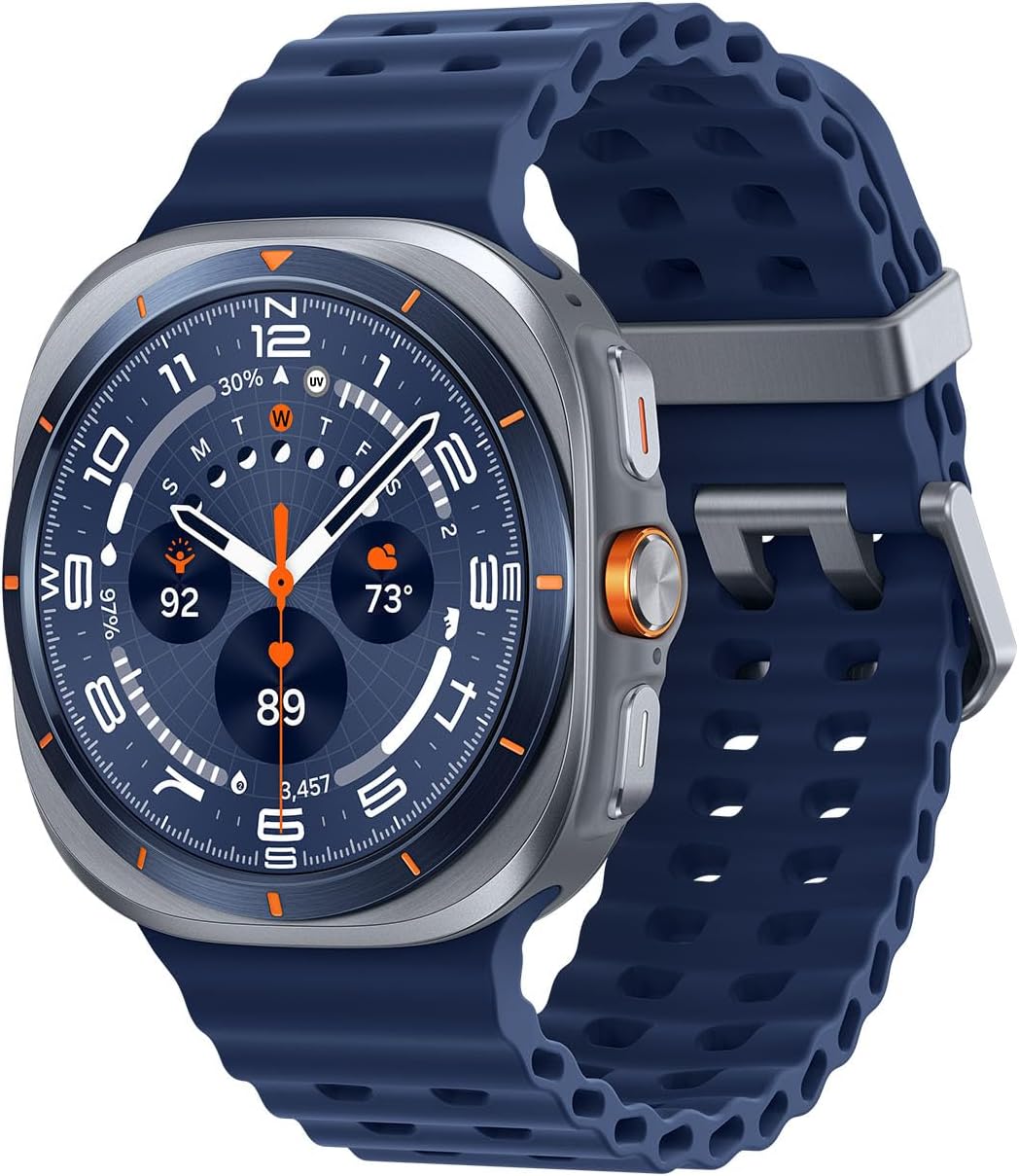
Rugged adventure just met premium smartwatch performance — and the result is extraordinary. Samsung Galaxy Watch Ultra 2025 features a Grade 4 titanium squircle case with sapphire glass, MIL-STD-810 certification, and water resistance to 10 meters, launching in July 2025 as Samsung’s definitive flagship for outdoor athletes. You train with confidence knowing Consumer Reports rated its fitness tracking accuracy superior to most tested smart wearables, with excellent GPS, heart rate, and pulse oximeter measurements across demanding outdoor activities. Samsung Health supports over 100 workout types, and the 3nm Exynos W1000 processor keeps the interface responsive mid-workout when checking heart rate zones matters most. A 590mAh battery delivers up to 48 hours during intense use and 100 hours in power-saving mode — dramatically outlasting Apple Watch Series 11 and Google Pixel Watch 4 on demanding multi-day adventures. Quick-release band system swaps sport bands to dress options in seconds, covering gym sessions, outdoor adventures, and formal occasions from one wrist. Body composition measurement using bioelectrical impedance adds a unique health metric that neither Apple Watch nor Pixel Watch 4 currently offers. Double Pinch gesture occasionally activates accidentally during physical activities, and LTE battery drain runs noticeably higher than Bluetooth-only operation. Choose Galaxy Watch Ultra when titanium-tough durability, class-leading battery life, and precise multi-sport tracking define your ultimate smartwatch.
3. Google Pixel Watch 4

Android smartwatches finally have their definitive champion. Google Pixel Watch 4 adds several smart updates while keeping the same price as its predecessor, earning recognition as the best all-round Wear OS smartwatch available for Android users. You experience a stunning Actua 360 AMOLED LTPO display hitting 3,000 nits peak brightness — reading comfortably in direct sunlight where Samsung Galaxy Watch Ultra and Apple Watch Series 11 occasionally struggle. Satellite SOS capability contacts emergency services when off-grid, complemented by fall detection and an experimental loss-of-pulse feature that automatically calls for help in critical situations. Snapdragon W5 Gen 2 chipset delivers faster app launches and smoother Wear OS 6.0 navigation than previous Pixel Watch generations managed during daily operation. Repairable design lets you swap the battery and display through a genuinely straightforward process — a forward-thinking sustainability feature no competing smartwatch currently offers. Fitbit integration delivers advanced training metrics including Cardio Load, Daily Readiness Score, and running efficiency data that outpace Samsung Health’s coaching depth on comparable workout types. Heart rate and blood oxygen accuracy matched dedicated monitoring equipment during independent testing sessions. What we love most is how Pixel Watch 4 combines Google’s deepest AI assistant integration with meaningful safety features in one beautiful package. LTE reliability proved inconsistent during testing, with some messages requiring a reboot before successfully sending. Choose Pixel Watch 4 when the best Android smartwatch experience, satellite safety, and repairability define your perfect wearable.
4. WHOOP 5.0/MG Activity Tracker

No screen. No distractions. Just relentless, intelligent health data working for you. WHOOP 5.0 and MG are 7% smaller and thinner than their predecessor, while the medical-grade MG model delivers an ECG reading in minutes alongside background heart rhythm screenings. You benefit from 24/7 continuous heart rate monitoring, recovery scoring, and sleep stage analysis that coaches daily training decisions more precisely than any screened smartwatch competitor manages. New Healthspan feature calculates your pace of ageing across nine biomarkers, including VO2 max, time in heart rate zones, and additional longevity-focused metrics. A 14-day battery life dramatically outlasts Apple Watch Series 11, Samsung Galaxy Watch Ultra, and Google Pixel Watch 4 on a single charge. Lightweight, screenless band design stays genuinely comfortable during sleep tracking, workouts, and all-day wear without wrist fatigue. What we love most is how WHOOP shifts focus from glancing at numbers to understanding what those numbers mean for your daily performance plan. Top-tier membership unlocks the most valuable features, adding meaningful ongoing cost beyond the initial device investment. Choose WHOOP 5.0/MG when deep recovery coaching, longevity tracking, and screenless 24/7 monitoring define your health priorities completely.
5. Garmin Forerunner 55

Serious running training doesn’t always demand a serious price tag. Garmin Forerunner 55 adds advanced training tools typically reserved for more expensive Forerunner models, making it an excellent smartwatch for new and intermediate runners alike. You get precise GPS tracking verified at just 0.08 miles off during rigorous hilly course testing — accuracy rivaling watches costing three times more. PacePro feature generates personalized pacing suggestions based on your training history and fitness level for goal races. Body Battery energy monitor tracks recovery status continuously, telling you exactly when your body is ready for hard efforts. Daily suggested workouts sync automatically through Garmin Connect alongside VO2 max estimates and weekly mileage totals. Up to two weeks of smartwatch battery life and 20 hours of GPS mode dramatically outlast Apple Watch Series 11 and Google Pixel Watch 4 competitors. What we love most is how Garmin packed premium training intelligence into a genuinely accessible package. No onboard music storage or contactless payment capability limits everyday smartwatch convenience compared to Apple and Samsung rivals. Choose Forerunner 55 when reliable GPS accuracy and structured running coaching at an accessible investment define your perfect training watch.
Wrist Power: The Complete Guide to Choosing the Best Smartwatch for Your Lifestyle
Introduction
A smartwatch is far more than a watch that tells time. It puts a small computer, a fitness coach, and a health monitor on your wrist. You can glance down to read a message without pulling out your phone. That small change saves dozens of interruptions every day. Notifications stay useful instead of turning into a constant distraction.
Fitness tracking is where many people feel the biggest difference. Your watch counts steps, tracks workouts, and measures your heart rate around the clock. It can show how well you slept and how your body is recovering. Seeing those numbers can motivate you to move more and rest better.
Modern watches also watch out for your health. Many can alert you to unusually high or low heart rates or irregular rhythms. Some measure blood oxygen and skin temperature, and some record an ECG. Certain models can detect a hard fall and call for help automatically. That kind of safety net gives real peace of mind to older adults, solo runners, and people who live alone.
Convenience is another big win. You can pay at a shop by tapping your wrist. You can control music, set timers, check the weather, and navigate with turn-by-turn directions. Some watches let you answer calls or reply to messages by voice.
The market is huge, and that is both good and bad. Prices range from the cost of a takeaway meal to the cost of a laptop. Some watches last a day on a single charge, while others last weeks. Some work only with certain phones, which surprises many buyers after purchase.
This guide cuts through the noise. It explains the main types, the features that matter, and the practical points to weigh before you buy. It also covers how to shop smartly, care for your watch, and fix common problems.
Types of Smartwatches
Smartwatches differ in purpose, battery design, and how much they rely on your phone. Knowing which category fits you saves time and money. Here are the main types.
Lifestyle and Everyday Smartwatches
These are the all-rounders, built around bright touchscreens, apps, payments, and notifications. They suit people who want one device for messages, health tracking, and daily convenience. They typically need charging every day or two.
Fitness and Sports Watches
Built for training, these focus on accurate heart-rate sensors, built-in GPS, and detailed workout metrics. They are ideal for runners, cyclists, swimmers, and gym-goers who want performance data. Many have longer battery life than lifestyle watches, though their app selection is often smaller.
Outdoor and Adventure Watches
Rugged and durable, these watches offer long battery life, strong GPS, and features like altimeters, barometers, and offline maps. They suit hikers, climbers, and anyone who spends days away from a charger. They are often bulkier and pricier.
Hybrid Smartwatches
A hybrid looks like a classic analog watch but hides basic smart features inside. It offers step counting, sleep tracking, and simple notifications, often with battery life measured in weeks or months. It is a good fit for people who want a traditional look and minimal screen time.
Kids’ Smartwatches
These are simple, sturdy watches with calling, messaging, and location tracking for parents. They suit families who want to stay connected without giving a child a full smartphone. Check the privacy and safety features carefully before you choose one.
Key Features to Look For
Feature 1: Phone Compatibility. This is the first thing to check. Some watches work best, or only, with iPhone. Others favor Android, and a few work well with both. Confirm compatibility before you fall in love with a model, because a mismatch can disable features or make setup impossible.
Feature 2: Battery Life. A watch that dies mid-afternoon is frustrating, especially if you want sleep tracking. Daily-charge watches offer brighter screens and more features. Multi-day watches trade some flashiness for convenience. Pick the rhythm that fits your habits.
Feature 3: Health and Fitness Sensors. Look for continuous heart-rate monitoring, sleep tracking, and workout modes for your activities. Blood oxygen, ECG, and temperature sensing are useful extras. Keep in mind that a smartwatch is a wellness tool, not a medical diagnosis device. For any health concern, talk to a doctor.
Feature 4: GPS Accuracy. Built-in GPS lets you track runs, rides, and hikes without carrying your phone. Watches that support multiple satellite systems tend to be more accurate in cities and forests. If you only walk around town, phone-based GPS may be enough.
Feature 5: Display and Design. Bright, sharp screens are easy to read in sunlight. Always-on displays are convenient but use more battery. Comfort matters just as much as looks, so consider size, weight, and strap material, especially if you plan to wear it to bed.
Feature 6: Water Resistance. Look for a clear rating, such as 5 ATM or a swim-proof claim. This protects against sweat, rain, and showers, and for many models, swimming. “Splash resistant” is not the same as swim-ready.
Feature 7: Bonus Features. These include contactless payments, music storage, cellular connectivity, voice assistants, fall detection, and replaceable straps. Cellular models can make calls without your phone but usually need a monthly plan. These extras are nice to have, but choose them only if you will use them.
Things to Consider Before Buying
Think about how you will wear the watch day to day. A feature-packed model is wasted if you never use most of it. A simpler watch you love wearing beats an advanced one that stays in a drawer.
Size and Fit: Wrist size matters more than many buyers expect. A large watch can feel heavy and awkward on a small wrist, and a small one can be hard to read. Check case sizes and try one on if you can. Make sure the strap adjusts to a snug, comfortable fit, since sensors need good skin contact to work accurately.
Ease of Use: Most smartwatches are simple after initial setup, but menus and apps vary. Beginners should look for intuitive interfaces and clear companion apps. Advanced sports watches offer many data screens that can take time to learn.
Durability: Look for scratch-resistant glass, a solid case, and a reliable brand. Check how long the manufacturer provides software updates, since older watches can lose features or security support. A good warranty and easy repair or battery-replacement options extend the watch’s useful life.
Privacy and Data: Your watch collects sensitive health and location information. Review the brand’s privacy policy and app permissions, and only share data with services you trust.
Budget: Decide what you can spend before browsing. A mid-priced watch often delivers the best balance of features, build quality, and support. Premium models add materials, battery life, and advanced sports features, but not everyone needs them.
Step-by-Step Buying Guide
1. Research Your Needs
Start by listing what you want the watch to do. Do you want to track workouts, monitor sleep, stay connected, or just look sharp? Note which phone you use, since this narrows your options right away. Decide how often you’re willing to charge it. Prioritize two or three must-have features, and ignore the rest.
2. Compare Products
Build a short list and compare compatibility, battery life, sensors, GPS, water resistance, and price side by side. Read reviews from trusted testers and long-term owners, and look for repeated complaints about accuracy, comfort, or battery. Check whether replacement straps and accessories are affordable. Compare prices across several retailers, and consider last year’s model, which is often much cheaper with nearly identical features.
3. Finalize Your Choice
Check the warranty terms and the return policy before you buy. A generous return window lets you test comfort and battery life in real use. Buy from an authorized retailer or the manufacturer to avoid counterfeit or refurbished surprises. If you’re buying a cellular model, check the carrier plan cost and coverage first.
Maintenance Tips
Tip 1: Keep It Clean. Wipe the watch and strap regularly with a soft, slightly damp cloth. Rinse sweat off after workouts, and dry the strap and sensors fully. Clean skin contact keeps heart-rate readings accurate and prevents irritation.
Tip 2: Avoid Common Mistakes. Don’t expose the watch to extreme heat, such as saunas or hot tubs, unless the manufacturer says it is safe. Don’t use harsh chemicals or abrasive cleaners on the screen. Avoid wearing it too tight for long periods, and give your skin a break now and then.
Tip 3: Extend Its Lifespan. Install software updates for security and performance. Use the original or a certified charger, and avoid leaving the watch on the charger for days after it reaches full. Reduce screen brightness and unneeded notifications to save battery and slow wear.
Common Issues and Troubleshooting
- Battery drains too fast: Lower the screen brightness, turn off always-on display, and limit background apps and notifications. Check for a pending software update.
- Won’t connect to your phone: Restart both devices, make sure Bluetooth is on, and re-pair if needed. Confirm that the companion app is up to date.
- Inaccurate heart rate: Tighten the strap slightly, clean the sensors, and wear the watch a finger’s width above the wrist bone. Cold weather and tattoos can also affect readings.
- Notifications not arriving: Check notification permissions in the companion app and in your phone’s settings. Make sure Do Not Disturb isn’t enabled.
- GPS not locking: Give the watch a moment outdoors with a clear view of the sky before starting your activity. Update the software if the problem continues.
- Watch is frozen or unresponsive: Hold the power button to force a restart. If that fails, a factory reset may help, but back up your data first.
Final Words
The right smartwatch can quietly improve your day. It keeps you informed, helps you stay active, and watches over your wellbeing. The best one is not the most expensive or most crowded with features. It is the one that fits your phone, your habits, and your wrist.
Take your time, focus on the features you will use daily, and make sure the battery and comfort suit your routine. Once you find the right match, it will feel less like a gadget and more like a helpful companion you rarely take off.