
We brewed hundreds of cups across today’s most popular coffee machines and blind-tasted every single one with seasoned coffee lovers. Some produced remarkably smooth, flavorful results, others tasted disappointingly flat, and one particular machine fooled our entire panel into believing a professional barista made it. Stick around, because finding your perfect coffee machine changes every single morning.”
Top 5 Coffee Machines:
1. Technivorm Moccamaster

Truly great coffee should never require an advanced chemistry degree to achieve. Technivorm Moccamaster proves exactly that, brewing café-quality drip coffee using one refreshingly simple on-off switch. A hand-assembled copper heating element maintains water precisely between 195 and 205 degrees Fahrenheit — the scientifically ideal range for proper flavor extraction. Shorter, more controlled water flow saturates coffee grounds evenly throughout, producing remarkably consistent results cup after cup after cup. Both SCA and European Coffee Brewing Center certifications prove this Dutch-engineered machine meets genuinely professional brewing standards worldwide. Individually replaceable internal components let you repair specific parts rather than discarding the entire machine over time. Cleaning takes mere minutes, and you’ll barely need to open the included instruction manual at all. Standard paper filters keep excess oils out, delivering a consistently bright, impressively clean final cup. What we love most is its distinctly sleek, retro-futuristic design — it genuinely looks like functional kitchen art. Compared directly against Cuisinart and Ninja, Moccamaster brews noticeably cleaner, more balanced, more nuanced coffee flavor. No built-in timer exists, so you must manually start every single brewing cycle yourself. Choose Moccamaster when flavor precision, mechanical durability, and striking design outrank convenience-focused programmable features entirely.
2. Cuisinart Coffee Maker

Large families and coffee enthusiasts deserve brews that stay genuinely hot. Cuisinart DCC-3200P1 brews up to fourteen full cups at temperatures approaching 195 degrees Fahrenheit — noticeably hotter than most competing entry-level drip machines manage consistently. Brew strength control switches confidently between regular and bold settings with one simple button press. A dedicated one-to-four-cup setting prevents unnecessary waste whenever only a small amount is needed. Twenty-four-hour programmable scheduling means brewing starts automatically before your alarm clock even finishes ringing each morning. Brew Pause technology lets you pour an early cup, while the adjustable warming plate protects flavor integrity for hours afterward. Automatic descaling reminders glow bright red, ensuring maintenance never quietly sneaks up unexpectedly. Permanent gold-tone filters cut ongoing paper waste and eliminate repeated filter shopping trips entirely. What we love most is how consistently flavorful and aromatic every single pot tastes across repeated daily use. Its sleek stainless steel finish looks genuinely premium yet collects visible fingerprints, so keep a cloth handy nearby. Compared with Black+Decker’s budget approach, Cuisinart brews measurably hotter with far more meaningful customization options. Choose DCC-3200P1 when big-batch consistency and precise temperature control define your daily coffee ritual.
3. Keurig K-Duo Coffee Maker

Couples who constantly disagree about coffee finally found their truce. Keurig K-Duo brews either a single K-Cup pod or a full twelve-cup carafe from one compact machine. You select pods for quick weekday mornings, then switch to ground coffee when hosting guests or family gatherings. One shared sixty-ounce water reservoir simplifies refilling significantly while saving valuable counter space compared to owning two separate machines. Pause & Pour technology lets you grab an early cup mid-brew, while the heating plate keeps carafe coffee warm for hours afterward. Hot & Iced mode intelligently adjusts brewing parameters, ensuring ice never dilutes or waters down your refreshing summer drink. Overnight programming lets you set tomorrow’s entire pot tonight, making groggy mornings considerably smoother and more predictable. Front-facing digital buttons keep every control refreshingly simple, even during half-asleep early morning routines. Brew sizes spanning eight, ten, or twelve ounces accommodate practically every mug size you own. What we love most is genuine dual-brewing flexibility that few competing drip machines manage to replicate. Coffee quality trails dedicated single-purpose machines like Cuisinart and Ninja on pure flavor extraction. Choose K-Duo when pod convenience and full-pot capacity must genuinely share one countertop.
4. Ninja Fresh Brew Coffee Maker
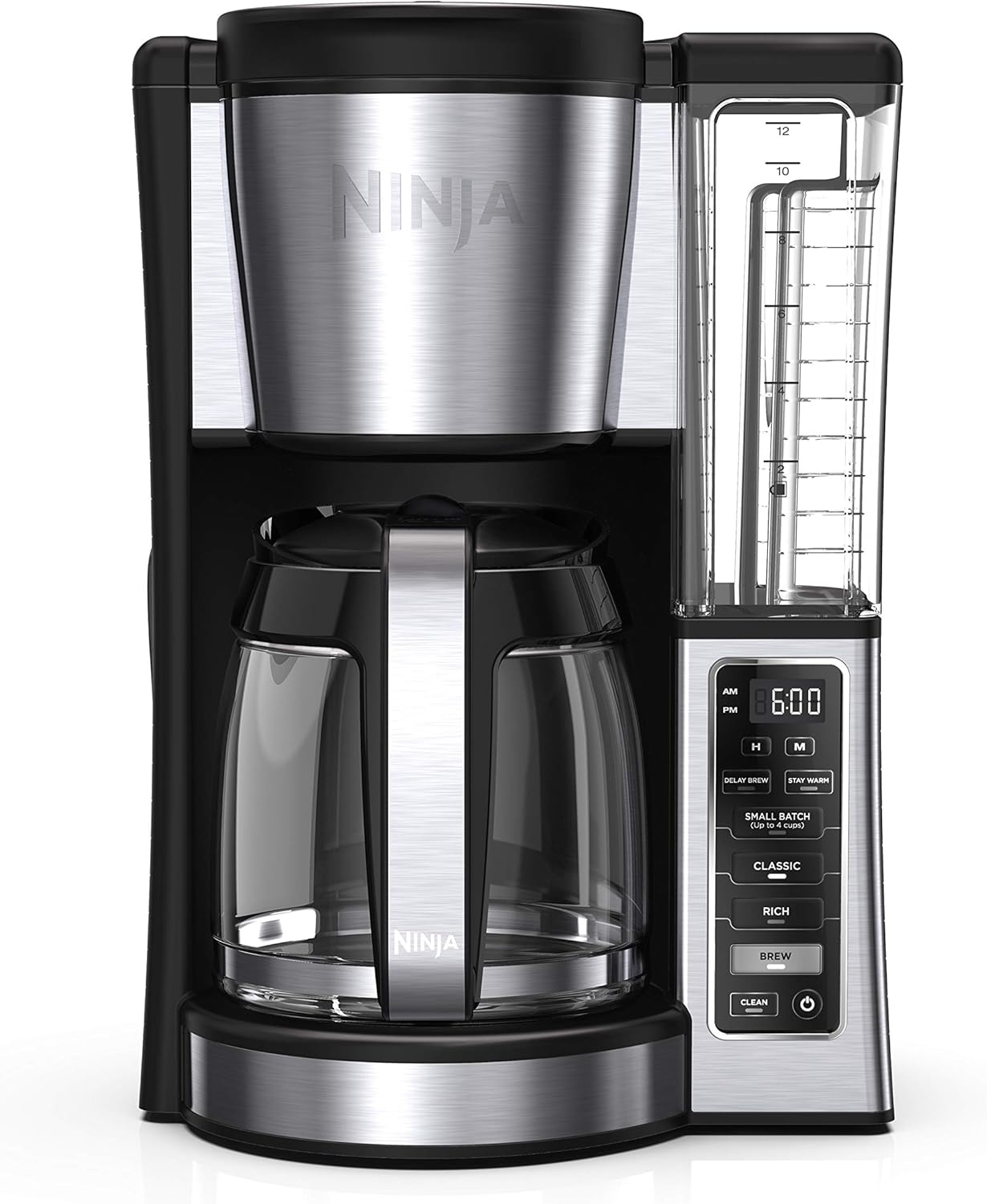
Busy households need serious capacity without any added brewing hassle. Ninja Fresh Brew 14-Cup Programmable Coffee Maker delivers exactly that combination, using Thermal Flavor Extraction technology to unlock fuller flavor from standard ground coffee. Delay Brew scheduling lets you load the machine tonight and wake up to a complete, fresh pot waiting silently. Programming the interface feels genuinely intuitive, even during groggy, half-asleep morning routines before your first cup. Standard footprint dimensions match typical drip machines, meaning your counter space commitment stays identical to what you’re replacing. Fourteen-cup capacity comfortably covers family breakfasts, office meetings, and unexpected weekend guests without requiring a second brewing cycle. What we love most is how confidently this budget-friendly machine competes against premium brewers costing significantly more money. Full pots take noticeably longer to finish brewing compared to faster competing machines like Black+Decker’s ten-minute cycle. The removable water reservoir simplifies refilling and cleaning without awkward reaching into tight machine compartments. Overall, Ninja delivers genuine capacity, scheduling flexibility, and surprisingly solid flavor extraction for considerably less than boutique brewing alternatives. Choose Fresh Brew when a busy household demands reliable, programmable coffee without premium pricing.
5. BLACK+DECKER Coffee Maker

Basic coffee makers rarely feel this genuinely thoughtful. BLACK+DECKER CM1160B brews a full twelve cups using programmable timing, so fresh coffee waits exactly when you wake up each morning. Sneak-a-Cup technology pauses mid-brew, letting you pour an early cup without dripping onto the warming plate below. A washable basket filter eliminates paper filter purchases entirely, cutting both cost and unnecessary kitchen waste over time. Front-facing dual water windows show exact fill levels clearly, so refilling never involves awkward guessing or spilling water backward into the unit. Compared with pricier Cuisinart models, this machine skips brew strength control yet still brews noticeably fast — twelve cups in roughly ten minutes flat. Automatic shutoff after two hours brings genuine peace of mind for forgetful mornings or rushed departures. What we love most is how this budget machine consistently outperforms higher-priced competitors on raw brewing temperature and overall reliability. The thin plastic housing feels lightweight, and some users report the carafe handle flexing slightly when fully loaded. Overall, you get dependable, no-fuss brewing with smart conveniences rarely found at this accessible price point. Choose CM1160B when everyday simplicity and programmable convenience define your coffee routine.
Brew Better Every Morning: The Ultimate Buying Guide to the Best Coffee Machines
Introduction
For millions of people around the world, the day does not truly begin until that first cup of coffee is in hand. That moment of aroma, warmth, and flavour has become one of the most universally cherished daily rituals, and the machine that produces it plays a far larger role in the quality of that ritual than most people realise until they experience the difference a genuinely good coffee machine makes. The right machine transforms coffee from a hurried necessity into a small, reliable pleasure you look forward to every single day.
The variety of ways people enjoy coffee has expanded dramatically, and the coffee machine market has evolved alongside it. Some people want the rich, concentrated intensity of a proper espresso topped with silky microfoam milk. Others prefer the clean, full-bodied simplicity of drip-brewed filter coffee that can be prepared in volume for a household or office. Still others value the convenience of a single capsule delivering a consistent cup in under a minute with virtually no cleanup. None of these preferences is more legitimate than another — they simply call for different machines, and understanding which type matches your actual coffee habits is the foundation of a satisfying purchase.
Beyond flavour, a quality coffee machine delivers genuine time savings and convenience that compounds daily. A programmable drip machine that has fresh coffee ready the moment you walk into the kitchen removes a small but meaningful friction point from busy mornings. A capsule machine that produces a consistent, good-quality espresso in the time it takes to find a mug eliminates the learning curve and daily preparation time that manual espresso brewing demands. These are not trivial conveniences — across hundreds of mornings per year, the time and mental energy saved by the right machine adds up to something genuinely valuable.
For households that entertain regularly or include multiple coffee drinkers with different preferences, a versatile machine capable of producing various drink styles — espresso, americano, cappuccino, latte, and filter coffee — from a single unit eliminates the need for multiple specialised devices cluttering the kitchen counter. Bean-to-cup machines in particular have become remarkably capable of delivering café-quality variety at the touch of a button, making it realistic for a household to satisfy diverse coffee preferences without anyone needing barista training.
For the growing community of home coffee enthusiasts, the right machine opens the door to genuine craft and experimentation. Manual espresso machines that give the user direct control over extraction pressure, temperature, and timing allow dedicated hobbyists to pursue the same precision and exploration that professional baristas practise, turning coffee preparation into a rewarding skill rather than a purely functional task. The satisfaction of pulling a perfectly balanced shot through your own developing technique is a meaningfully different experience from pressing a button on an automatic machine, and it appeals to a specific and growing segment of coffee drinkers.
The coffee machine market spans an extraordinary range of designs, price tiers, and automation levels — from simple drip machines that have barely changed their core function in decades to sophisticated bean-to-cup machines with integrated grinders, milk frothing systems, and digital displays that remember your preferred settings. Making sense of this range requires understanding what each type actually delivers, which features genuinely affect your daily cup, and which practical factors should guide your specific purchase. This guide walks through all of it clearly and comprehensively.
Types of Coffee Machines
Coffee machines divide into several distinct categories based on their brewing method and level of automation. Understanding these categories is the essential first step toward choosing a machine that actually matches how you drink coffee rather than how you imagine you might drink it.
Type 1: Drip (Filter) Coffee Machines
Drip coffee machines remain the most widely used coffee machine type worldwide, valued for their simplicity, consistency, and ability to brew multiple cups simultaneously. Ground coffee sits in a filter basket while heated water drips through it, producing a clean, full-bodied cup without the pressure-based extraction that defines espresso. Modern drip machines include programmable timers that allow coffee to be ready at a set time each morning, adjustable strength settings, and in higher-tier models, precise temperature control that significantly affects extraction quality. They are the ideal choice for households that drink filter-style coffee regularly, need to brew larger volumes for multiple people, and prioritise simplicity and low running costs over the variety and intensity of espresso-based drinks.
Type 2: Espresso Machines (Manual and Semi-Automatic)
Espresso machines force hot water through finely ground, tightly packed coffee under significant pressure — typically nine bars — producing the concentrated, crema-topped shot that forms the base of every espresso-based drink. Manual and semi-automatic machines require the user to grind, dose, and tamp the coffee themselves and to control the brewing process directly, offering maximum control over the final result in exchange for a genuine learning curve. Many include a steam wand for manually texturing milk, extending their capability to cappuccinos and lattes for users willing to develop the technique. These machines are best suited to coffee enthusiasts who enjoy the craft and ritual of espresso preparation, are willing to invest time in learning proper technique, and want the flexibility to fine-tune every variable in pursuit of their ideal cup.
Type 3: Bean-to-Cup (Automatic) Machines
Bean-to-cup machines integrate a built-in grinder, automated dosing and tamping, and a brewing unit into a single appliance that produces espresso-based drinks from whole beans at the touch of a button, with no manual intervention required between loading beans and receiving a finished cup. Many higher-tier models include automatic milk frothing systems that produce cappuccinos and lattes with similarly minimal user input, along with programmable drink profiles that remember individual preferences for strength, volume, and milk texture. They are the ideal choice for households that want genuine café-quality variety without the learning curve and daily maintenance of a manual espresso setup, offices and workplaces serving multiple users with different preferences, and anyone who values consistency and convenience as highly as the quality of the final cup.
Type 4: Pod and Capsule Machines
Pod and capsule machines use pre-portioned, sealed coffee capsules that are inserted into the machine and pierced during the brewing cycle, delivering a consistent cup with minimal preparation time, no grinding, and virtually no cleanup beyond discarding the used capsule. They have become enormously popular for their convenience, consistency, and the elimination of any technique requirement — the same quality cup is produced every time regardless of the user’s experience level. Capsule systems vary between proprietary formats tied to a specific brand’s capsule range and more open formats compatible with multiple capsule brands. They are an excellent choice for individuals and small households who value speed and simplicity above all else, offices where multiple people with varying preferences need quick, consistent results, and anyone for whom the daily ritual of grinding and brewing is less important than the end result arriving quickly.
Type 5: French Press and Manual Pour-Over Devices
While not technically machines in the electrical sense, French press and manual pour-over devices remain a significant and growing category among coffee enthusiasts who value the full control, simplicity, and absence of any electronic components that these methods offer. A French press steeps coarsely ground coffee directly in hot water before separating the grounds with a mesh plunger, producing a full-bodied cup with more sediment and oils than filtered methods. Pour-over devices allow precise, manual control over water flow rate and distribution, rewarding careful technique with exceptional clarity and nuance in the final cup. These methods are favoured by coffee purists who enjoy the meditative ritual of manual brewing, travellers and minimalists who want a compact, electricity-free brewing solution, and anyone exploring the wider world of specialty coffee brewing techniques beyond machine-based extraction.
Key Features to Look For
Water Temperature Consistency and Control
Water temperature during extraction has a profound effect on coffee flavour — water that is too cool under-extracts the coffee, producing a sour, thin result, while water that is too hot over-extracts, producing bitterness that masks the coffee’s more delicate characteristics. The ideal brewing temperature range for most coffee styles sits between 90°C and 96°C, and the ability of a machine to reach and maintain this range consistently throughout the brewing cycle is one of the most significant determinants of cup quality. Quality machines use PID temperature controllers — precision electronic systems that maintain water temperature within a very tight tolerance — while budget machines often rely on simpler thermostats that allow more temperature fluctuation during brewing. For espresso machines in particular, temperature stability between consecutive shots is a meaningful quality indicator worth researching specifically.
Grinder Quality (For Bean-to-Cup and Integrated Grinder Machines)
For any machine that grinds whole beans as part of its process, grinder quality is arguably more important to the final cup than any other single component, because grind consistency directly determines extraction evenness. Burr grinders — which crush beans between two revolving abrasive surfaces to produce a consistent, uniform particle size — are significantly superior to blade grinders, which chop beans unevenly using a spinning blade and produce an inconsistent mixture of fine dust and larger chunks that extract at different rates and muddy the final flavour. Within burr grinder designs, ceramic burrs tend to run cooler and last longer than steel burrs, though quality steel burr grinders remain excellent and are more common at accessible price points. Adjustable grind settings that allow fine-tuning for different brewing methods and bean roasts add meaningful versatility, particularly for enthusiasts who want to dial in their extraction precisely.
Milk Frothing System and Steam Power
For any machine intended to produce milk-based drinks — cappuccinos, lattes, flat whites — the quality and type of milk frothing system significantly affects both the convenience and the final drink quality. Manual steam wands, found on traditional espresso machines, require the user to develop technique for producing properly textured microfoam but offer unmatched control over the final texture once that skill is developed. Automatic milk frothing systems, found on many bean-to-cup machines, draw milk directly from a container and produce frothed milk automatically at the touch of a button, trading some of the textural nuance achievable by a skilled manual operator for consistent, effortless results. Steam power — generally indicated by boiler size and wattage — determines how quickly and effectively milk can be textured, with underpowered steam systems producing thin, poorly textured foam regardless of technique.
Build Quality and Material Durability
Coffee machines operate under genuine thermal and mechanical stress on a daily basis — heating water repeatedly, pressurising internal components, and in bean-to-cup machines, grinding beans multiple times per day. Build quality directly determines how reliably a machine performs this demanding daily cycle over years of use. Stainless steel boilers and internal components resist the mineral scale buildup and corrosion that plastic and lower-grade metal components succumb to more readily over time. Solid, well-damped housing materials reduce vibration and noise during operation, particularly relevant for grinders and pump-driven espresso machines. For portafilter-based espresso machines, a solid brass or stainless steel group head retains heat more effectively and consistently than lighter alternatives, directly benefiting shot consistency.
Things to Consider Before Buying
Your Actual Coffee Habits: The single most important factor in choosing a coffee machine is an honest assessment of how you actually drink coffee, not how you imagine an idealised version of yourself might. If you drink two straightforward black coffees each morning and have no interest in milk-based drinks or precise extraction variables, a quality drip machine or simple capsule system will serve you better than an elaborate espresso setup that demands skill and time investment you are unlikely to provide. If you genuinely enjoy café-style drinks daily and want that variety without developing barista technique, a bean-to-cup machine with automatic milk frothing is the natural fit. If you find the process of grinding, dosing, and pulling a shot genuinely enjoyable rather than a chore, a manual or semi-automatic espresso machine will reward that interest richly.
Space and Kitchen Counter Footprint: Coffee machines range from compact capsule machines small enough to tuck into a corner to substantial bean-to-cup units and espresso setups — including separate grinders — that require meaningful dedicated counter space. Measure your available counter space realistically before purchasing, accounting for clearance needed to access the water tank, bean hopper, or portafilter for daily use and maintenance. Also consider cabinet clearance above the machine, as many bean-to-cup and espresso machines require vertical space for cup dispensing or portafilter removal that a low-hanging cabinet or shelf can obstruct.
Ease of Use and Daily Maintenance: Different machine types demand genuinely different levels of ongoing attention. Capsule machines require almost no daily maintenance beyond emptying the used capsule container and refilling water. Drip machines require regular filter and pot cleaning but little technical maintenance. Bean-to-cup machines, despite their automation during brewing, typically require more involved daily cleaning cycles for the milk system and periodic descaling and grinder maintenance to sustain performance. Manual espresso machines demand the most hands-on daily involvement — cleaning the portafilter and group head after every use, regular backflushing, and periodic descaling — in exchange for maximum control. Be realistic about how much daily maintenance effort you are willing to invest, as a machine that is too demanding for your actual routine will be used less and maintained worse than one matched to your genuine habits.
Water Quality and Filtration Needs: Mineral content in your local water supply has a significant effect on both coffee flavour and machine longevity. Hard water — water with high mineral content — accelerates limescale buildup inside the machine’s internal components, which degrades heating efficiency, affects temperature accuracy, and can eventually cause component failure if descaling is neglected. Many quality machines include built-in water filtration systems or require periodic cartridge filters that both improve flavour by reducing mineral and chlorine taste and protect the machine’s internals from scale accumulation. If you live in a hard water area, prioritise machines with effective, replaceable filtration systems and commit to a regular descaling routine regardless of filtration, as filtration reduces but does not eliminate the need for periodic deep cleaning.
Step-by-Step Buying Guide
1. Research Your Needs
Before evaluating specific products, define your coffee habits and priorities with honesty and specificity. How many cups do you drink daily, and does that volume need to be produced quickly for multiple people or slowly for a single dedicated drinker? Do you prefer straightforward black coffee, milk-based espresso drinks, or a mix depending on the day? How much time and effort are you genuinely willing to invest in daily preparation and maintenance? Is counter space a meaningful constraint in your kitchen? Do you want to explore the craft of manual brewing, or do you want the best possible cup with the least possible effort? These answers create a clear profile that points directly toward the machine type and feature tier that will genuinely serve your daily life rather than impress briefly before becoming a source of friction or regret.
2. Compare Products
With your profile established, compare specific models from established coffee machine manufacturers — Breville, De’Longhi, Jura, Gaggia, Rancilio, Sage, Nespresso, Keurig, and Philips among the most respected across different categories — using dedicated coffee and kitchen appliance review publications, specialty coffee community forums, and verified long-term owner reviews. For espresso and bean-to-cup machines specifically, seek reviews that assess actual shot quality, temperature stability, and grinder performance rather than relying solely on feature lists. For any machine type, prioritise reviews and community feedback that address long-term reliability and the real-world experience of daily maintenance, as these factors become apparent only after extended ownership and are often understated in enthusiastic first-impression reviews.
3. Finalise Your Choice
Before completing your purchase, confirm the manufacturer’s warranty terms — quality coffee machines typically carry a minimum one to two year warranty, with some premium brands offering extended coverage for registered products. Verify that authorised service centres or technicians familiar with the specific brand are accessible in your region, as espresso machines and bean-to-cup units in particular benefit from professional servicing for descaling, seal replacement, and calibration over their working life. Purchase from authorised retailers or established kitchen appliance specialists who can provide genuine warranty support and knowledgeable pre-purchase advice. Confirm the return policy allows adequate time to evaluate the machine’s actual daily performance in your kitchen before any return window closes, as the practical experience of daily use often reveals considerations that a showroom demonstration cannot.
Maintenance Tips
Descale regularly according to your water hardness: Mineral scale buildup inside a coffee machine’s internal heating and water pathway components is one of the most significant and universal causes of declining performance and eventual failure across every machine type. Follow the manufacturer’s recommended descaling schedule, adjusting frequency upward if you live in a hard water area, and use a descaling solution specifically formulated and approved for your machine rather than generic alternatives that may damage seals or components. Regular descaling maintains consistent brewing temperature, prevents blockages in narrow water pathways, and significantly extends the functional lifespan of heating elements and pumps.
Clean the milk system thoroughly after every use: For any machine with a steam wand or automatic milk frothing system, residual milk left inside the system after use creates an environment for bacterial growth and produces increasingly stale, unpleasant flavours in subsequent drinks if not addressed immediately. Purge steam wands by releasing a short burst of steam immediately after frothing, then wipe the wand exterior with a clean, damp cloth. For automatic milk systems, run the machine’s built-in cleaning cycle after every session involving milk, and periodically disassemble and deep clean removable milk system components according to the manufacturer’s instructions.
Use fresh, appropriately stored coffee and clean the grinder regularly: Coffee beans and ground coffee degrade in flavour quality within weeks of roasting, and even faster once ground, as exposure to oxygen, light, and moisture accelerates the loss of the aromatic compounds that define good coffee flavour. Store beans in an airtight container away from direct light and heat, and purchase in quantities you will use within two to four weeks of the roast date rather than buying in bulk for long-term storage. For machines with integrated grinders, periodically clean the grinding chamber and burrs of accumulated coffee oil residue, which builds up over time and can affect grind consistency and introduce stale flavours into fresh beans.
Common Issues and Troubleshooting
Coffee tastes bitter or burnt: Bitterness most commonly results from over-extraction — water in contact with the coffee grounds for too long, water temperature that is too high, or grind size that is too fine for the brewing method being used. For drip machines, check that the machine’s water temperature is within the recommended range and that the correct grind size is being used for the filter type. For espresso machines, a shot that pulls too slowly typically indicates a grind that is too fine — adjust coarser and retest. Also check whether the machine itself needs descaling, as scale buildup can cause localised overheating that produces burnt flavours independent of brewing technique.
Coffee tastes weak or sour: Weak or sour flavour typically indicates under-extraction — not enough contact time between water and coffee, water temperature too low, or grind size too coarse for the method. For drip machines, check the coffee-to-water ratio, as insufficient coffee grounds relative to water volume is a common and easily corrected cause. For espresso, a shot that pulls too quickly indicates a grind that is too coarse — adjust finer and retest, allowing a few shots to stabilise after any grind adjustment as beans and grinder settle into the new setting.
Machine is not heating water or producing weak heat: Insufficient heating is commonly caused by scale buildup insulating the heating element from the water it needs to heat, a failing heating element after extended years of service, or in some models, a safety thermostat that has activated due to scale-related overheating protection. Descale the machine thoroughly as a first step, following the manufacturer’s recommended procedure. If heating problems persist after descaling, the heating element itself may require professional inspection or replacement, particularly in machines that have not been descaled regularly throughout their service life.
Milk is not frothing properly or froth is thin and watery: Poor milk texturing most commonly results from using milk that is not cold enough — milk should be refrigerator-cold, ideally below 5°C, for proper frothing — a steam wand or frothing nozzle that is partially blocked with dried milk residue, or technique issues for manual steam wand users still developing their skill. Clean the steam wand thoroughly, including the small holes at the tip where dried milk residue commonly accumulates and restricts proper steam flow. For automatic frothing systems, run the cleaning cycle and check that milk intake tubes are clear of blockages. Also confirm the milk itself has adequate fat content, as low-fat and plant-based milks froth differently and some require specific settings or techniques for optimal results.
Final Words
The right coffee machine does more than produce a beverage — it shapes one of the most consistently repeated rituals in your daily life, turning an ordinary morning moment into something genuinely enjoyable to look forward to. Whether that means a perfectly pulled espresso shot you crafted yourself, a consistent cappuccino produced at the touch of a button, or a simple, reliable pot of filter coffee ready the moment you walk into the kitchen, the right match between machine and habit makes all the difference.
Be honest about how you actually drink coffee and how much time and effort you genuinely want to invest in the process, rather than buying for an idealised version of your routine that may never materialise. Prioritise water temperature consistency and, where relevant, grinder quality above flashier features, and commit to the regular maintenance — particularly descaling — that keeps any coffee machine performing at its best for years rather than months.
Choose thoughtfully, maintain it well, and the right coffee machine will reward you with a better cup every single day — quietly becoming one of the most valued appliances in your home.