

Cutting wood shouldn’t feel like a workout. Whether you’re building a deck, framing a shed, or tackling DIY furniture, the right table saw makes every project faster, cleaner, and safer. In this video, we’re breaking down the best table saws that give you the power, precision, and features you need, without wasting your money. From compact jobsite models to heavy-duty workshop champs, we’ll help you find the perfect fit for your space and skill level. So if you’re ready to make straighter cuts and smoother builds, stay tuned—we’ve got the saw that’s right for your next big project.
Top 5 Table Saws:
1. DEWALT DWE7491RS Table Saw

Cutting through thick hardwood like butter, the DEWALT DWE7491RS table saw brings serious jobsite power with unmatched precision and portability in one rugged, well-built machine.
I’ve used plenty of jobsite table saws, but this one stands out. The 15-amp motor rips effortlessly through oak and maple without bogging down. The 32-1/2″ rip capacity is a game changer—wide enough for full sheets of plywood or custom shelving. What really impressed me, though, was the rack & pinion fence system. Adjustments are quick, accurate, and stay locked in, which means no second-guessing your cuts.
The rolling stand deserves its own praise. It sets up in under a minute, stays rock-solid during cuts, and folds down compactly when I’m done. For anyone who moves between worksites, this makes transport a breeze. I also love the onboard storage—everything I need is right where I expect it, and the flip-over fence for narrow rips is just smart design.
Dust collection works well with my shop vac, keeping cleanup minimal. Whether I’m doing finish trim work or tearing into rough hardwoods, the DWE7491RS holds up like a champ. DEWALT clearly built this for pros who demand both power and precision.
If you’re looking for a reliable, no-nonsense table saw that sets up fast and cuts like a beast, this one’s worth every penny.
2. SKIL SPT99-11 Table Saw
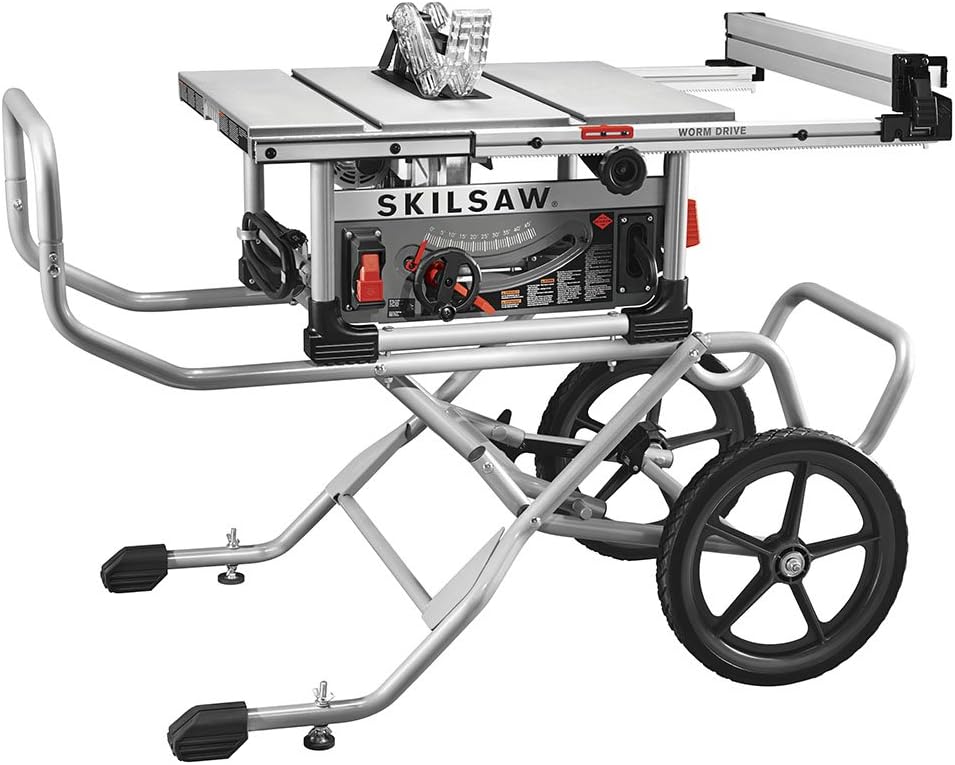
Built like a tank and cuts like a champ, the SKIL SPT99-11 Worm Drive Table Saw brings raw power, precision, and jobsite-ready mobility all in one beastly package.
From the first rip, I knew this saw meant business. The worm drive gearing delivers serious torque—I sliced through thick 4x lumber and dense plywood without a hiccup. With a 3-⅝” depth of cut and 30-½” rip capacity, this thing chews through material that bogs down lesser saws. The rack and pinion fence is rock solid, making adjustments super smooth and keeping cuts dead-on accurate.
What sets it apart is the mobility. The rugged stand with big 16-inch wheels handles gravel, uneven ground, and even stairs without breaking a sweat. Setup takes minutes, and once it’s in place, the saw feels solid and stable enough to handle anything I throw at it.
The Dual-Field™ motor is another standout. It stays cooler during long jobs, and that means more consistent performance without stalling out. The dust port elbow is a smart touch, keeping debris contained so cleanup is quick.
I also appreciated the outfeed and left support—it let me handle big sheets solo, which saved me time and effort. Whether you’re framing, trimming, or cranking through sheet goods, this saw keeps up.
SKIL nailed it with the SPT99-11. It’s powerful, portable, and built to last—everything a serious woodworker or contractor needs on the job.
3. BOSCH GTS15-10 Jobsite Table Saw

With power, precision, and portability rolled into one, the BOSCH GTS15-10 Jobsite Table Saw makes tough cuts feel smooth and setup a total breeze.
I’ve been using this saw on job after job, and it’s become my go-to for both fine woodwork and heavy-duty cuts. The 15-amp motor cranks out 3,800 RPMs, and it doesn’t flinch under pressure, whether I’m slicing through hardwood trim or ripping 4x4s. The electronically regulated speed keeps performance steady, even under load, which means cleaner, faster work with fewer re-cuts.
One of my favorite features is the rack and pinion fence. It’s quick, precise, and totally frustration-free thanks to the color-coded index pins. No more guessing or tapping the fence into place. And the brake? Super convenient—it stops the blade in just a few seconds, which makes jobsite work that much safer and more efficient.
The Gravity-Rise stand is a lifesaver. I roll it over dirt, gravel, even curbs, and it folds out with one easy motion. Stability is solid, and it’s surprisingly light for how tough it is. I also use the ClampZone areas as an extra mini-workbench when I need a flat surface—really handy on tight sites.
Storage for all the accessories is built-in, and the Smart Guard System keeps things safe without getting in the way. Bosch really nailed the balance between pro performance and user-friendly design. If you need a table saw that keeps up and moves easily, this one’s a solid investment.
4. DEWALT DWE7485 Jobsite Table Saw

Tough enough for the jobsite but compact enough to carry under one arm, the DEWALT DWE7485 brings serious cutting power in a small, smart package.
I’ve used this saw on multiple builds, and it punches way above its size. The 15-amp motor cranks out 5,800 RPM, making quick work of 4×8 plywood, OSB, and hardwoods without bogging down. With 24.5 inches of rip capacity, I’ve been able to handle most sheet goods solo, which saves time and hassle.
What really impressed me was the rack and pinion fence. Adjustments are fast, smooth, and dead-on accurate—no more fiddling or second-guessing before a rip. The Site-Pro Modular Guarding System is another win. It makes switching out the guard or riving knife tool-free, which keeps my workflow smooth and safe.
The compact footprint is perfect for tight spaces and small shops, and the metal roll cage base gives it real jobsite durability. I toss it in the back of the truck, roll it out, and it’s ready to go in minutes.
DEWALT also nailed the little things, like onboard storage for all your accessories and the power-loss reset feature that prevents accidental startups after a power outage. That’s the kind of safety feature you don’t know you need until you do.
If you’re looking for a table saw that delivers big performance in a small body, the DWE7485 is one tool that earns its spot on the truck.
5. SKIL TS6307-00 Jobsite Table Saw

This thing rips through 4x4s like butter, folds up in seconds, and still cuts cleaner than most saws twice the price—I put it to the test, and it delivers.
The SKIL TS6307-00 Jobsite Table Saw is a workhorse with brains. I used it on a recent deck rebuild, and the 15-amp motor handled pressure-treated lumber without hesitation. The rack and pinion fence? Smooth, fast, and incredibly accurate—no more nudging and double-checking every rip.
I loved how the legs folded into a compact stand; it made loading it into my truck a breeze. The setup on-site took maybe three minutes. The coated aluminum tabletop is slick and sturdy, giving me a stable base for sheet goods and long boards.
One of the standout features is the micro-adjustable parallel blade alignment. Dialing it in with the rip fence and miter slot gave me dead-on cuts all day. Bevel cuts were just as easy thanks to the quick-release lever, and going from 0° to 45° felt seamless.
It even has a dust port elbow that funnels the mess right into a container. Less cleanup means more time actually building.
For anyone who needs a reliable, portable table saw with pro-level precision, this one checks all the boxes. It’s not just for job sites—it’s just as comfortable in a garage workshop. Bottom line? It’s compact, powerful, and smartly built.
The Ultimate Buying Guide For The Best Table Saw
Introduction
A table saw is arguably the most important tool in any woodworking shop. Whether you’re a weekend hobbyist building furniture for your home or a seasoned contractor framing houses, the table saw is central to your workflow. Its unmatched accuracy, versatility, and power make it a must-have for precise cutting tasks. With a good table saw, you can rip lumber, crosscut boards, and even cut dadoes and rabbets with ease.
The impact a quality table saw has on productivity and project quality can’t be overstated. Not only does it allow for clean, straight cuts every time, but it also ensures repeatability, which is essential for batch jobs or building identical components. It replaces the need for multiple other saws by performing a variety of tasks efficiently and safely when used properly.
However, not all table saws are created equal. There are several types designed for specific uses—from compact models for tight spaces and jobsite tasks to full-sized, industrial-grade machines for permanent workshop installations. With so many options on the market, choosing the right table saw can be overwhelming. This guide walks you through the major types, features to look for, and buying tips to help you make an informed decision and get the most value for your money.
Types of Table Saws
Table saws come in several types, each tailored to different tasks and users. Understanding their differences will help you choose one that aligns with your project needs and workspace constraints.
1. Benchtop Table Saw
Benchtop models are compact, affordable, and designed to be placed on a workbench or portable stand. These saws typically feature direct-drive motors and lightweight construction, making them easy to store or move.
- Who it’s good for: Beginners, casual DIYers, and users with limited space.
- Pros: Inexpensive, lightweight, and space-saving.
- Cons: Limited cutting capacity and less power than larger models.
2. Jobsite Table Saw
Jobsite saws are a step up from benchtop models. They offer better build quality, more powerful motors, and folding stands with wheels for easy transport. These are popular among contractors and remodelers who need a reliable tool on the go.
- Who it’s good for: Contractors and mobile professionals.
- Pros: Portable, rugged, and feature-rich.
- Cons: Louder operation and smaller tables than workshop saws.
3. Contractor Table Saw
Larger and more powerful, contractor saws are often semi-portable and sit on an open or enclosed stand. They feature belt-driven motors and larger tables, offering greater stability and cutting capacity.
- Who it’s good for: Hobbyists and small business owners.
- Pros: Versatile, relatively portable, and more durable.
- Cons: Heavier and less suited for frequent transport.
4. Cabinet Table Saw
These are professional-grade saws with enclosed cabinets, powerful motors (3–5 HP), and top-tier components. They’re designed for precision and durability in high-volume environments.
- Who it’s good for: Professional woodworkers and production shops.
- Pros: Excellent power, stability, and accuracy.
- Cons: Very heavy and expensive; not portable.
5. Hybrid Table Saw
A hybrid saw blends features of contractor and cabinet saws, offering a good balance of performance and price. They typically feature enclosed cabinets, moderate power, and upgraded fence systems.
- Who it’s good for: Advanced DIYers and semi-pro users.
- Pros: Great value, better dust collection, and sturdier than contractor models.
- Cons: Still heavy and not as powerful as true cabinet saws.
Key Features to Look For
Rip Capacity
Rip capacity refers to the maximum width a saw can cut to the right of the blade. If you’re working with sheet goods or wide boards, look for at least a 24-inch rip capacity. For professional work, 30–36 inches is better.
Motor Power
Motor strength determines how efficiently a saw cuts through hardwoods. Most portable saws have motors ranging from 1.5 to 2 HP. Cabinet saws can have up to 5 HP, allowing them to power through thick stock without bogging down.
Fence System
A quality fence ensures straight, accurate cuts. Look for a fence that locks securely in place, glides smoothly along rails, and remains parallel to the blade. The Biesemeyer-style fence is a gold standard in the industry.
Blade Adjustability
The ability to tilt the blade (usually up to 45 degrees) and adjust its height is essential for making bevel cuts and varying depth cuts. Easy-to-use adjustment wheels or levers improve efficiency and accuracy.
Safety Features
Key safety features include:
- Blade guard: Prevents accidental contact.
- Riving knife: Reduces kickback by preventing the workpiece from pinching the blade.
- Anti-kickback pawls: Hold material down in case of kickback.
- Flesh-sensing technology (e.g., SawStop): Instantly stops the blade on contact with skin.
Dust Collection
Dust ports, typically 2.5 to 4 inches, allow for attachment to a shop vac or dust collection system. Effective dust removal improves air quality and keeps your workspace cleaner.
Miter Gauge
Used for crosscuts and angled cuts, a solid miter gauge with positive stops and tight tolerances ensures precision and repeatability.
Portability
Wheeled stands, folding bases, and lightweight construction make a big difference if you need to move your saw frequently.
Things to Consider Before Buying
Budget
Table saws range from $150 to $4000+. Here’s a rough breakdown:
- Under $300: Entry-level benchtop models with limited features.
- $300–$800: Mid-range jobsite and basic contractor saws.
- $800–$1500: Hybrid saws and better contractor models.
- $1500 and up: Professional cabinet saws.
Choose a model that offers the best features and build quality within your budget.
Size and Space
Measure your workshop or garage to ensure you have enough room for both the saw and material feed/exit areas. Cabinet and hybrid models require permanent space, while jobsite and benchtop units offer mobility.
Ease of Use
User-friendly features like onboard storage, quick blade changes, and toolless adjustments can save time and reduce frustration. Also consider the learning curve for complex setups.
Durability and Warranty
Invest in a saw built with high-quality components like cast iron, stainless steel, and aluminum. A robust warranty (at least 2–5 years) is also a good sign of manufacturer confidence.
Pros and Cons
| Pros | Cons |
|---|---|
| High precision and repeatability | Can be expensive |
| Versatile for many cut types | Large footprint for some models |
| Improves efficiency and workflow | Requires routine maintenance |
| Available with advanced safety | Louder than other saw types |
Step-by-Step Buying Guide
1. Research Your Needs
Start by evaluating what types of cuts you’ll make, how often you’ll use the saw, and the type of materials you’ll be working with. Light users can opt for portable models, while heavy-duty users should invest in more robust machines.
2. Compare Products
Check online reviews, manufacturer specifications, and expert opinions. Compare blade size, rip capacity, motor power, safety features, and warranty. Look for video reviews to see the saw in action.
3. Finalize Your Choice
Before purchasing, consider:
- Warranty coverage
- Parts availability
- Return policy
- Shipping or delivery options
Buy from a reputable retailer or authorized dealer to avoid warranty issues.
Maintenance Tips
Tip 1: Clean and Wax the Table Surface
A clean, rust-free surface helps wood slide smoothly and prevents corrosion. Apply paste wax every few months for extra protection.
Tip 2: Check Blade Alignment
Ensure the blade is parallel to the miter slot and fence. Misalignment can lead to kickback or inaccurate cuts. Check alignment monthly.
Tip 3: Keep Blades Sharp
Dull blades cause burning and stress the motor. Use carbide-tipped blades and clean them regularly. Replace or sharpen as needed.
Tip 4: Inspect Power Cords and Switches
Regularly check for frayed cords, loose connections, or malfunctioning switches. Replace parts immediately to maintain safety.
Common Issues and Troubleshooting
- Burn marks on wood: Likely due to a dull or dirty blade. Clean or replace it.
- Inconsistent cuts: Check the fence and miter gauge for square alignment.
- Blade not raising/lowering: Clean sawdust buildup from elevation mechanisms.
- Kickback incidents: Ensure the riveting knife is properly installed and aligned.
Final Words
Picking the right table saw can transform your woodworking experience. From improving precision and productivity to enhancing safety, a quality saw is an investment in better craftsmanship. Prioritize the features that match your needs—whether that’s portability, cutting power, or accuracy—and choose a saw built to last. With the right model and proper maintenance, your table saw will serve you reliably for years to come. Happy cutting!