

Tiny but mighty, mini circular saws make cutting wood, plastic, and even metal fast and easy, without the bulk of full-size tools. These compact power tools are perfect for DIY fans, home repair, or anyone short on space. They’re lightweight, simple to control, and ideal for quick, clean cuts. Whether you’re trimming shelves, cutting flooring, or building small projects, the right mini saw saves time and effort. This guide will help you pick one that fits your hand, your needs, and your budget—so you can work smarter, not harder. Let’s cut through the noise and find your perfect match.
Top 5 Mini Circular Saws:
1. DEWALT DCS571B ATOMIC Mini Circular Saw

Light, fast, and surprisingly powerful—this little saw packs a punch. I used the DEWALT DCS571B ATOMIC Mini Circular Saw on a weekend project, and it didn’t disappoint. The compact 4-1/2″ blade might seem small, but with its brushless motor, I got smooth cuts through 2x4s at 90° and crisp bevels at 45°. The bevel gear design and on-board dust port made things cleaner and easier than I expected.
What stood out most was the control. The removable auxiliary handle gave me a better grip, especially for tighter cuts. Even with gloves on, the 1-1/2″ finger trigger let me choke up and maneuver the saw with confidence. Blade changes were quick, too—DEWALT’s onboard key storage really came in handy.
It runs on the 20V MAX* system, and with my DCB205 battery (sold separately), I ripped through a ton of ¾” OSB—probably close to the 369 feet they claim. The brake is fast, which adds a layer of safety I didn’t realize I needed until I had it.
This is a solid pick for anyone who needs portability without sacrificing cutting power. It’s not just a backup saw—it handled primary cutting tasks on my job. Perfect for DIYers and pros who want serious performance in a compact frame.
2. Makita SH02R1 Mini Circular Saw

Reading building plans or DIY instructions is only half the fun—the real satisfaction comes when the sawdust starts flying. That’s where the Makita SH02R1 Mini Circular Saw comes in. I’ve used this compact cutter on everything from pegboard to melamine, and the precision it delivers for its size is impressive. Weighing just 3.5 pounds, it’s light enough to use overhead or in tight corners without fatigue.
The 3-3/8″ blade offers a 1-inch depth of cut, which handles most small to mid-range tasks around the house. I especially appreciated the bevel feature—it cuts clean angles from 0° to 45° with a smooth tilt base. At 1,500 RPM, it’s not the fastest saw on the market, but it’s more than enough for quick, clean cuts in plywood and drywall.
What really makes this kit shine is the battery system. The included 12V max CXT Lithium-Ion batteries come with LED indicators, and they charge quickly. I used the optional power source add-on to charge my phone while working, which is a handy bonus.
For small projects, quick repairs, or working in cramped spaces, this Makita mini saw delivers serious convenience without sacrificing performance. It’s not made for ripping long sheets of plywood, but for what it’s designed to do, it does it well. This tool’s a smart choice if you value portability, balance, and versatility in your gear.
3. DOVAMAN Compact Circular Saw

There’s something satisfying about making clean, accurate cuts, and the DOVAMAN Compact Circular Saw delivers that experience right out of the box. I tried this saw on a variety of materials during my home renovation, and it tackled everything from wood planks to tile with no trouble. With six included blades—two each for wood, soft metal, and tile—you’re ready for just about any project.
The built-in laser guide and edge guide made a real difference. I was able to line up cuts with confidence and keep my work straight without needing to second-guess every mark. The bevel feature was easy to adjust and came in handy for angled corner trims. At 45°, it cut up to 1-1/8″ deep; at 90°, the adjustable depth reached nearly 1-11/16″, which was more than enough for my needs.
Stability is where this tool shines. The larger base and metal auxiliary handle gave me a firm grip, and I appreciated that I could mount the handle on either side. The safety lock mechanism was a smart touch, too—requiring both hands to start the saw kept things controlled and prevented any accidents.
I connected it to my shop vacuum, and the dust stayed manageable. For a compact saw, it feels like a full-size performer. Whether you’re building, repairing, or crafting, this tool is a versatile addition to your kit that punches above its size.
4. GALAX PRO Mini Circular Saw
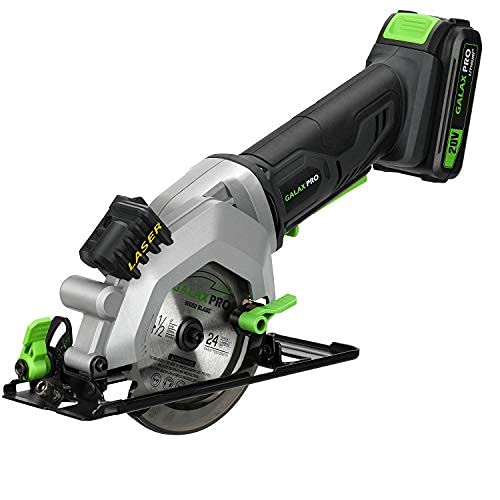
Light, fast, and surprisingly powerful—this little saw packs a punch. I spent a full weekend testing the GALAX PRO Mini Circular Saw, and for such a compact tool, it’s shockingly capable. From cutting wood boards to trimming plastic panels and even soft metal, this saw handled every task I threw at it with ease. It spins up to 3400 RPM, and with the included 24T wood blade and 60T metal blade, I didn’t need to run to the store for extras.
What really impressed me was the precision. The laser guide worked surprisingly well, helping me follow straight lines on trim and framing cuts. Whether I was cutting at 90° (up to 1-11/16″) or beveling at 45° (1-1/8″ deep), I got smooth, clean results every time. Adjustments were simple too—just a quick turn, and I was ready to go.
The build is ergonomic and safe. The double protection switch gave me peace of mind, especially while working in tighter spots. The soft rubber grip minimized vibration, and I didn’t walk away with that numb-hand feeling some saws leave behind. I also hooked it up to a shop vac using the vacuum adaptor, which kept dust to a minimum.
The GALAX PRO comes with everything: battery, charger, blades, rip guide, and even a hex key. It’s a powerful little package for DIYers or weekend warriors who need performance without the bulk. If you want a mini saw that works like a full-size tool, this one delivers.
5. Worx WX429L Compact Circular Saw
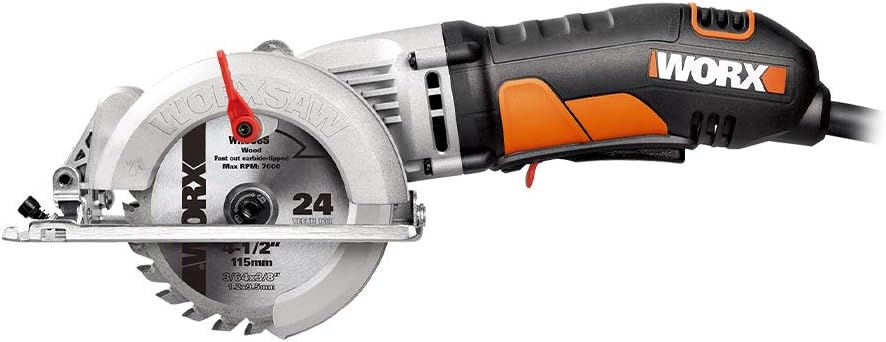
If you enjoy diving into weekend DIY projects the way others dive into a good novel, the Worx WX429L Compact Circular Saw is your kind of tool. I’ve been using this little powerhouse for a few months, and it’s been surprisingly capable for its size. It weighs about half of what a full-size circular saw does, but it still cuts cleanly through 2x4s, metal, tile, and even plastic.
One-handed operation makes a big difference when you’re trimming door frames or slicing plywood alone. The left-sided blade design gives you a clear view of every cut, and that visibility means more accurate results—no second-guessing or do-overs. The bevel adjustment lever is quick to flip, and I’ve easily gone from 90° straight cuts to 45° angles without breaking pace.
What really stood out to me was the motor speed. That thinner 4-½” blade spins up to 3,500 RPM, which helps reduce strain and boosts overall lifespan. Swapping the blade was also super simple: unplug, press a button, twist the Allen key, and you’re done.
For someone who needs power without bulk, the Worx WX429L hits the sweet spot. It’s compact, light, and ready to go without much setup. Whether you’re cutting trim or redoing shelves, it feels like having the precision of a full-size saw in a body that won’t weigh you down.
Small Saw, Big Power: The Ultimate Mini Circular Saw Buying Guide
Mini circular saws might be small, but they pack a serious punch. Whether you’re tackling DIY home renovations, cutting flooring, or trimming wood for crafts, these compact power tools are perfect for precision and portability. Unlike bulky standard circular saws, mini versions offer better control, making them ideal for one-handed use and working in tight spaces.
They’re especially handy for beginners or hobbyists who don’t want the weight or noise of larger tools. A mini circular saw can cut through wood, plastic, tile, and even metal, depending on the blade you use. They’re also easier to store, generally safer to operate, and surprisingly powerful for their size. If you’re into home improvement or small construction projects, owning one of these saws can seriously improve your workflow.
Let’s break down everything you need to know to choose the best mini circular saw for your needs.
Types of Mini Circular Saws
Mini circular saws come in different designs, each tailored for specific types of cutting jobs or user preferences. Below are the most common types.
Compact Corded Mini Circular Saws
These models plug into a standard outlet and offer consistent power without the need for recharging. They’re ideal for longer projects where you need uninterrupted use. Great for users who work mostly in a workshop or near a power source.
Cordless Mini Circular Saws
Cordless models run on rechargeable batteries, giving you the freedom to work anywhere. They’re especially useful for outdoor work or job sites without easy access to power. Best for those who value mobility over extended run time.
Multi-Material Mini Circular Saws
Equipped with versatile blades, these saws can cut wood, tile, plastic, and even soft metal. They’re good for people doing mixed-material projects or remodeling work where multiple surfaces need cutting.
Plunge-Cut Mini Circular Saws
These saws allow you to start a cut in the middle of the material, not just from the edge. They offer more control and precision, especially for tasks like cutting out sink openings in countertops.
Key Features to Look For
1. Motor Power
Measured in amps (for corded) or volts (for cordless), motor power affects how smoothly and quickly your saw can cut. More power means easier cutting through tougher materials like hardwood or MDF.
2. Blade Size
Most mini circular saws use blades between 3.5 and 4.5 inches. Smaller blades are great for precision, while slightly larger blades offer deeper cuts. Consider what material you’ll be working with most often.
3. Cutting Depth and Bevel Capacity
The maximum depth your saw can reach determines what thickness of material you can work with. Bevel adjustments let you make angled cuts, which are essential for many trim and flooring jobs.
4. Dust Extraction and Safety Features
Features like built-in vacuum ports, blade guards, and safety switches make your cutting cleaner and safer. They’re especially important if you’ll be using the saw indoors or in a tight space.
Things to Consider Before Buying
Budget
Mini circular saws typically range from $50 to $150. Corded models are usually more affordable, while cordless or multi-material saws come with a higher price tag. Stick to your budget, but don’t skimp on safety and power.
Size and Storage
These tools are compact by design, but some models are bulkier than others. Check the dimensions if you’re tight on workspace or need to carry it in a tool bag.
Ease of Use
Look for ergonomic grips, lightweight bodies, and simple blade adjustment systems. A good mini saw should feel comfortable in your hand and be easy to operate with one hand.
Durability and Warranty
A solid build with quality materials will last longer and require less maintenance. Brands that offer a 1–3 year warranty usually stand behind their product quality.
Pros and Cons
| Pros | Cons |
|---|---|
| Compact and easy to store | Limited cutting depth |
| Great for precision work | Not ideal for large-scale cutting |
| Lightweight and easy to use | Some models lack power for hardwoods |
Step-by-Step Buying Guide
1. Research Your Needs
Think about what types of materials you’ll be cutting and how often you’ll use the saw. Do you need portability for outdoor work? Will you mostly cut wood, or do you need something more versatile?
2. Compare Products
Once you’ve narrowed your needs, compare specs—motor power, blade size, and depth capacity. Don’t forget to read user reviews and check for complaints about overheating, battery life (cordless), or performance.
3. Finalize Your Choice
After comparing options, confirm the warranty and customer service support. Buying from a reputable brand or retailer gives you peace of mind. Consider whether it’s better to buy online or at a hardware store where you can test the grip and size.
Maintenance Tips
Tip 1: Clean Regularly
After every few uses, wipe down your saw and clear out any sawdust buildup. This prevents overheating and keeps the motor running smoothly.
Tip 2: Avoid Forcing the Saw
Let the blade do the work. Pushing too hard can damage the motor or wear out the blade faster.
Tip 3: Replace Blades as Needed
A dull blade will cause more resistance and result in rough cuts. Keep a few extra blades on hand, especially if you switch between materials.
Common Issues and Troubleshooting
-
Problem: Saw won’t start
Fix: Check power cord or battery connection. Reset any safety locks. -
Problem: Blade isn’t cutting smoothly
Fix: Clean or replace the blade. Make sure it’s the right blade for the material. -
Problem: Overheating
Fix: Allow rest periods between long cuts. Keep ventilation areas clear of dust.
Final Words
Choosing the best mini circular saw can transform how you tackle home projects or job-site tasks. These handy tools save time, boost precision, and make cutting tasks less intimidating. By focusing on features that match your needs—whether that’s cordless freedom, plunge cutting, or multi-material blades—you’re investing in smoother, faster, and more enjoyable DIY experiences.
Take your time, weigh the pros and cons, and pick the model that fits your budget and project scope. Once you get the hang of it, you’ll wonder how you ever worked without one.