
Tired of your music sounding like it’s coming from a tin can at the bottom of a well? It’s time to unleash the full potential of your speakers with the best stereo amplifiers on the market! Whether you’re a vinyl junkie, a streaming enthusiast, or just someone who likes their bass to rattle the windows, this video’s got your audio cravings covered. We’ve cranked the volume on specs, features, and value—so you don’t have to blow your budget to blow your mind. Let’s turn the dial past 10 and dive into the amps that truly rock.
Top 5 Stereo Amplifiers
1. Sony STRDH190
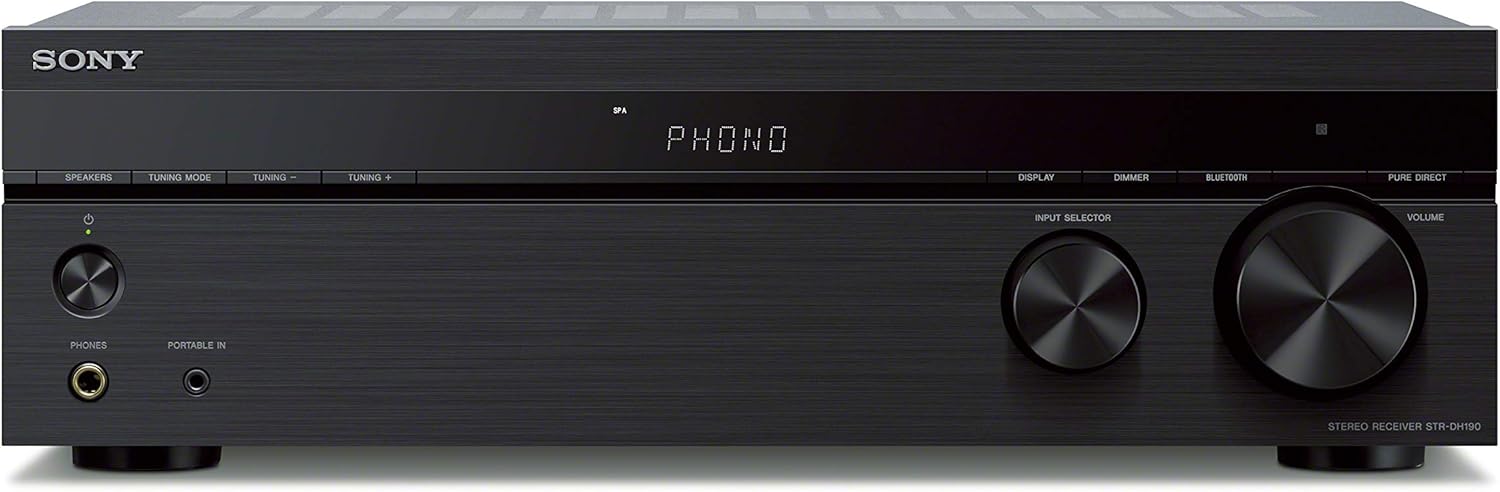
Crank it up—the Sony STRDH190 2-ch Home Stereo Receiver turns your living room into a personal concert hall. You’ll appreciate how it blends old-school charm with modern convenience, especially if you love both vinyl and streaming. Unlike many budget receivers, this one pushes 100 watts x 2, giving your speakers real punch and presence.
You can wirelessly stream music, podcasts, or audiobooks thanks to the built-in Bluetooth. It’s responsive and stays connected—perfect for casual listening or parties. Hook up your turntable to the phono input and rediscover records with rich, warm tones that other receivers often flatten. You also get 4 stereo RCA audio inputs, plus a 3.5mm input and RCA output for added versatility.
Play up to four speakers with A/B switching. Run them all together or split them into two zones—ideal if you’re juggling kitchen dance-offs and backyard barbecues. It’s low-profile build fits easily into tight spaces, and that matters more than you think when dealing with clunky home setups.
Enjoy clean FM radio reception with 30 presets and a satisfying full-size headphone jack. Audio feels detailed, layered, and surprisingly crisp—thanks to its high-resolution audio support and large capacity power transformer. Everything from quiet acoustic tracks to big-band jazz stays clean and powerful.
What do I love most? It’s ability to switch effortlessly from digital playlists to dusty vinyl without skipping a beat. You get clean sound, plenty of inputs, and flexibility in a slim package.
This stereo receiver checks all the right boxes for any music lover craving both clarity and connection.
2. Denon PMA-600NE

Pure sound meets powerful design in the Denon PMA-600NE Stereo Integrated Amplifier—and it shows from the first listen. This amp delivers 70 watts x 2 channels, pushing your music with clarity and punch that budget models often miss.
Turn off Bluetooth using the analog mode and enjoy rich, untouched analog playback without digital noise. That small feature makes a massive difference with vinyl. It’s one reason this unit sounds warmer and cleaner than rivals at this price. You also get Bluetooth connectivity when needed—great for switching quickly to digital playlists or streaming apps without lag.
Built-in DAC and phono pre-amp support give your turntable and digital files equal attention. Your setup stays minimal, your signal path stays clean. Digital inputs include two optical and one coaxial port, giving you freedom to connect multiple sources like your Blu-ray or computer with hi-res audio support up to 192kHz/24-bit.
This unit runs Denon’s Advanced Ultra High Current amplifier design, which keeps the sound full, punchy, and immersive without sacrificing subtle detail. Even at low volume, it stays engaging—no dull, flat output here. I paired it with mid-range bookshelf speakers and got a room-filling result.
You’ll love the vibration-resistant build and solid frame—it feels premium without being flashy. Every knob, port, and finish screams attention to quality.
What stood out most to me? The way this amp balances modern flexibility with classic Hi-Fi richness—it doesn’t cut corners.
This Denon amplifier nails performance, power, and precision in one sleek, rock-solid package.
3. YAMAHA R-S202BL Stereo Receiver
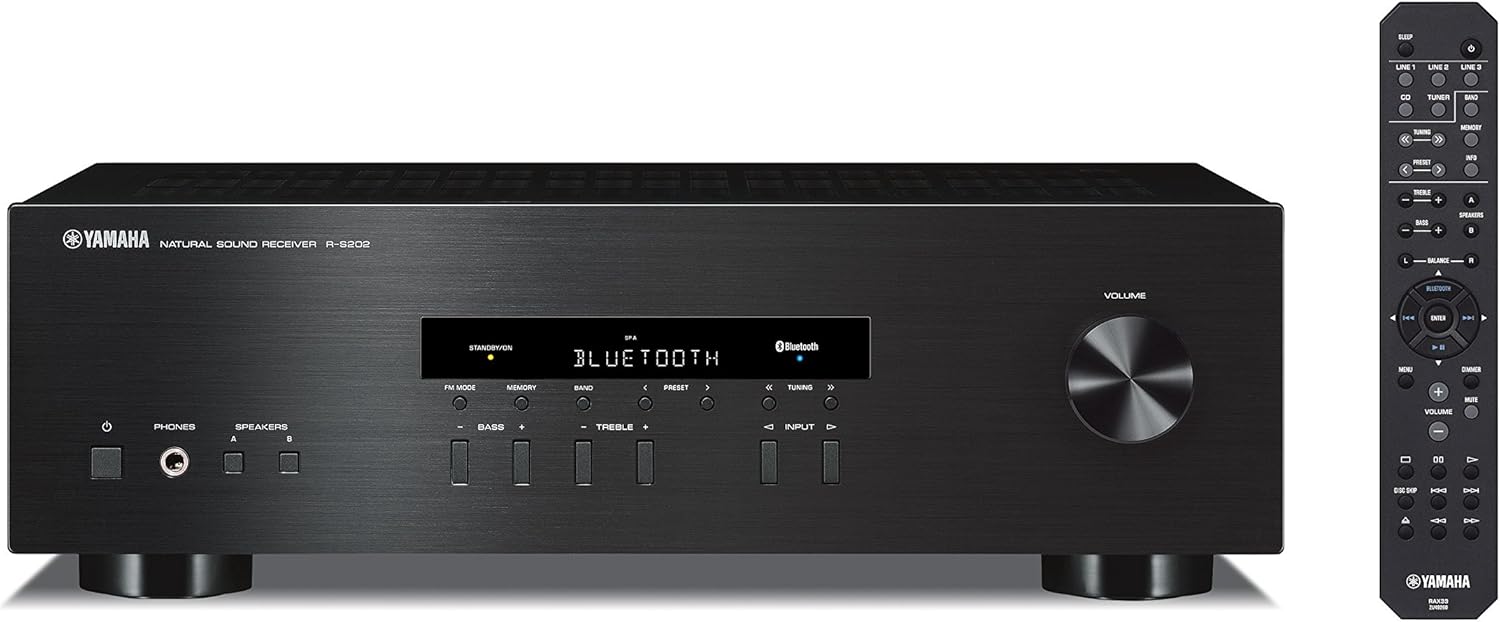
Power meets simplicity with the YAMAHA R-S202BL Stereo Receiver, giving you clean sound and wireless ease without breaking the bank. You’ll instantly notice how it punches above its price when paired with decent speakers.
Connect your smartphone or tablet via Bluetooth and stream playlists with Yamaha’s signature clarity. Playback feels crisp, not flat, and the pairing process runs smoothly every time. Want to power two zones? Use the speaker selector for dual-system output—great if you’re juggling both living room and patio setups.
Yamaha’s advanced circuitry design reduces signal interference while pushing a stronger, more detailed soundstage. It’s subtle, but once you hear the tighter imaging, you won’t go back. Add the brushed aluminum finish, and you’ve got a receiver that looks far more expensive than it is.
Control up to 40 FM/AM presets, and enjoy a wide frequency response from 10Hz to 100kHz—wider than most competing units in this class. Use the headphone terminal for private listening, and the auto power standby cuts energy use to just 0.5 watts. That’s smart thinking, especially for an entry-level receiver.
I really appreciate how Yamaha engineered this with care. They placed the power transformer close to the amp circuit, which adds punch while keeping things clean. That kind of layout usually shows up in higher-end gear.
What I loved most? It’s ability to fill a room with natural, uncolored sound that stays sharp at any volume.
This stereo receiver proves you don’t need to spend big to enjoy real hi-fi performance.
4. Onkyo TX-8220

Big sound on a small budget—that’s exactly what the Onkyo TX-8220 2 Home Audio Channel Stereo Receiver delivers. This receiver pushes past its price class with serious power and rich audio detail.
You can run two speaker sets at once, thanks to dual speaker posts. That means filling two rooms or switching between zones without extra gear. Bluetooth pairing feels instant, and it remembers your device, so music starts playing as soon as it connects. That’s smooth, smart, and super convenient.
You’ve got a phono input ready for your turntable, four analog line inputs, and two digital ports for your TV or Blu-ray player. That variety gives you true plug-and-play freedom. Whether it’s vinyl or hi-res digital, this receiver handles it all with ease.
Onkyo’s WRAT design and high-current amp system keep your speakers tight and responsive. Sound remains clean, even when pushing volume. The massive EI transformer helps drive everything with control, which is something cheaper models often miss.
Frequency coverage from 20 Hz to 20 kHz and a strong FM/AM tuner give more ways to enjoy media. Use the included remote to control everything without leaving the couch. Build quality also feels solid, with tactile knobs and a clear layout.
What stood out most? The wide, detailed soundstage that brings your music to life—especially when streaming or spinning records.
This Onkyo receiver combines versatility and muscle to bring premium stereo performance to your home system.
5. Fosi Audio BT20A

Small body, big punch—that’s what you get with the Fosi Audio BT20A Bluetooth Stereo Amplifier. This mini Class D amp delivers 100 watts per channel, pushing bookshelf or garage speakers with impressive volume and clarity.
Hook it up in minutes. It offers both Bluetooth and RCA inputs, allowing you to stream wirelessly or connect a traditional source. Bluetooth stayed solid through walls and distance during testing—no dropouts, just smooth playback.
Use it indoors or outside. I powered ceiling speakers on a patio without distortion. It’s compact size fits anywhere—desk, shelf, or cabinet—with no clutter. You get precise bass and treble controls, which let you tune sound to your space and your taste.
This unit supports speaker impedance from 2 to 8 ohms, providing you with the flexibility that most budget amps can’t. You’ll love how little heat it produces, thanks to its energy-efficient build and all-in-one chassis.
Controls are easy—just one power switch and a pair of dials that feel solid, not flimsy. Its black aluminum case looks sleek and doesn’t scream “cheap.” You won’t find flashy screens or smart features, but you will find great performance that beats many larger competitors.
What I loved most? That you can drive passive speakers to room-filling levels without pushing past 50% volume—and still hear clean, punchy sound.
This little amp proves great hi-fi doesn’t have to come in a giant box—or with a giant price tag.
Power Up Your Sound: The Ultimate Guide to Choosing the Best Stereo Amplifier
Introduction
A stereo amplifier is the heart of any home audio setup. Whether you’re reviving an old pair of bookshelf speakers or building a dedicated music room from scratch, a quality stereo amplifier can transform your listening experience. It boosts weak audio signals into something powerful enough to drive your speakers while preserving the richness, depth, and dynamics of the original sound.
Today’s amplifiers aren’t just about raw power—they’re smarter, sleeker, and more connected than ever. From Bluetooth streaming to vinyl support, from minimalist Class D designs to audiophile-grade tube amps, there’s an option for every listener. And with so many choices available, finding the best stereo amplifier depends entirely on your audio goals, room size, speaker compatibility, and budget.
The right stereo amplifier doesn’t just amplify music—it enhances your entire audio lifestyle. Imagine hearing every detail in your favorite song, from the subtle strum of a guitar string to the deep thump of a bassline, exactly as the artist intended. That’s the promise of a great stereo amp.
Whether you’re a vinyl enthusiast, a streaming addict, or just someone who appreciates crisp, clean sound, this guide will help you cut through the jargon and pick the stereo amplifier that best fits your space, preferences, and budget.
Types of Stereo Amplifiers
Stereo amplifiers come in several configurations, each catering to different levels of performance, budget, and user preferences. Let’s break down the main types:
1. Integrated Amplifiers
An integrated amplifier combines a preamplifier and power amplifier into a single unit. It simplifies your setup by handling both signal processing and speaker power.
Best for: Most users, especially those looking for a space-saving solution that doesn’t compromise on quality.
2. Power Amplifiers
Power amplifiers only amplify the signal—they need a separate preamplifier to manage volume and source input.
Best for: Audiophiles building a high-end, component-based system who want total control over their gear.
3. Preamplifiers
Preamplifiers take weak audio signals and prepare them for further amplification. They often include source switching, volume control, and tone adjustment.
Best for: Users who already have or plan to add a power amp or want highly customizable setups.
4. Tube Amplifiers
Tube (or valve) amplifiers use vacuum tubes to produce warm, rich tones. They’re favored for their vintage character and distinctive audio profile.
Best for: Analog lovers and audiophiles who appreciate warmth and texture over pure accuracy.
5. Digital/Class D Amplifiers
These compact amps are energy-efficient and lightweight, often featuring digital inputs and wireless connectivity.
Best for: Budget-conscious users or those looking for compact and modern solutions with Bluetooth and streaming.
Key Features to Look For
1. Power Output (Watts per Channel):
The higher the wattage, the more powerful the amplifier. But more power isn’t always better—match it to your speakers’ sensitivity and room size for optimal performance.
2. Inputs and Connectivity:
Look for analog and digital inputs (RCA, optical, coaxial), Bluetooth, phono (for turntables), and HDMI ARC (for TVs). The right mix ensures future-proofing and flexibility.
3. Impedance and Compatibility:
Your amp should match your speaker’s impedance (usually 4–8 ohms) for best results. Check both specs to avoid underpowering or overheating.
4. Bonus Features (Nice-to-Haves):
Tone controls, subwoofer out, remote control, streaming capabilities, and headphone outputs all add convenience and versatility to your setup.
Things to Consider Before Buying
🔸 Budget
Stereo amps range from under $100 to over $5000. Entry-level options like Class D amps can deliver surprisingly good quality, while high-end models offer premium components and craftsmanship.
🔸 Size/Space
Consider your space. Larger, heavy-duty amps require good ventilation, while compact digital units are perfect for desktop or small rooms.
🔸 Ease of Use
Not all amps are plug-and-play. Some require careful matching and configuration. Beginners should look for intuitive controls and auto-switching features.
🔸 Durability/Warranty
Reputable brands offer multi-year warranties and reliable customer service. Look for build quality—metal chassis, solid knobs, and reputable component brands are green flags.
Pros and Cons
| Pros | Cons |
|---|---|
| Enhances audio clarity and power | Can be expensive for premium models |
| Wide range of features and inputs | Some require complicated setup |
| Long-lasting investment | High power amps can overheat in small spaces |
Step-by-Step Buying Guide
1. Research Your Needs
Start by asking: What will you use the amp for—streaming, vinyl, TV audio, or gaming? What are your speaker specs? How large is your room? Clarifying your use case helps narrow down your choices.
2. Compare Products
Look at side-by-side feature comparisons, customer reviews, and trusted expert opinions. Don’t focus solely on wattage—consider total harmonic distortion (THD), signal-to-noise ratio, and user interface.
3. Finalize Your Choice
Buy from trusted retailers or directly from the manufacturer for better return policies. Double-check for included warranties and ensure customer support is accessible in your region.
Maintenance Tips
Tip 1: Keep it Cool
Amplifiers generate heat. Ensure proper airflow around the unit to prevent overheating. Avoid stacking other electronics on top of it.
Tip 2: Clean Regularly
Dust buildup can block vents and affect performance. Use compressed air and soft cloths to clean the exterior periodically.
Tip 3: Update Firmware (if applicable)
Many modern amps have software. Keep it updated to ensure bug fixes and improved functionality.
Common Issues and Troubleshooting
-
No Sound Output: Check speaker wire connections and input source. Some amps require manual input switching.
-
Distorted Audio: May indicate a mismatch between amp and speaker impedance or overdriven input.
-
Overheating: Ensure ventilation and avoid running at maximum volume for long periods.
Final Words
Choosing the best stereo amplifier can dramatically improve your audio experience, whether you’re streaming Spotify or spinning vinyl. By matching the amp’s features to your personal needs and speaker setup, you’ll unlock richer, fuller sound in every note. Remember, the best amp isn’t necessarily the most expensive—it’s the one that fits seamlessly into your audio lifestyle.
Make your choice with confidence, knowing that great sound is just a power-up away.