

“Protecting your home, family, and valuables shouldn’t require a professional security degree. Choosing the right spy camera feels confusing, overwhelming, and expensive. We tested every top model extensively, so finding your perfect hidden camera solution finally becomes straightforward and stress-free.”
Top 5 Spy Cameras:
1. HiSpyCam

Small, stealthy, and surprisingly capable, the HiSpyCam Mini Camera delivers reliable security in a tiny form. You quickly notice how its compact DIY design hides easily compared with bulkier indoor cameras. Setup feels simple, letting you start recording within minutes using just a Micro SD card.
Image quality stands out thanks to crisp 1080p video that captures fine details clearly in most lighting conditions. Remote viewing works smoothly, giving you stable WiFi access without frequent interruptions seen in cheaper alternatives. Motion detection responds fast, sending alerts that help you react quickly to unexpected activity.
Storage flexibility adds real value, since local SD card support keeps footage safe even without internet access. You also appreciate continuous recording options, which many similarly priced models often limit or exclude. App control feels responsive, making playback and live monitoring straightforward during daily use.
One limitation appears with the 2.4G WiFi requirement, which may restrict compatibility for some modern networks. Overall, you get a discreet, dependable camera that balances performance, convenience, and affordability impressively.
2. Mini Security Camera

Tiny yet powerful, the Mini Security Camera impresses with versatility and sharp performance. You quickly notice how this Mini Security Camera blends into spaces better than larger surveillance options. Setup feels smooth, and remote monitoring through the free app works reliably during testing.
Video clarity stands out with 4K capture, delivering sharper detail than most compact rivals in this price range. Auto night vision keeps footage visible in darkness, giving you steady coverage without extra lighting. Motion detection reacts quickly, sending instant alerts that help you stay aware of activity anytime.
Flexible storage adds convenience through free cloud and SD card support, letting you choose how recordings are saved. Operation without WiFi ensures continuous recording, which many competing cameras fail to provide consistently. Magnetic design makes installation simple, while the 180° rotating lens helps you adjust viewing angles easily.
Battery performance remains decent, though four hours of standalone use may feel limited during extended monitoring sessions. Overall, you get a compact, adaptable camera that balances image quality, smart features, and everyday usability effectively.
3. VIDCASTIVE Mini WiFi Indoor Camera

Compact power meets sharp clarity with the VIDCASTIVE Mini WiFi Indoor Camera. You quickly see how this VIDCASTIVE Mini WiFi Indoor Camera outperforms many small rivals in daily use. Setup feels quick, and app control responds smoothly during testing sessions.
Video quality shines with 4K Ultra HD capture, delivering crisp detail beyond typical budget indoor cameras. A 150° wide-angle view covers more space, reducing blind spots in tight rooms. Smart motion detection uses PIR sensors and AI human detection to cut false alerts effectively.
Night vision performs reliably, keeping footage clear even in complete darkness without extra lighting. Magnetic design allows flexible placement, making repositioning simple compared with fixed-mount alternatives. Battery performance stands out, offering extended life with power saving and remote shutdown options.
WiFi connectivity supports both 2.4GHz and 5GHz bands, improving stability over many entry-level models. Flexible storage options include free cloud access and microSD support for secure recording anytime.
Battery duration during continuous recording could feel shorter without activating energy-saving features. Overall, you get a capable, portable camera that blends smart features, strong video quality, and everyday convenience impressively.
4. Upgraded 4K HD Mini Security Camera
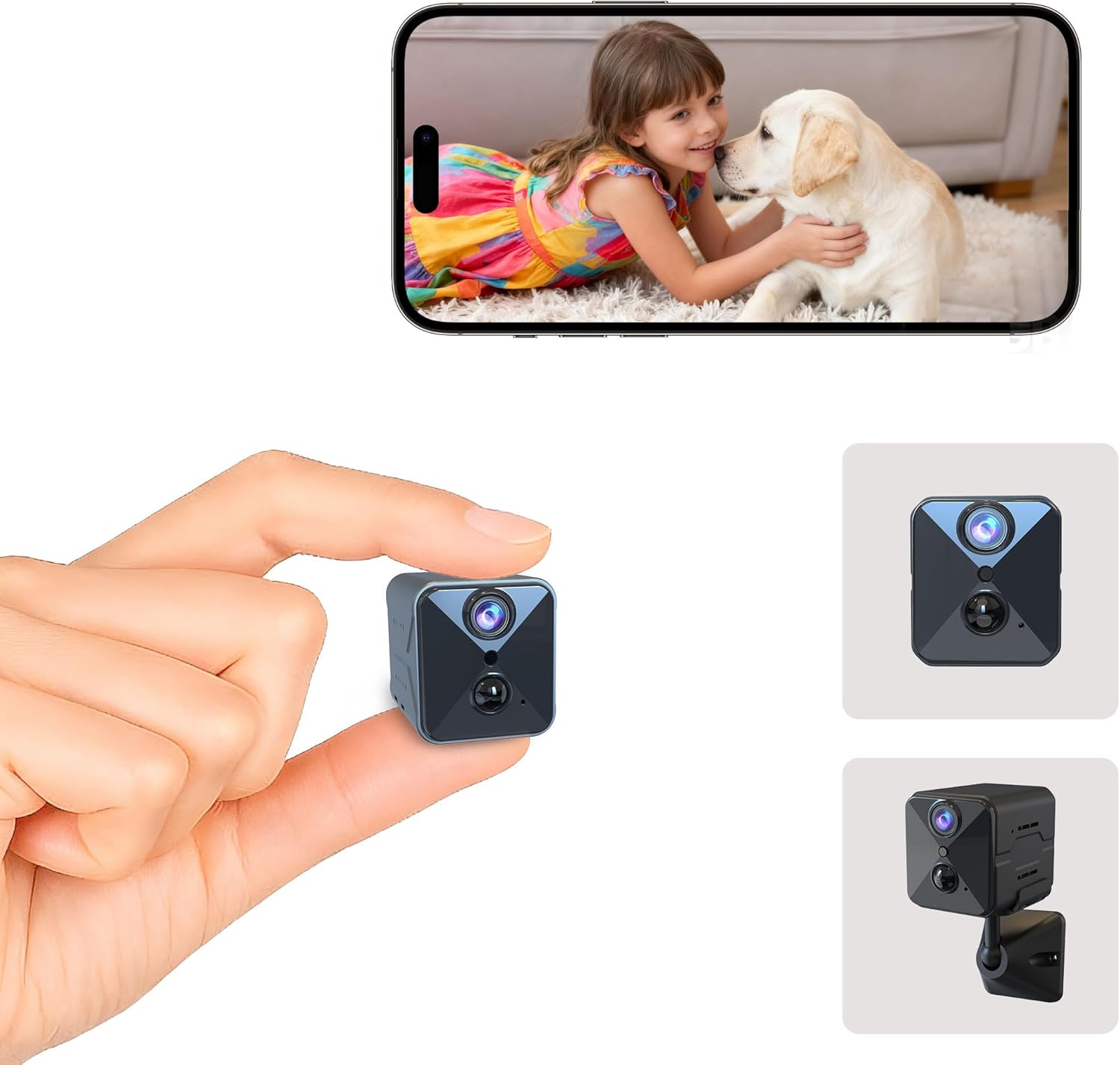
Small yet powerful, the Upgraded 4K HD Mini Security Camera delivers impressive performance in daily use. You quickly notice how this Upgraded 4K HD Mini Security Camera rivals larger indoor models with ease. Setup feels simple, and app controls respond quickly during regular monitoring tasks.
Video quality stands out with sharp 4K clarity, giving you detailed footage beyond many compact competitors. Night vision performs reliably, capturing clear images even in complete darkness within short indoor ranges. Smart AI detection sends real-time alerts, helping you react quickly to movement around important areas.
Battery life impresses most, offering extended standby time that easily beats similar wireless cameras. Wire-free design keeps placement flexible, allowing discreet positioning without messy cables or mounting hassle. Storage options add convenience through SD card support and cloud access for secure video management.
WiFi works steadily on 2.4GHz networks, maintaining a consistent connection through walls and across rooms.
Continuous recording may reduce battery endurance compared with motion-based usage modes. Overall, you get a dependable indoor camera that blends strong performance, smart alerts, and flexible setup effectively.
5. Fjj Mini Spy Camera

Tiny and practical, the Fjj Mini Spy Camera surprises with solid everyday usability. You quickly notice how this Fjj Mini Spy Camera feels lighter and simpler than many competing mini cameras. Setup stays easy thanks to a single-button design that speeds up WiFi configuration.
Video quality holds steady with 1080P resolution, delivering clear footage suitable for basic indoor monitoring tasks. A 140° wide viewing angle covers more space, reducing blind spots compared with narrower alternatives. APP control works smoothly, letting you check live feeds quickly from your phone.
Wireless connectivity remains stable on 2.4GHz networks, helping maintain consistent viewing without frequent dropouts. Motion detection sends instant notifications, keeping you updated whenever movement appears in monitored areas. Multi-user support adds convenience, allowing family members to access footage without complicated sharing steps.
Rechargeable design supports continuous recording while charging, which helps during longer monitoring sessions. Compact size makes placement flexible, allowing you to hide it easily in tight spaces.
Lack of night vision limits visibility when the lighting becomes very low. Overall, you get a simple, portable camera that balances ease of use, coverage, and essential features effectively.
Small Camera, Big Security: The Definitive Spy Camera Buying Guide
Introduction
In a world where personal security, child safety, and property protection have become everyday concerns, spy cameras have quietly moved from the realm of espionage movies into our living rooms, offices, and front porches. Whether you are a worried parent wanting to keep an eye on a babysitter, a homeowner concerned about package theft, a small business owner monitoring your store after hours, or simply someone who values peace of mind, a spy camera can be one of the most powerful tools at your disposal.
Unlike traditional security cameras that are obvious and bulky, spy cameras are designed to blend seamlessly into everyday environments. They can look like a clock on your shelf, a smoke detector on your ceiling, a USB charger on your wall, or even a pen on your desk. Their discreet nature makes them incredibly effective — because they are not noticed, they capture authentic, unguarded footage rather than altered behavior prompted by the visible presence of a camera.
Beyond personal security, spy cameras have legitimate uses across a wide range of situations. Pet owners use them to monitor animals when they are away. Elderly caregivers use them to check in on aging relatives receiving in-home assistance. Airbnb hosts use them to deter property damage. Office managers use them to protect sensitive inventory and assets. In all these scenarios, the value lies not just in catching wrongdoers after the fact, but in the powerful deterrent effect that surveillance — even hidden surveillance — can create once people know it might be in use.
Modern spy cameras are more capable than ever before. Today’s models offer high-definition video up to 4K resolution, night vision for low-light environments, motion detection that triggers recording only when needed, cloud storage for remote access to footage, and Wi-Fi connectivity that lets you monitor live feeds directly from your smartphone anywhere in the world. Battery life has also improved dramatically, with many cameras capable of running for days or even weeks on a single charge. The technology has become more affordable, too, with capable cameras available at a wide range of price points to suit nearly any budget.
However, with so many options on the market, choosing the right spy camera can feel overwhelming. The differences between models can be significant, and the wrong choice could mean blurry footage, short battery life, poor night vision, or a design that simply does not blend into your specific environment. This guide is designed to walk you through everything you need to know — the types available, the key features to prioritize, important factors to consider before purchasing, and practical tips for getting the most out of your camera once you have it.
Types of Spy Cameras
Spy cameras come in a surprisingly diverse range of form factors, each suited to different environments and use cases. Understanding the main categories helps you match the right device to your specific needs.
Type 1: Hidden Object Cameras (Disguised Cameras)
These are the most classic type of spy camera — devices that look exactly like ordinary household or office objects. Common disguises include alarm clocks, wall clocks, smoke detectors, picture frames, USB chargers, lamps, books, and even plants. They are ideal for indoor use in living rooms, bedrooms, offices, or hotel rooms. Because they look entirely natural in their surroundings, they are virtually impossible to spot unless someone is actively searching for them. They work best for stationary monitoring of a specific area and are a top choice for parents, caregivers, and homeowners who want long-term, unobtrusive surveillance indoors.
Type 2: Wearable or Body-Worn Cameras
These cameras are integrated into items that a person can carry or wear, such as pens, glasses, watches, buttons, or lapel pins. They are designed for on-the-go recording and are particularly popular with journalists, investigators, field researchers, and individuals who need to document interactions in real time. The quality varies widely between models, but many modern wearables now offer HD recording, long battery life, and easy data transfer via USB. They are less useful for fixed-location monitoring but unmatched when you need a personal, portable recording solution.
Type 3: Outdoor Disguised Cameras
Designed to withstand weather and environmental exposure, outdoor spy cameras often disguise themselves as rocks, garden ornaments, outdoor lights, or motion-sensor housings. They are built with waterproofing and UV resistance to survive rain, heat, and cold. Ideal for monitoring driveways, gardens, garages, and entry points, these cameras help homeowners extend their surveillance coverage beyond interior spaces without alerting intruders to the presence of security equipment. Many outdoor models also include night vision and motion-triggered alerts, making them effective around the clock.
Type 4: Mini Pinhole Cameras
These are among the smallest spy cameras available, often just a few millimeters in lens diameter and small enough to be hidden inside almost any object or surface. They are frequently used by professionals who need to install cameras in extremely confined or inconspicuous spaces, such as inside walls, vents, or custom-built housings. While their small size limits battery capacity and sometimes image quality, many pinhole cameras are designed to be wired into a constant power source, making them reliable for long-duration surveillance. They require more technical knowledge to install but offer maximum concealment.
Key Features to Look For
Video Resolution
Resolution determines the clarity of your footage — and clarity matters enormously when you need to identify a face, read a license plate, or document an incident. Look for a minimum of 1080p Full HD; 2K and 4K options are available if you need finer detail. Avoid cameras that offer only 720p or below, as the footage may be too grainy to be useful in critical situations.
Night Vision
Most security incidents happen in low-light conditions. A spy camera without infrared (IR) night vision is essentially blind after dark. Look for cameras with IR LEDs that can illuminate at least 15–20 feet in complete darkness. Some premium models offer color night vision using ambient light enhancement, which produces far more useful footage than traditional black-and-white infrared imagery.
Motion Detection and Alerts
Continuous recording drains batteries and creates hours of footage you have to sift through. Motion-activated recording solves both problems — the camera only records when it detects movement, conserving power and storage space. The best models also send real-time push notifications to your phone when motion is detected, allowing you to respond immediately to any activity rather than discovering it hours later.
Wi-Fi Connectivity and Remote Access
Wi-Fi-enabled spy cameras let you view live footage and access recorded video directly from a smartphone app, regardless of where you are in the world. This is an essential feature if remote monitoring is a priority. Look for cameras compatible with both 2.4GHz and 5GHz networks for better flexibility. Some models also support cloud storage, which means footage is backed up off-site even if the camera itself is discovered or tampered with.
Things to Consider Before Buying
Size and Space: Think carefully about where you plan to place the camera and choose a disguise that fits naturally. A clock camera makes no sense in a bathroom; a smoke detector camera would look out of place in a small closet. The best spy camera is one that nobody would ever question seeing in its chosen location.
Ease of Use: Some spy cameras are remarkably plug-and-play, while others require more technical setup, especially those involving wired pinhole systems or custom installations. If you are not technically inclined, look for models with straightforward app-based setups, simple SD card recording, and clear instruction manuals. Reading user reviews specifically for the setup experience can save you considerable frustration.
Pros and Cons
| Pros | Cons |
|---|---|
| Discreet design blends into any environment | Legal restrictions vary by location — always check local laws |
| Modern models offer HD, Wi-Fi, and night vision | Battery life can be limited, especially in motion-detection mode |
| Affordable entry-level options available | Lower-budget models may have poor app support or video quality |
| Deters theft, misconduct, and property damage | Hidden cameras can raise ethical concerns if misused |
| Remote monitoring via smartphone from anywhere | Cloud storage often requires a paid subscription |
| Wide variety of form factors for every situation | Pinhole and wired models require more complex installation |
Step-by-Step Buying Guide
1. Research Your Needs
Before browsing products, get clear on your specific use case. Ask yourself: Where will the camera be placed — indoors or outdoors? Do you need continuous recording or motion-triggered? Is battery power sufficient, or do you need a wired connection? Will you monitor remotely via Wi-Fi, or is local SD card storage enough? The answers will immediately narrow your options and prevent you from overpaying for features you will never use.
2. Compare Products
Once you know what you need, compare at least three to five products across review platforms, retailer sites, and independent security blogs. Pay close attention to real user reviews, particularly those that mention long-term use, app reliability, and video quality in actual conditions rather than manufacturer marketing claims. Check whether replacement parts or accessories are readily available, and verify that the app is compatible with your smartphone’s operating system.
3. Finalize Your Choice
When you have narrowed it down to one or two candidates, check the return policy carefully before purchasing — this gives you a safety net if the camera does not perform as expected in your specific environment. Verify the warranty terms and look for sellers who offer genuine customer support, not just automated email responses. Authorized retailers and established marketplaces with buyer protection tend to be safer choices than unknown third-party sellers, particularly for electronics.
Maintenance Tips
Keep lenses clean: Even a small smudge on a pinhole lens can significantly degrade video quality. Use a soft, lint-free cloth to gently clean the lens every few weeks, especially on cameras in dusty or outdoor environments.
Check storage regularly: SD cards can fill up quickly, especially on cameras set to continuous recording. Set a regular schedule — weekly or bi-weekly — to transfer and back up footage, and format the card periodically to prevent file corruption.
Update firmware: Manufacturers regularly release firmware updates that fix bugs, improve motion detection accuracy, and sometimes add new features. Check the manufacturer’s app or website every few months and apply updates when available to keep your camera performing at its best.
Common Issues and Troubleshooting
Camera not connecting to Wi-Fi: Make sure you are using a 2.4GHz network during setup, as many budget cameras do not support 5GHz. Restart your router and the camera, and ensure you are entering the Wi-Fi password correctly — some cameras are case-sensitive.
Night vision appears blurry or washed out: IR LEDs can sometimes overexpose nearby surfaces. Try repositioning the camera slightly further from walls or reflective surfaces. Also check whether there is a privacy glass or tinted cover over the lens that may need to be removed for optimal night performance.
Motion detection triggering too frequently: Sensitivity settings can usually be adjusted in the companion app. Reducing sensitivity or setting an activity zone that focuses only on a specific area of the frame (like a doorway rather than the entire room) will reduce false alerts significantly.
Battery draining too fast: Continuous recording is a major battery drain. Switch to motion-activated recording mode if available. Also disable Wi-Fi streaming when remote access is not needed, as maintaining a live connection consumes significant power.
Final Words
Choosing the right spy camera is not just a purchase — it is an investment in your security, your peace of mind, and the safety of the people and property you care most about. The ideal camera for you depends on your unique situation: where you need coverage, what level of technical complexity you are comfortable with, and what your budget allows.
Prioritize the features that align directly with your core needs — resolution and night vision if image quality is paramount, motion detection and Wi-Fi if real-time alerts matter most, battery life and compact design if portability is key. Do not be swayed by feature lists alone; a camera that excels at the two or three things you actually need will always outperform a feature-heavy model that does everything adequately but nothing brilliantly.
Take your time, read real user experiences, understand the legal boundaries in your area, and make a confident, informed decision. The right spy camera, chosen thoughtfully, can make an enormous difference in how safe and secure your home, business, or personal life truly feels.