

Cutting precise angles doesn’t have to be a struggle, especially when you’ve got the right miter saw by your side. Whether you’re framing, molding, or building furniture, a good miter saw saves time and gives clean, accurate cuts every time. In this guide, you’ll discover the best miter saws that combine power, precision, and ease of use. From beginners to pros, there’s a perfect model to match your projects and budget. Let’s break down the top options to help you work smarter, cut faster, and get better results with every pass of the blade.
Top 5 Miter Saws:
1. Festool 575306 Sliding Compound Miter Saw
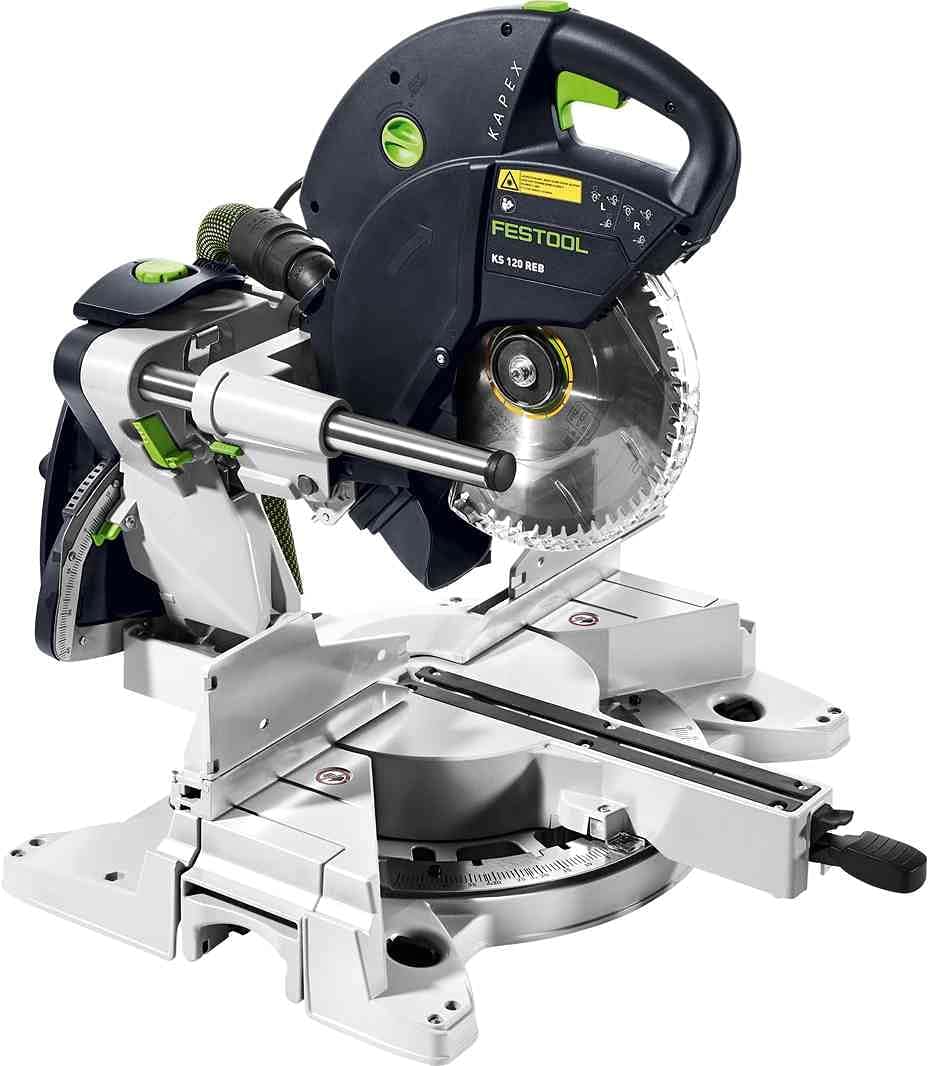
This saw cuts cleaner than a straight razor on a fresh shave and handles crown molding like a dream, even on tough job sites.
The Festool Kapex 575306 isn’t just another miter saw—it’s a precision machine built for serious woodworkers and contractors who refuse to compromise. After months of daily use, I’m still impressed by its dual laser guides that make alignment a breeze. You don’t get that “close enough” feeling—you get dead-on cuts every time. The micro-adjustable bevel knob is a standout. It dials in angles so precisely, you’ll wonder how you ever used a miter saw without it.
At just under 48 pounds, the Kapex is portable enough to toss in the back of your truck without breaking your back, but sturdy enough to chew through hardwood without any wobble. And that 91% dust collection rate? Believe the hype—it keeps your line of sight clear and your lungs cleaner.
Festool also upgraded the base with integrated sliding extensions. No more balancing long trim pieces on scrap wood or your knee—this saw supports your work like a pro. Bonus points for the CleanTEC-compatible dust port; it locks in tight, keeping cleanup minimal.
Sure, it’s a premium-priced saw—but when you factor in accuracy, durability, and pro-grade features, it’s an investment that pays for itself job after job. Whether you’re trimming out custom cabinetry or framing windows, the Kapex delivers finish-quality results right out of the box. This is the miter saw that cuts.
2. BOSCH GCM12SD Dual-Bevel Sliding Glide Miter Saw

This glide system is so smooth, it’s like the saw is floating—precision cutting has never felt this effortless or taken up this little space.
The Bosch GCM12SD brings a whole different kind of motion to the miter saw game. The Axial-Glide system isn’t just fancy marketing—it truly delivers buttery-smooth cuts while shrinking the saw’s footprint by almost a foot. For those of us working in cramped garages or tight workshops, this is a game-changer.
The saw’s 15-amp motor puts out a steady 4,000 RPM, and you can feel the power behind every cut. The expanded horizontal and vertical capacities are perfect for baseboards, crown molding, or even larger framing lumber. You’ll appreciate how cleanly it slices through everything from soft pine to dense oak.
One feature I lean on a lot is the upfront bevel controls. You don’t have to reach behind the saw to make adjustments, which sounds minor until you’ve done it a hundred times. Stainless steel scales and clear detents ensure quick and accurate results.
Dust collection is excellent, especially when connected to a vacuum. The SquareLock fences are factory-aligned and remain true without requiring constant recalibration. Additionally, the ambidextrous handle feels great whether you’re a left-handed or right-handed user.
It’s heavy, sure, but it’s built like a tank. The Bosch GCM12SD is one of the most durable and precise miter saws I’ve used. If you want professional results with space-saving benefits, this saw is worth every inch of your bench.
3. DEWALT DWS780 Double Bevel Sliding Miter Saw

This thing eats hardwood for breakfast—powerful, accurate, and built for job sites where performance can’t afford to falter.
The DWS780 has been my go-to for years, and it still holds up like a champ. With a 15-amp motor cranking out 3,800 RPM, it’s more than capable of handling everything from fine cabinetry to framing lumber. I’ve pushed it through thick maple and composite boards without a hiccup.
One of its biggest standouts is the XPS crosscut positioning system. Unlike laser guides, this LED shadow system shows exactly where the blade will hit. No recalibrating, no guesswork. It works like a charm—even in bright lighting—and has made my cuts incredibly consistent.
The dual bevel design is versatile, letting you tilt both left and right with stops at the most-used angles. And the oversized bevel scale makes adjustments quick and easy. Miter cuts are also super flexible—up to 60° to the right and 50° to the left—great for trim and angled corners.
Dust collection could be better, but it’s not bad. The saw’s also built like a brick—tough and rugged enough for daily job site use. The back fence design and tall sliding fences give you excellent support for wide and tall materials.
If you’re doing crown, baseboard, or just need solid cutting power with consistent accuracy, the DWS780 is still one of the best bang-for-your-buck saws out there. It’s the workhorse every serious DIYer or contractor should consider.
4. SKIL MS6305 Dual Bevel Sliding Compound Miter Saw
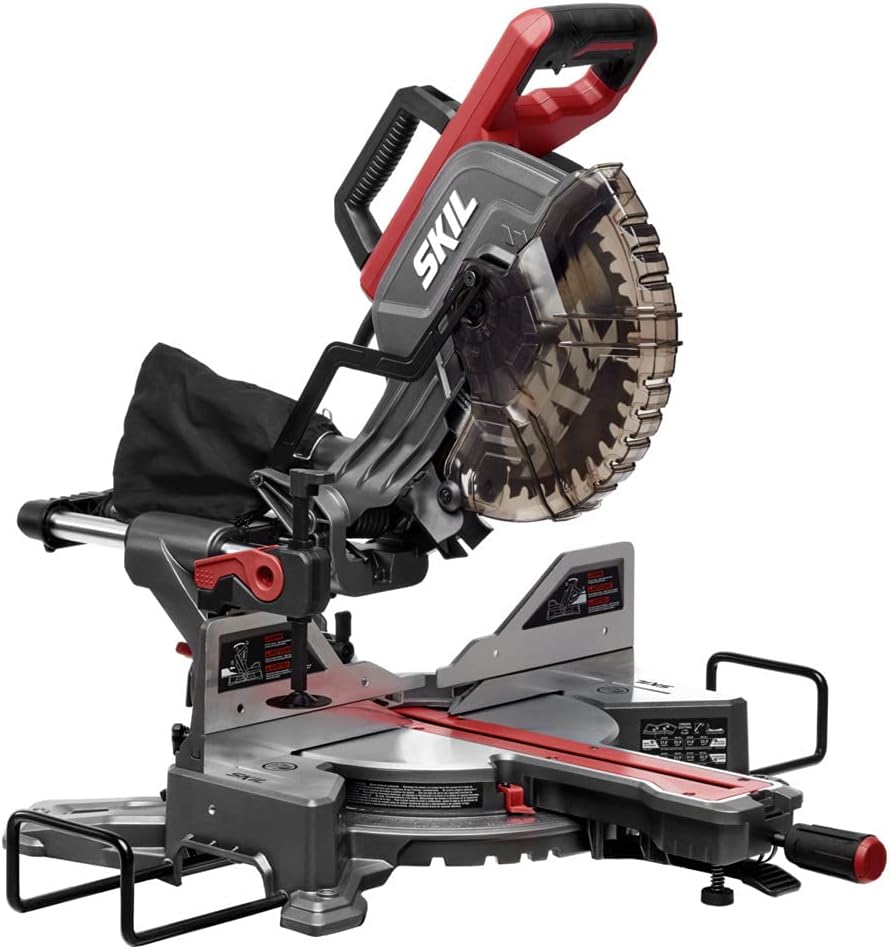
Affordable, accurate, and packed with pro-level features—this saw proves you don’t need to break the bank to get serious results.
The SKIL MS6305 surprised me. A lot. For the price, it offers an incredible amount of value. First off, the 15-amp motor runs smoothly and strongly, pushing 4,800 RPM. Whether I was slicing 2x12s or fine-tuning trim, it didn’t flinch. It’s the kind of dependable performance that’s hard to find in this budget range.
What really sets this saw apart is the LED shadow line system. It’s more precise than most lasers and doesn’t need constant adjusting. That’s a huge plus for accurate cuts, especially when you’re working fast. Dual bevel functionality with four positive stops gives you the flexibility to handle complex angles without flipping your material.
The miter scale is intuitive, with 11 positive stops at common angles. And the cam lock knob keeps things locked down tight. Tall fences support 6-1/4” crown molding and 4-1/2” base vertically—rare for a 10” saw in this class.
At 39 pounds, it’s lightweight enough to move around, and the built-in handle makes transport simple. The work clamp and sliding rails make securing and cutting stock easy, even when working solo.
Is it built like a Festool? No. But it punches way above its weight class and nails the basics better than some pricier models. If you’re a weekend warrior or even a semi-pro needing a reliable, portable saw, the SKIL MS6305 should be at the top of your list.
5. Metabo HPT C10FCGS Compound Miter Saw

Budget-friendly but battle-ready—this compact powerhouse delivers clean cuts and portability without cutting corners where it counts.
When I first picked up the Metabo C10FCGS, I didn’t expect much. It’s light, it’s cheap, and it’s not loaded with bells and whistles. But after weeks of use, I can confidently say this saw earns its spot in the top 5.
It weighs just 24 pounds—one of the lightest saws I’ve handled, making it incredibly easy to haul between job sites or set up in tight spaces. Despite the size, it doesn’t skimp on power. The 15-amp motor runs up to 5,000 RPM, and it sliced through pine, MDF, and even some hard maple with no bogging down.
The miter range is solid, going 0–52° left and right, with thumb-actuated stops that make angle changes quick and frustration-free. Bevel capacity isn’t dual, but it still hits 0–45° left with precision and reliability. For what you pay, that’s a win.
Its large table offers great support, and the vice clamping system holds material steady without wobble. It doesn’t have fancy LED or laser guides, but if you know how to line up a blade manually, it’s very accurate.
This is an ideal backup saw for pros or a main saw for new woodworkers. It handles trim, framing, and basic furniture work with ease. If portability and price matter more than high-end features, this is a no-brainer buy. It’s not flashy, but it’s tough, efficient, and gets the job done clean.
Best Miter Saw: A Complete Buying Guide for DIYers and Professionals
Introduction
Whether you’re framing a house, installing crown molding, or tackling your first DIY furniture project, a miter saw is a game-changing tool. Its ability to make precise crosscuts and angled cuts with speed and accuracy saves both time and frustration. Unlike handheld saws or even table saws, miter saws deliver cleaner, more controlled cuts, especially for wood trim, studs, and other finish work.
The beauty of a miter saw lies in its versatility. Need a quick 45° cut for a picture frame? Easy. Making compound cuts for crown molding? No problem. From casual hobbyists to seasoned carpenters, anyone working with wood benefits from having a reliable miter saw in their workshop.
But not all miter saws are built the same. The market is full of models with varying features, motor power, blade sizes, and even cutting capacities. That’s why it’s critical to understand your cutting needs before making a purchase. This guide breaks down the types of miter saws, key features to consider, what to look for based on your budget and space, and much more.
Let’s explore everything you need to know to choose the best miter saw for your projects—whether you’re slicing baseboards or crafting cabinet doors.
Types of Miter Saws
Miter saws come in several different forms, each tailored to specific types of work. Understanding the core differences will help you select the most suitable tool.
1. Standard Miter Saw
This is the most basic type. It makes straight crosscuts and miter cuts (angled cuts across the board width) but can’t tilt for bevel cuts. It’s ideal for simple woodworking jobs like framing or cutting studs.
Best For: Beginners and basic DIY work.
2. Compound Miter Saw
A step up from the standard model, a compound miter saw tilts in one direction (usually left) for bevel cuts. This allows for compound angle cuts—critical for crown molding, door frames, and trim.
Best For: Homeowners, trim carpenters, and furniture builders.
3. Dual-Bevel Compound Miter Saw
Dual-bevel models tilt both left and right, making it easier to cut complex angles without flipping the workpiece. This saves time and improves accuracy when handling intricate trim work.
Best For: Professionals and serious DIYers working on detailed projects.
4. Sliding Compound Miter Saw
This variant includes a sliding arm, letting the blade move forward and backward. It dramatically increases the cut width, enabling you to handle wider boards.
Best For: Projects involving wide lumber, such as shelving and flooring.
5. Cordless Miter Saw
Running on batteries instead of cords, cordless miter saws offer maximum portability without sacrificing power—thanks to advancements in lithium-ion battery tech.
Best For: Contractors on the go or anyone working without constant access to power outlets.
Key Features to Look For
1. Blade Size
Common sizes include 8-inch, 10-inch, and 12-inch blades. A larger blade offers deeper and longer cuts, but it’s also heavier and more expensive.
Why It Matters: Bigger blades are better for heavy-duty cuts; smaller ones are perfect for trim and light-duty tasks.
2. Motor Power (Amperage)
Miter saws typically have 10-15 amp motors. Higher amperage means more cutting power, allowing the saw to glide through hardwoods effortlessly.
Why It Matters: More power equals better performance and durability when cutting tough materials.
3. Bevel and Miter Ranges
Wider bevel and miter capabilities mean more cutting flexibility, especially for detailed trim work and compound angles.
Why It Matters: More range = fewer workarounds and more accurate results.
4. Laser Guide or LED Shadow Line
These optional features enhance cut-line visibility. While lasers may require calibration, LED shadow lines are accurate right out of the box.
Why It Matters: Improved precision and reduced mistakes, especially for beginners.
Things to Consider Before Buying
Budget
-
Entry-level ($100–$250): Basic miter saws suitable for casual DIYers.
-
Mid-range ($250–$450): Feature-rich compound or sliding models.
-
Premium ($450+): Dual-bevel sliders, cordless options, and pro-grade durability.
Choose a price point that matches your frequency of use and the complexity of your tasks.
Size/Space
Miter saws can be bulky, especially sliding models. Check your workspace dimensions and storage options before buying.
Tip: If space is tight, consider a compact or folding model with a rolling stand.
Ease of Use
Look for intuitive controls, easy bevel adjustments, and clear markings. Features like electric brakes, smooth sliding rails, and dust collection ports enhance safety and comfort.
Durability/Warranty
Choose models with solid construction, metal fences, and a stable base. Reputable brands often offer 3–5 year warranties and accessible customer service.
Pros and Cons
| Pros | Cons |
|---|---|
| Accurate, repeatable cuts | Can be bulky and heavy |
| Versatile for angled and bevel cuts | Expensive for premium models |
| Speeds up repetitive tasks | Requires regular blade maintenance |
Step-by-Step Buying Guide
1. Research Your Needs
Start by identifying the type of work you plan to do. Cutting trim and molding? You’ll need a compound or dual-bevel saw. Building decks or shelving? Go for a sliding model. Portability important? Consider cordless.
2. Compare Products
Use comparison tools and read online reviews. Pay attention to:
-
Blade size and motor power
-
Sliding vs. non-sliding rails
-
Ease of angle adjustments
-
Safety features
YouTube demos and woodworking forums can also offer real-world insights.
3. Finalize Your Choice
Choose a model that balances cost and performance. Check return policies, warranty coverage, and the availability of replacement parts. Reputable buying platforms include Amazon, Home Depot, Lowe’s, and manufacturer websites.
Maintenance Tips
1. Keep It Clean
Dust buildup reduces accuracy and can wear down the motor. Use a vacuum or air blower to clean your miter saw after every session.
2. Check the Blade Regularly
Inspect the blade for dullness or damage. Replace it if it starts burning the wood or leaves rough edges.
3. Store Properly
Avoid damp areas. If it’s a folding model, store it in a dry space and cover it to protect from dust and rust.
Common Issues and Troubleshooting
-
Issue: Saw won’t start.
Fix: Check the power source or battery charge. Also, inspect the safety lock. -
Issue: Cuts aren’t square.
Fix: Recalibrate the miter and bevel angles using a square tool. -
Issue: Blade binding or burning wood.
Fix: Replace dull blades or slow your feed rate.
Final Words
Choosing the right miter saw can dramatically elevate the quality, speed, and safety of your work. Whether you’re a seasoned pro or a first-time DIYer, there’s a perfect miter saw to match your needs and budget. Prioritize the features that matter most to you—cutting capacity, bevel range, portability, or ease of use—and don’t hesitate to invest in a reliable brand.
In the end, the best miter saw is the one that helps you cut cleaner, work faster, and build better. Happy cutting!